


Why Die and Blade Quality Matters in Pelletizing
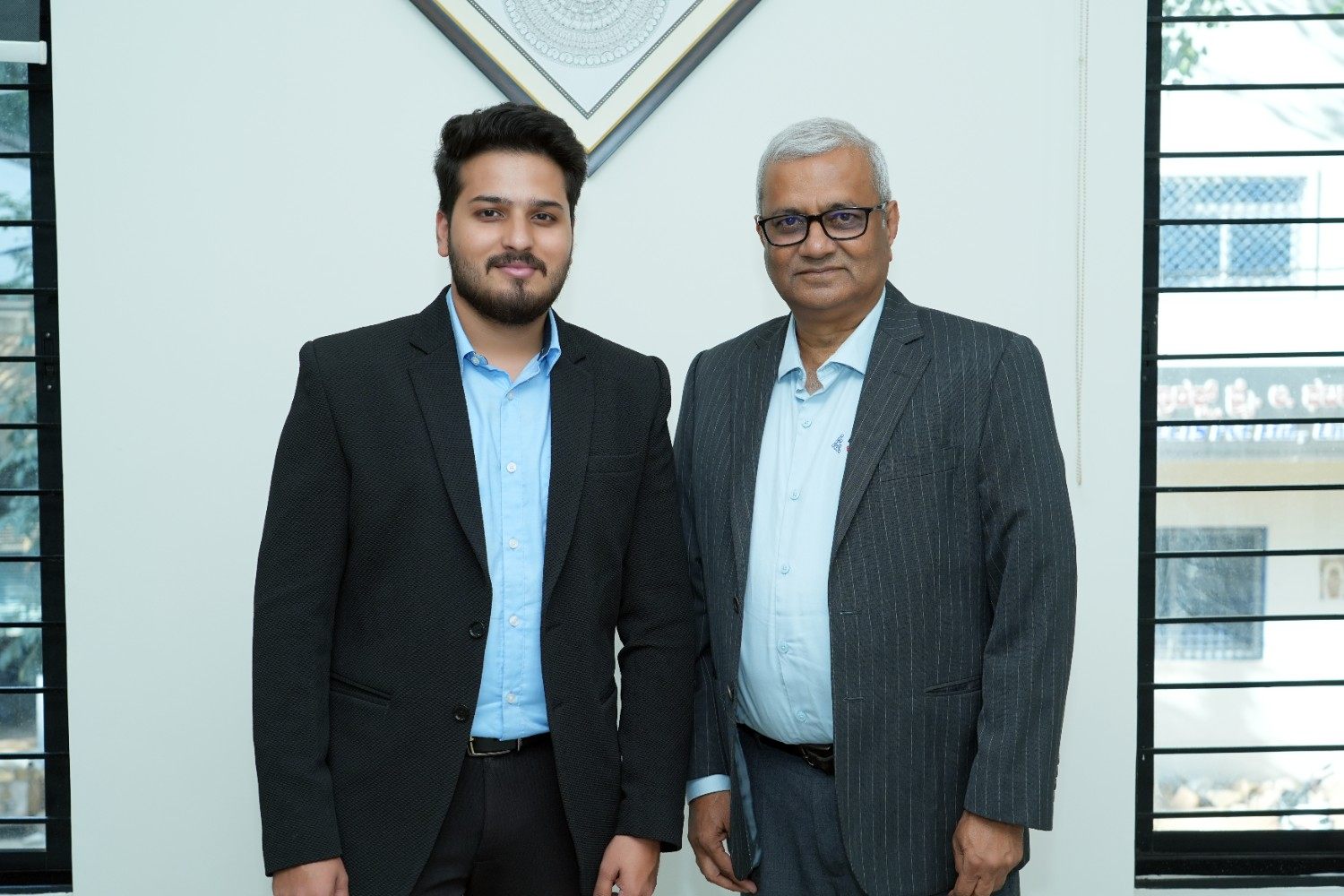
An Executive Interview with Mr. Pranav Pejavar,Business Head and Mr. Manjunath ML, Managing Director, Concord United Products Pvt Ltd.
Concord United on application specific tooling and the next stage of growth
For compounders and recyclers, the quality of a finished pellet depends on the performance of the cutting system at the end of the line. A worn die face, an unsuitable blade or a mismatch between the tooling and the material being processed can turn that final stage into a persistent production problem. Choosing replacement parts therefore involves questions about materials, maintenance and operating conditions, as well as dimensions and price.
In interviews with Modern Plastics TV, Manjunath ML, Managing Director of Concord United Products, and Pranav Pejavar, Business Head, discuss how their Bengaluru based company moved into pelletizing dies and blades. Their account connects a background in tooling and machine tools with the requirements of polymer compounding and PET recycling, where reliable cutting and longer component life matter to processors.
The conversation also explores the information buyers should provide when requesting a die, the role of refurbishment and the company’s plans to expand its manufacturing capabilities. The following interview has been edited and organised by subject for clarity and length. Product, performance and capacity statements are attributed to the interviewees and describe their account at the time of recording.

How did your engineering background lead you into the plastics industry?
Manjunath ML: I graduated as a mechanical engineer in 1982 from BMS College in Bengaluru. My exposure to tooling and plastics came through postgraduate study at NTTF, where I studied design. I am a designer at heart, and that training has remained important throughout my career.
I then worked outside India for about ten years designing moulds for the toy industry in the Asia Pacific market. That experience helped me understand how companies in different countries operate. When I returned to India, I followed my interest in injection moulding. Later, the knowledge of moulds and dies that I had developed became useful when we began making extrusion dies for pelletizing.
What prompted the move beyond injection moulding?
Manjunath ML: We started the company in 2000. Until around 2011, our activities included injection moulding and machine tools. Much of the moulding work was for the telecom industry. As the market for landline related products declined, we needed to look at other areas.
An opportunity to work in extrusion equipment sales gave me exposure to the extrusion process and to customers around the world. That helped us understand pelletizing. We began making blades around 2012, followed by dies around 2015. The move grew from our existing engineering experience and from learning what processors needed in another part of the plastics industry.

how does the machine tool business fit into that history?
Pranav Pejavar: Concord United was established in 2000 by Manjunath ML. Initially, we imported reusable wire cut machines into India. In 2007, we decided to manufacture those machines here. That was an important part of building our manufacturing experience.
The next stage was to look beyond machine tools and make parts for the extrusion and pelletizing industry. We first concentrated on blades, then expanded into underwater pelletizer die plates, cutter hubs and shafts. More recently, the growth of PET recycling encouraged us to develop that side of the business further. It has been a journey of identifying requirements and extending what we can manufacture.
Why do dies and blades deserve particular attention in a continuous processing line?
Manjunath ML: Pelletizing is a continuous manufacturing process. The complete line has to run properly to achieve production, and a stoppage can lead to substantial losses. Customers operating large plants therefore look closely at the quality of the die, the quality of the blade and the life they can obtain from those components.
For us, repeat business comes from providing a combination of quality and cost effectiveness. The die and blade have to perform together within the customer’s process. Their value becomes clear during production, when the processor needs consistent performance from the line rather than simply a replacement component that fits.
What are the main technical considerations in a carbide inserted die?
Manjunath ML: One of the central challenges is ensuring that the tungsten carbide inserts remain secure in the die. That is an important part of the technology. The quality of the carbide itself is also important. Alongside that, the blade material and blade hardness must match the requirements of the original equipment. These elements have to work together. We source the carbide and the steel used for our blades from Europe. Ensuring the quality of the raw material is a major part of the work, because the performance of the finished tooling starts with those material choices.
What should a compounder tell you before asking for a die recommendation?
Manjunath ML: We need to know the polymer being processed, the filler being used and the percentage of filler. In compounding, the filler can make the material particularly abrasive. Other materials can create corrosion related challenges. Those differences affect the die.
We also need information such as the melt flow index and whether the plastic has high or low viscosity. Sometimes a processor brings an existing die and asks us to reproduce it. However, details of the application help us make a die suited to the material. Understanding what is being processed is therefore an important part of developing the solution.
How does that choice influence the finished pellet?
Manjunath ML: Whether the process is compounding or recycling, the final product passes through the pelletizing system. The appearance and quality of the granule are closely connected to that stage.
The die and the cutting system produce the final output. The quality of the steel used in these products also helps determine the life of the die. These are important considerations for the processor: the system has to make a good pellet, and the tooling has to continue performing through production. Material selection and the cutting arrangement both contribute to that result.
Wear cannot be eliminated. How should processors respond to it?
Manjunath ML: Even wear resistant material will wear during operation. What matters is how quickly the person operating the machine recognises that wear and takes action. Responding in time can help extend die life.
We provide grinding tools, and many customers use them as part of their maintenance. The schedule should relate to the material being run. Attention to the die face helps maintain the quality of the granules. Blade selection is another part of the same issue: blades are available in different materials, and the appropriate choice is linked to the application.
What recurring problems do customers bring to Concord?
Pranav Pejavar: A frequent issue is premature wear or grooving on the carbide face. Excessive grinding of knives against the die plate can create a groove pattern, and that can lead to pellets with tails.
We recommend attention to the die face and the use of the appropriate grinding tool. In some cases, we suggest that a customer keep a replacement die plate available. The customer can then replace the worn plate and send it to us for work on a surface grinder. Having that option is useful when the production line cannot wait for the original die plate to be restored.
How broad is your current product offering?
Pranav Pejavar: Our range includes die plates and blades for underwater and water ring pelletizing systems. We also make cutter hubs, shafts and online grinding wheels for pelletizing applications.
We have developed thousands of blade designs, including standard and nonstandard designs, as well as a range of die plate designs. The products serve different processing requirements across compounding, masterbatch and recycling. Our material choices are important across that range. We use European steel and European grade tungsten carbide, because we regard the quality of the material as a basic requirement for the component’s performance.
Can a buyer request a customised part rather than a standard design?
Pranav Pejavar: Yes. We make standard designs and customised products. For customisation, we need information from the customer, such as the original equipment description, a reference die or dimensions. An old die can also provide a reference. Customers can send it to us, and we can use that information to develop the replacement. The same approach applies to the requirements of different pelletizing systems.
The important starting point is obtaining enough information about the part the customer needs, so that we can manufacture to that requirement.
Where does refurbishment fit into your service offering?
Pranav Pejavar: We carry out retiling and refurbishment of die plates. Refurbishment can help extend the life of a die rather than requiring the customer to buy a new one immediately. It may add another two or three years of life.
This is also part of how we think about sustainability. We look at the opportunity to reuse the existing component through retiling or refurbishment. Alongside the manufacture of new dies and blades, restoring components is a service that can help customers make further use of the tooling they already have.
What is your approach when a customer needs replacement blades quickly?
Pranav Pejavar: We keep stock of standard blades and can supply those against a purchase order. For regular customers, we also maintain stock to support their requirements.
That is different from developing a customised part, where we first need the relevant dimensions or reference information. Stock availability is one part of supporting the customer; understanding the required design is another. We work across both standard supply and customised manufacture, depending on what the customer needs for the pelletizing system.
Beyond refurbishment, what sustainability measures did you describe at Concord?
Pranav Pejavar: We have solar energy and send scrap generated during the manufacture of dies and blades back for recycling. The scrap can go back to the mill and be made into new sheets.
We also regrind shredder knives used in PET recycling and refurbish die plates. These activities form part of our effort to make better use of materials and components. As a small and medium enterprise, we are working through practical steps within our own operations and within the services we provide to customers.
What expansion are you planning?
Pranav Pejavar: At the time of this discussion, we were making around 50 die plates and 55,000 blades a month. Based on the demand we were seeing, we wanted to increase that towards 100 dies and around 150,000 blades a month. Further expansion would follow customer demand.
We were also building a new facility of about 38,000 square feet. The aim is to bring the process together in-house, from receiving the raw material through to dispatching the finished goods. We have invested in a vacuum furnace and other machinery as part of that direction.
What role will automation play in that development?
Pranav Pejavar: We want to reduce dependence on manual operations and use CNC automated machines. The objective is to reduce the opportunity for errors and support the integrated manufacturing approach we are developing.
The investment in machinery is connected to the broader capacity plan. As demand increases, we want to have the processes and equipment in place to manufacture more within our own facility. That is why we are looking at both the production capacity and how the different stages of manufacturing fit together.
Which new die requirements are you looking to address?
Pranav Pejavar: We already manufacture microhole die plates, and we are seeing enquiries for smaller holes. We are also looking at larger die plates for PET recycling.
Our existing capability is around 500 millimetres in diameter, and we want to increase that towards 800 or 900 millimetres. These are areas we are considering as we plan the next stage. The intention is to respond to the requirements coming from customers and extend the manufacturing capability accordingly.
Closing perspective
For buyers, the discussion points to a practical starting point: describe the process before specifying the replacement part. Polymer characteristics, filler loading, existing tooling and the symptoms of wear all help frame a more useful technical conversation. Concord’s interview places that conversation alongside its plans for greater capacity, with application knowledge and component maintenance remaining central to its account of the business.
#Concordunitedproducts #modernplasticsnetwork #printmagazine #printpublication #modernplasticsglobal #modernplasticssingapore

