

Close Menu

    Subscribe to Updates

    Get the latest creative news from FooBar about art, design and business.

    What's Hot

    Redefining High-End Manufacturing with All-Electric Injection Molding

    November 19, 2026

    Redefining High-End Manufacturing with All-Electric Injection Molding

    November 19, 2026

    Why Die and Blade Quality Matters in Pelletizing – Concord United

    November 19, 2026
    Facebook X (Twitter) Instagram
    Modern Plastics KoreaModern Plastics Korea
    • Demos
    • Demos
    • World
    • World
    • World
    • World
    • Politics
    • Politics
    • Politics
    • Politics
    • Buy Now
    • Buy Now
    • Buy Now
    • Buy Now
    • Demos
    • Demos
    Facebook X (Twitter) Instagram
    SUBSCRIBE
    Modern Plastics KoreaModern Plastics Korea
    Home»News»Medical & Healthcare»Photo-Chemical Etching Drives Higher Efficiency and Precision in Medical Device Manufacturing
    Medical & Healthcare

    Photo-Chemical Etching Drives Higher Efficiency and Precision in Medical Device Manufacturing

    korean_adminBy korean_adminMay 7, 2025No Comments5 Mins Read
    Facebook Twitter Pinterest LinkedIn Tumblr Reddit WhatsApp Email
    Share
    Facebook Twitter LinkedIn Pinterest WhatsApp Email

    Photo-Chemical Etching Drives Higher Efficiency and Precision in Medical Device Manufacturing

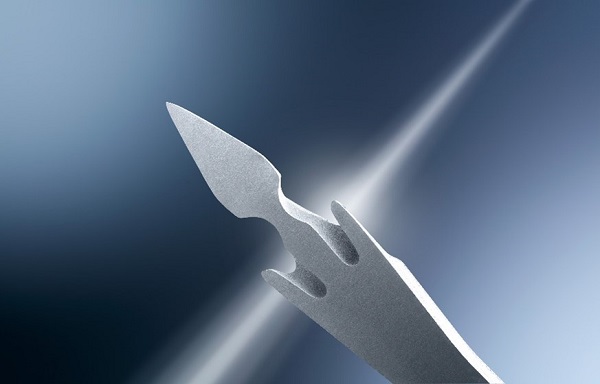
    Precision in medical device making isn’t simply a nice thing to have — it’s absolutely essential. If it’s a surgical instrument, an implant, or a microfluidic feature, the latitude for error is zero. Any dimension counts. Any edge, channel, and contour must be manufactured with integrity and precision. In this precision-crafted game of life or death, where device performance drives patient outcomes, photo- chemical etching (PCE) has become an industry game-changer.

    At micrometal Group, we see the critical importance of precision every day. Medical OEMs are demanding more — smaller components, tighter tolerances, more complex geometries. And they’re demanding it faster, with fewer production bottlenecks and a higher standard of quality assurance. PCE delivers on all these fronts, not only meeting the precision challenge but redefining what’s possible in the manufacture of medical components.

    ELIMINATING IMPERFECTIONS

    Traditional machining methods like stamping, laser cutting, or CNC milling often introduce mechanical stress, burrs, and inconsistencies. These imperfections can be detrimental in a medical setting, where even microscopic flaws could lead to contamination, reduced device performance, or rejection during regulatory review. PCE eliminates these risks by producing burr-free, stress-free components with micron-level accuracy. Using light-sensitive photoresists and controlled chemical etchants, manufacturers can achieve intricate, repeatable patterns on thin metals — perfectly suited for medical devices where form and function must work in harmony.

    APPLICATIONS

    Take surgical instruments, for example. From endoscopic blades to cutting jaws in minimally invasive tools, the sharpness and precision of each feature is directly tied to patient safety and procedural success. PCE enables the production of ultra-thin blades and geometrically complex features without the need for grinding or post-processing. The result? Faster production cycles and instruments that meet or exceed quality and hygiene standards.

    Implantable components also benefit from PCE’s unique capabilities. Components like battery contacts, mesh structures, and stents must not only meet strict biocompatibility standards but also maintain consistent dimensions across large production volumes. PCE allows for repeatable manufacturing with near-zero variation, helping to streamline validation and approval processes. And because PCE is a non-contact, non-thermal process, there’s no risk of metallurgical distortion — ensuring components retain their full material properties.

    Another area where PCE shines is in microfluidics. As point-of-care diagnostic devices continue to shrink in size while expanding in complexity, designers face the challenge of integrating micro-channels, filters, and electrodes onto a single platform. PCE makes it possible to etch highly precise, miniature structures into metal substrates without the limitations of mechanical tooling. This opens the door for innovative diagnostic solutions with rapid fluid flow, accurate measurement, and robust chemical resistance — all key to reliability in clinical settings.

    Precision isn’t just about geometry — it’s about reliability, repeatability, and responsiveness to customer needs. The PCE process has been engineered to allow quick iterations, enabling medical device designers to prototype, test, and refine concepts rapidly. Unlike traditional tooling, which requires time-intensive and costly modifications, PCE relies on digital photomasks. Need a new design iteration? Upload the file. No retooling, no delay.

    This flexibility is crucial in a sector where time-to-market can directly impact lives. In emergency scenarios — such as the fast-tracked development of COVID-19 testing devices — manufacturers turned to technologies that could keep pace with demand without compromising on accuracy or safety. PCE offered a fast, scalable pathway from prototype to mass production, supporting innovation under pressure.

    QUALITY ASSURANCE

    But speed and flexibility are only part of the story. In medical manufacturing, quality assurance is the cornerstone of credibility. The industry is tightly regulated, and for good reason. To pass audits and gain certification, every component must meet rigorous specifications. This is where manufacturing experience becomes essential. A good process integrates in-line and offline quality inspection, real-time imaging, and statistical process control. Precision is not just promised — its proved, batch after batch.

    Precision in the medical sector isn’t just about tolerances on paper — it’s about what those tolerances mean in the real world. A component that’s 10 microns out of spec might be acceptable in consumer electronics. In a medical implant, it could be catastrophic. That’s why the entire process should be engineered around absolute repeatability.

    There’s another layer to this, and that is cleanliness. Because PCE is a clean, non-contact process, it avoids introducing contaminants or residues that could compromise sterile environments. Components exit the etching process burr-free, without oils, shavings, or thermal distortion — meaning they’re easier to clean, inspect, and qualify for medical use.

    SUSTAINABILITY

    Sustainability is also becoming a growing concern in medical manufacturing. Regulatory pressures and consumer expectations are pushing OEMs to seek out greener processes. PCE supports this shift. It produces less material waste than subtractive machining, requires no physical tooling, and minimizes energy consumption by removing the need for high-heat operations. It’s a precise process with a lower environmental footprint — helping manufacturers achieve both performance and sustainability goals.

    www.micrometal.de

    #micrometal #Modernplasticsindia #Pasticsnews #ModernPlasticsIndiaMagazine
    #PrintPublication #PrintMagazine #Modernplasticsasia

    Author

    • korean_admin
      korean_admin
    korean_admin
    • Website

    Related Posts

    Diagnostic Reagents Enhanced with Next Gen Synthetic Polymers for Greater Sensitivity

    July 31, 2025

    Photo-Chemical Etching Drives Higher Efficiency and Precision in Medical Device Manufacturing

    May 7, 2025

    Syensqo Launches White Radel in Celebration of 35 Years of PPSU Excellence

    May 6, 2025

    Comments are closed.

    Don't Miss
    Injection Moulding

    Redefining High-End Manufacturing with All-Electric Injection Molding

    By Ankit PrajapatiNovember 19, 20260

    Redefining High-End Manufacturing with All-Electric Injection Molding Demand for micron-scale components is growing in medical,…

    Redefining High-End Manufacturing with All-Electric Injection Molding

    November 19, 2026

    Why Die and Blade Quality Matters in Pelletizing – Concord United

    November 19, 2026

    Why Die and Blade Quality Matters in Pelletizing – Concord United

    November 19, 2026
    Stay In Touch
    • Facebook
    • Twitter
    • Pinterest
    • Instagram
    • YouTube
    • Vimeo
    Our Picks

    Redefining High-End Manufacturing with All-Electric Injection Molding

    November 19, 2026

    Redefining High-End Manufacturing with All-Electric Injection Molding

    November 19, 2026

    Why Die and Blade Quality Matters in Pelletizing – Concord United

    November 19, 2026

    Why Die and Blade Quality Matters in Pelletizing – Concord United

    November 19, 2026

    Subscribe to Updates

    Get the latest creative news from SmartMag about art & design.

    Demo

    Recent Posts

    • Redefining High-End Manufacturing with All-Electric Injection Molding
    • Redefining High-End Manufacturing with All-Electric Injection Molding
    • Why Die and Blade Quality Matters in Pelletizing – Concord United
    • Why Die and Blade Quality Matters in Pelletizing – Concord United
    • New G-Max fprimus 13 turns Waste into Valuable Raw Materials Inhouse Recycling with Maximum cost Efficiency

    Recent Comments

    No comments to show.
    About Us
    About Us

    Your source for the lifestyle news. This demo is crafted specifically to exhibit the use of the theme as a lifestyle site. Visit our main page for more demos.

    We're accepting new partnerships right now.

    Email Us: info@example.com
    Contact: +1-320-0123-451

    Our Picks

    Large Study of COVID Vaccine Side Effects in Sweden

    January 12, 2020

    Coronavirus latest: Japan’s Vaccination Rate Tops 75% As Cases Drop

    January 10, 2020
    8.9

    Review: Denmark Proposes Corona Pass Mandate for Workers

    January 9, 2020
    New Comments

      Archives

      • November 2026
      • October 2026
      • September 2026
      • August 2026
      • July 2026
      • June 2026
      • May 2026
      • April 2026
      • March 2026
      • February 2026
      • January 2026
      • December 2025
      • October 2025
      • September 2025
      • August 2025
      • July 2025
      • June 2025
      • May 2025
      • April 2025
      • March 2025
      • October 2021
      • September 2021
      • May 2021
      • April 2021
      • March 2021
      • January 2021
      • August 2020
      • March 2020
      • January 2020

      Categories

      • 3D Printing
      • 3D Printing & Prototyping
      • Achievements
      • Ancillary Equipment
      • Automation & Robotics
      • Automation Update
      • Automotive
      • Automotive & Mobility
      • Awards & Recognition
      • Bio-Plastics
      • Blow Moulding / Blow Molding
      • Circular Economy
      • Colourants & Masterbatch
      • Compounding
      • Driver & Motors
      • Engineering Polymers
      • Environment & Recycling
      • Environment & Sustainability
      • Exhibitions
      • Expansions & Appointments
      • Extrusion
      • Features & Insights
      • Flexible Packaging
      • Industrial Ecosystem
      • Industry News
      • Injection Moulding
      • Innovation
      • Interview
      • Lifestyle
      • Machinery & Equipment
      • Machinery Update
      • Manufacturing
      • Market Report
      • Markets
      • Material Update
      • Materials & Compounding
      • Medical & Healthcare
      • Medical Plastics
      • Micro Molding
      • Mould Making & Tooling
      • News
      • Opening & Expansions
      • Packaging & Printing
      • Packaging News
      • Packaging Update
      • Partnership
      • Pipe & Profiles
      • Politics
      • PRESS RELEASE
      • Printing & Packaging
      • Product
      • Product Launch
      • Recycling News
      • Research & Developments
      • Sheet & Pipe
      • Show News
      • Show News
      • Special Article
      • Sustainability & Recycling
      • Technology
      • Technology & Innovation
      • Technology News
      • Technology Study
      • Technology Update
      • Thermoforming
      • Thermoplastics
      • Uncategorized
      • World
      Facebook X (Twitter) Instagram Pinterest
      © 2026 ThemeSphere. Designed by ThemeSphere.

      Type above and press Enter to search. Press Esc to cancel.

      Powered by CookieAdmin
      Necessary cookies enable essential site features like secure log-ins and consent preference adjustments. They do not store personal data.
      None
      Functional cookies support features like content sharing on social media, collecting feedback, and enabling third-party tools.
      None
      Analytical cookies track visitor interactions, providing insights on metrics like visitor count, bounce rate, and traffic sources.
      None
      Advertisement cookies deliver personalized ads based on your previous visits and analyze the effectiveness of ad campaigns.
      None
      Unclassified cookies are cookies that we are in the process of classifying, together with the providers of individual cookies.
      None
      Powered by CookieAdmin