


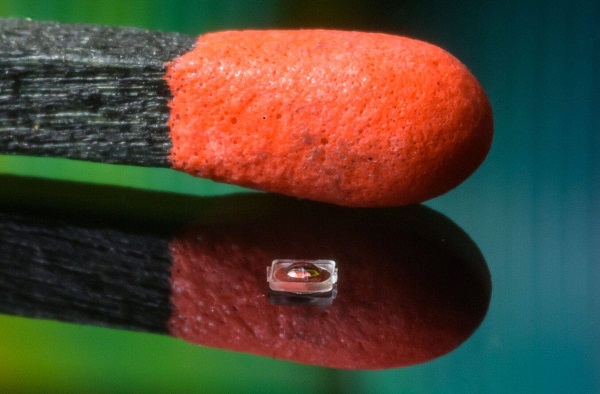
Micro Molding Revolution: Unlocking the Potential of Liquid Silicone Rubber
Material selection is rarely a random matter in micro production, where tolerances are measured in microns and part operation frequently depends on the unseen. Liquid silicone rubber (LSR) is one of the materials that contributes the most value — or complication — to this field. Its specific qualities make it indispensable for vital applications in the electronics, medical, and microfluidic industries; yet, these same qualities also pose serious molding issues, particularly at the microscale.
Micro molding is a challenging field in and of itself. It necessitates a delicate balancing act between metrology, material knowledge, process control, and tool design. The production environment gets much more complex when LSR is taken into consideration. Miniaturizing conventional LSR procedures is not enough to successfully mold LSR components at the sub-gram scale; a completely new strategy based on accuracy, experience, and a thorough comprehension of the material’s behavior under pressure is needed.
WHY LIQUID SILICONE RUBBER?
LSR is a two-part, thermosetting elastomer that is cured using heat. It is chemically inert, UV- and temperature-resistant, biocompatible, and durable, with excellent mechanical properties. It is widely used for components that need to flex, seal, insulate, or endure hostile environments.
What makes LSR especially appealing for micro applications is its ability to flow into extremely fine features and maintain tight tolerances once cured. It also bonds well to a variety of substrates, making it ideal for over-molding or insert molding in complex assemblies. In the medical space, its biocompatibility, resistance to degradation, and soft touch make it perfect for implantables, diagnostics, and wearable technologies. In electronics, it offers excellent dielectric properties and environmental sealing. But molding it at the micro scale is anything but straightforward.
THE MATERIAL CHALLENGE
Processing LSR differs radically from thermoplastics. Unlike materials that soften with heat and solidify upon cooling, LSR remains liquid until it is heated to cure, meaning the mold must be kept hot, not cold. The material is pumped in two parts that must be precisely mixed just before injection, and its low viscosity allows it to flow into the smallest crevices, which — at the micro level — can be both a benefit and a liability.
LSR’s tendency to flash is particularly problematic in micro molding. Flash (the unwanted seepage of material into parting lines or around cores) is a common issue with silicone and can be especially pronounced in cavities designed for parts that weigh less than a gram. Even the tiniest amounts of flash can cause functional or cosmetic failure in micro parts, particularly in medical or optical applications.
Moreover, the thermal cure profile of LSR demands exact timing and temperature control. An under-cured part can exhibit tackiness and weak mechanical performance. An over- cured part can become brittle. The curing process is irreversible, there are no do-overs once a shot goes into the mold.
TOOLING
Mold design is the single greatest determinant of success in micro molding LSR. Precision tooling must anticipate and accommodate the unique flow and curing behavior of LSR, especially in features that may be smaller than a human hair.
Material selection for the mold tool itself, often stainless steel to resist wear and high temperatures, must balance dimensional stability with thermal conductivity. Venting requires a fine line between effective air displacement and the risk of flash. And the gating strategy must ensure even, complete fill without introducing turbulence, bubbles, or premature curing.
Unlike larger-scale molding, where minor variations can often be absorbed, micro molds require micron-level precision throughout the cavity, gate, and ejection system. At this scale, even slight misalignments can result in scrap or tool damage. That’s why many successful LSR micro molding operations rely on fully in-house tool design and fabrication, allowing tight integration between design intent and tool performance.
PROCESS CONTROL AND CONSISTENCY
Beyond tooling, micro molding LSR demands a rigorously controlled and repeatable process. Material must be mixed consistently, delivered cleanly, and cured uniformly. Any deviation in shot size, fill time, or cavity temperature can lead to rejects.
This requires sophisticated injection systems designed specifically for LSR, capable of dosing accurate shot sizes, maintaining uniform temperatures, and minimizing shear and air entrapment. Additionally, mold temperature must be maintained within narrow limits to ensure curing occurs only within the cavity and not in the runners or nozzle.
Cycle times can be longer than with thermoplastics due to the thermal cure, but throughput must still be optimized, especially in high-volume applications. Here, process stability becomes the foundation of cost-effective scaling. It’s not enough to mold one good part. You need to mold millions with the same precision.
THE VALUE OF INTEGRATION
One often-overlooked success factor in micro molding LSR is the importance of integrating design, tooling, molding, and validation under one roof. The more seamless the collaboration between these functions, the better the result. When these disciplines are siloed (when tooling is outsourced or metrology is an afterthought) key feedback loops are lost. But when they work together from the start, challenges can be addressed proactively. A cavity vent might be adjusted during tool build, a feature reoriented during DfM review, or an inspection criterion added during development, all of which mitigate risk and improve yield.
This approach is essential for LSR projects, where tooling costs are high, part validation is rigorous, and the ability to iterate quickly is key to success.
WHERE LSR MICRO MOLDING DELIVERS VALUE
The practical applications of micro molded LSR are growing rapidly. In medical devices, micro diaphragms, valves, gaskets, and soft over-molded inserts are enabling new generations of minimally invasive surgical tools, implantables, and wearable health tech. LSR’s resistance to sterilization processes and its skin-safe properties make it a natural fit for components that require both precision and biocompatibility.
In microfluidics, LSR is used to create flexible membranes and channels within diagnostic cartridges, controlling fluid flow, pressure, and mixing in systems that measure volumes in microliters or less. In electronics, LSR provides insulation, protection, and vibration damping for sensitive micro components. Over-molded LSR buttons and seals are also found in handheld and wearable electronics, where tactile feel and environmental resistance are essential.
Even in optical and sensing applications, transparent grades of LSR are being used for micro lenses, light guides, and encapsulation of photonic components, taking advantage of LSR’s clarity, durability, and ease of molding into complex geometries.
MASTERING THE MATERIAL
What becomes clear when working with LSR at this scale is that success is not just about having the right equipment. It’s about having the right experience, knowing how to design for the material, how to machine tools that can handle its quirks, and how to maintain process discipline over thousands or millions of cycles.
LSR demands respect. It offers no shortcuts, no forgiveness for sloppiness. But when its properties are fully understood and harnessed, it becomes a gateway to performance levels that other materials can’t match, especially in parts that need to stretch, seal, or survive inside the human body.
#MicroMolding #Modernplasticsindia #Pasticsnews #ModernPlasticsIndiaMagazine
#PrintPublication #PrintMagazine #Modernplasticsasia

