20.9 C
Korea
Wednesday, July 15, 2026
Home Blog Page 122

“Chemical Recycling is Still in Its Infancy, But Has Huge Potential”

“Chemical Recycling is Still in Its Infancy, But Has Huge Potential”

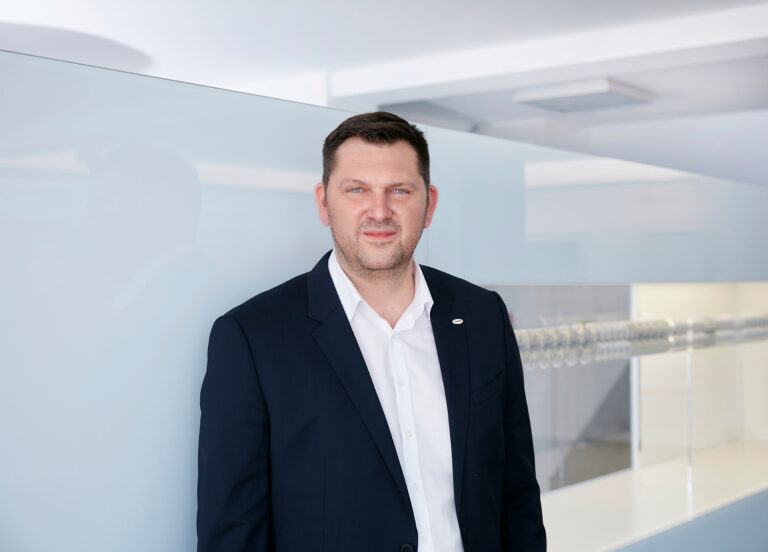
Industry Interview with Jochen Schofer, Head of Sales of the Recycling Business Unit at Coperion GmbH

Mr. Schofer, what contribution can chemical recycling make to the circular economy?
In principle, it can make a big contribution. But it only works properly together with mechanical recycling. And it will only work if the circular economy is accepted not just in Germany or Europe, but throughout the world. In many parts of the world however, there are still either only fragmented waste collection systems, depositing systems and similar systems, or none at all, that are able to generate a sufficient waste stream for recycling. At the moment an increasing number of large corporations are jumping on the chemical recycling bandwagon, all of them operating internationally. There is hope that they will contribute considerably towards the implementation of the necessary infrastructure in all parts of the world.

Chemical recycling has huge potential. The results that have been achieved so far are very promising. Nevertheless, chemical recycling is still in its infancy, while mechanical recycling is already established. Chemical recycling has particular potential because there are many plastics that cannot be processed mechanically, and more and more will be added. For example, in the construction sector, think of the many mixed plastics that are released when a house is demolished, or in the automotive industry. That is precisely why chemical recycling has to make a big contribution to the circular economy.

In which areas is chemical recycling superior to mechanical recycling? The major advantage of chemical recycling over mechanical recycling is that it can be used to recycle all types of plastic. You no longer need a single type of material stream, as you do with mechanical recycling – for example, only polyethylene or polypropylene. Chemical recycling can also be used to recycle

composites. However, the prerequisite is that you have a large material stream, because only then can the process be operated economically. Some large plants for chemical recycling with throughputs of up to 25 tonnes per hour are already being planned.

Which recycling method does the machine manufacturer Coperion primarily rely on?
As a machine builder, we have made it our goal to support the plastics industry as best we can on its path to a circular economy. We develop solutions for chemical recycling, mechanical recycling, and even for many other processes, such as solvent-based recycling. Here, two different polymers are separated from each other, and the solvent is degassed in the extruder. We offer technologies for processing all plastic material streams, for well-sorted as well as poorly sorted ones. But the question is whether you put the energy into pre- sorting or, in the case of chemical recycling, into processing the oil quality afterwards. Because the worse the product to come out of the reactor, the more processing it requires. Here, too, it’s all about economic efficiency in the end.
Because the chemical recycling process is very energy-intensive, it is advisable to focus more on the upstream steps in the case of high throughputs. For smaller plants, it may also make economic sense to invest in processing the recovered oil.

Were there any technological challenges?
As pioneers in processing technology for virgin plastics, we have modified our product range in such a way that we can also serve the recycling market with innovative solutions. In recycling, we deal with contaminated materials, low bulk weights or high moisture contents. Therefore, we have made many developments, adjustments and optimisations to our technologies. Especially for chemical recycling, for example, we have developed a new technique that makes it possible to reliably degas chlorides directly in the extruder.

Will the waste problem be solved through the circular economy?
Both systems, mechanical and chemical recycling, are not silver bullets. Both make a great contribution to solving our waste problem, but much more needs to be done. Above all, product design should completely avoid poorly recyclable plastics. Because if more and more poorly recyclable plastics enter the market, they threaten to end up being burned instead of recycled. A great contribution would therefore be to simply not produce and use the poorly recyclable plastics in the first place. That should be our first goal for a functioning circular economy.

www.vdma.org


#vdma #modernplasticsindia #indianplasticmagazine #modernplasticsaward #plasticnews #modernplasticsgermany #ginujoseph #modernplastic #plasticindia  #plasticrecycling #sustainability #modernplasticsglobalnetwork #modernglobalnetwork #modernplasticsaward2023 #plasticmagazine #PlasticIndustry  #modernplasticsmiddleeast #indianmagazine #innovations #modernplasticsamerica #modernplasticsbangladesh #modernplasticsasia #modernplasticsitaly
The Full Range of Advanced Masterbatch Technology

The Full Range of Advanced Masterbatch Technology

Tosaf will be presenting their latest developments in masterbatches for applications ranging from agricultural films to rigid and soft packaging and technical parts on stand B4-4402 in hall B4. For example, Tosaf’s new additives for contour-sharp laser marking are also suitable for transparent plastics in a wide range of applications. Also in focus are a new masterbatch carrier system with approval for direct food contact as well as masterbatches to produce light-diffusing elements, for example for covers of LED lights. Adapted to growing sustainability requirements are blowing agents for foamed plastics that help to reduce the ecological footprint, as well as colour and functional masterbatch solutions for compounds containing recycled materials.

Contour sharp marking with the laser beam

A new laser additive family from Tosaf can be used for transparent applications without affecting the optical properties. It enables contour-sharp, high-contrast markings on thermoplastics that originally show poor or no colour change during laser marking, as well as on compounds with fillers such as calcium carbonate, talcum, titanium dioxide or carbon black. Depending on the substrate, optional settings for marking colours ranging from white to grey to black are possible. Since very low dosages are sufficient and the laser marking process can be fully automated, the new masterbatches help to reduce production costs compared to conventional processes such as labelling or embossing. By eliminating the need for chemicals, varnishes or stickers, their use is also non-critical and more sustainable. Typical applications include pipes, fittings, profiles and irrigation systems as well as, thanks to their suitability for food contact, caps and closures for beverages and other food packaging. Customised combi-masterbatches are also possible.

Food compliant masterbatch carrier system

A new universally applicable masterbatch carrier system from Tosaf Color Service meets all common food contact requirements, including those in Germany, the USA and China. Masterbatches based on this carrier system can thus be used without hesitation across continents for applications ranging from translucent and opaque materials for rigid and flexible packaging, toys and household items to components for food processing machinery and equipment.

Light diffusing Masterbatches

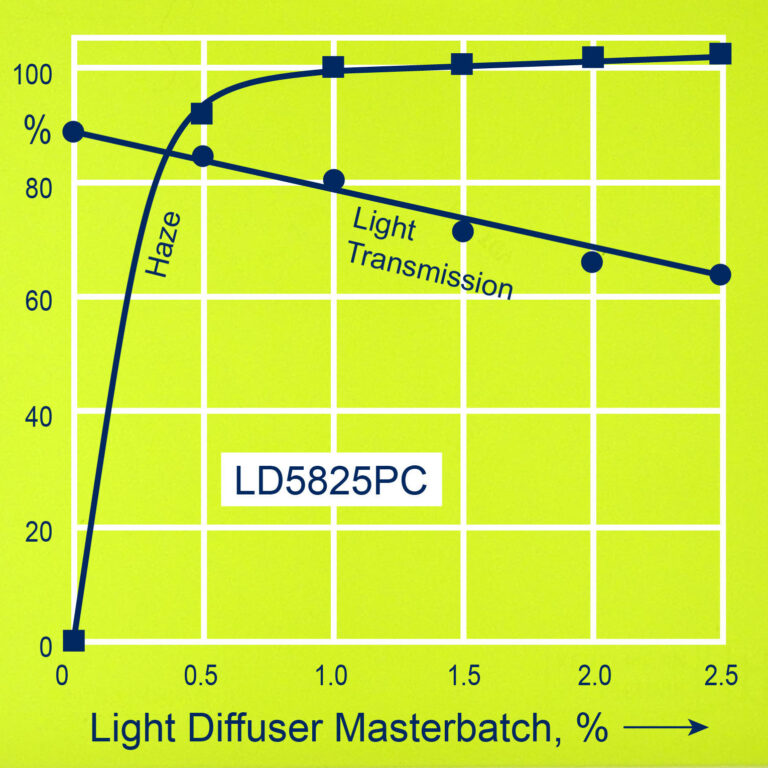
To achieve uniform light distribution even with point-shaped LED light sources, Tosaf Color Service has developed light diffusing (LD) masterbatches that contain microfillers. Even very small amounts in the range of 1 to 2 % result in highly efficient scattering of light in originally transparent material, mainly polymethyl methacrylate (PMMA) and polycarbonate (PC). The light transmission and mechanical properties of the base material are almost completely retained. Both colour-neutral grades and combinations with specific colours and functional additives such as UV stabilisers are available.

Sustainability in mind

In the spirit of the circular economy, Tosaf has developed colour masterbatches specifically for recyclates, with a focus on post-consumer plastics. They compensate for origin-related inconsistencies that are typical for such materials. A special additive masterbatch range from Tosaf is based on biodegradable carriers such as polylactic acid (PLA) and resin (rosin) and gives corresponding agricultural films properties such as increased UV stability, anti-fogging and IR filtering.

Also geared towards sustainability in plastics processing are chemically active blowing agents that Tosaf has developed for the material-saving foaming process. The portfolio includes endothermic and exothermic types for a wide range of thermoplastics. Endothermic grades are considered safe to use, are approved for food contact and generally require relatively low temperatures for activation. Their applications range from thin-walled films and moulded parts with high surface quality as well as PP tapes to XPS and XPE trays for food packaging and large and thick-walled parts. The exothermic grades combine a high foaming effect with very good dispersibility. Exothermic and endothermic blowing agents combined in one concentrate are particularly suitable for PVC applications such as sheets, profiles and pipes.

Beyond colour and foaming agents, Tosaf’s portfolio includes other additives that can contribute to greater sustainability, including antioxidants, moisture and odor absorbers, processing aids and chain extenders.

www.konsens.de


#konsens #modernplasticsindia #indianplasticmagazine #modernplasticsaward #plasticnews #modernplasticsgermany #ginujoseph #modernplastic #plasticindia  #plasticrecycling #sustainability #modernplasticsglobalnetwork #modernglobalnetwork #modernplasticsaward2023 #plasticmagazine #PlasticIndustry  #modernplasticsmiddleeast #indianmagazine #innovations #modernplasticsamerica #modernplasticsbangladesh #modernplasticsasia #modernplasticsitaly
Lightweight But With a Substantial Effect

Lightweight But With a Substantial Effect

  • Krones wins German Packaging Prize in the “Sustainability” category
  • The jury gave the accolade to the ShoulderFlex bottle weighing a mere 5.9 grams

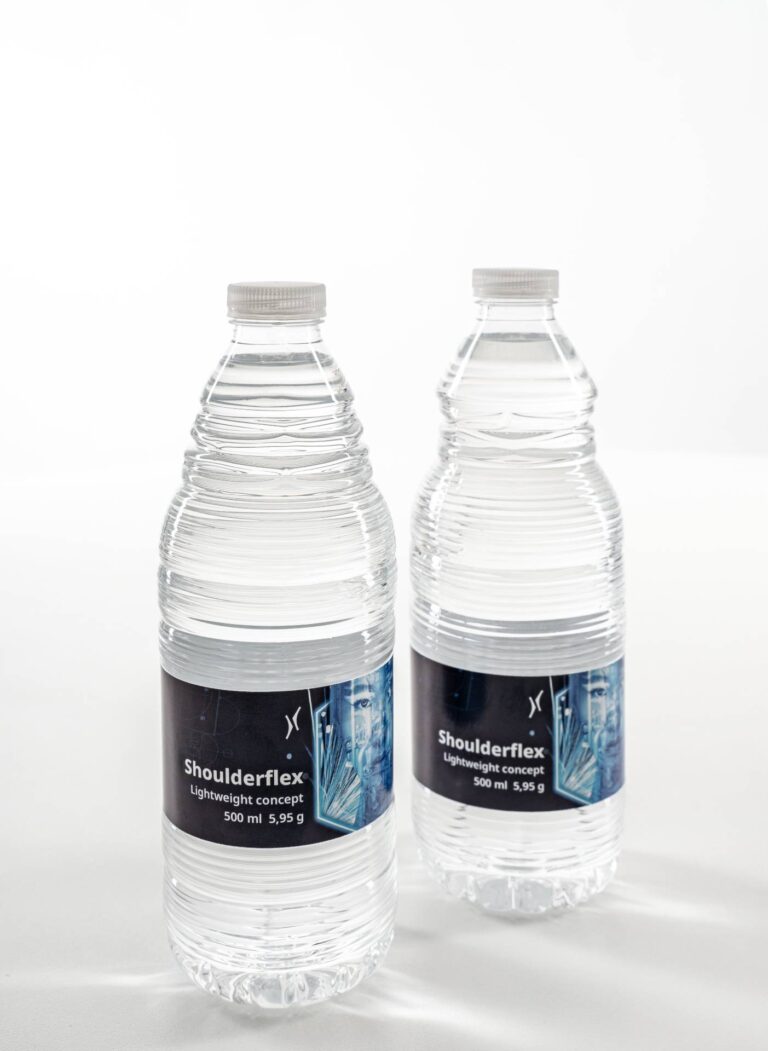
5.9 grams – The extremely low weight of the ShoulderFlex bottle was the deciding factor for this year’s jury of the German Packaging Prize in the “Sustainability” category. That is because the ShoulderFlex makes a crucial contribution towards reducing the carbon footprint of water bottlers by yielding material savings of up to 50 per cent compared to conventional 0.5-litre water bottles on the market.

Krones’ revolutionary bottle design can be used to make containers that are sustainable and weigh very little, but its advantages are also apparent during the bottle production and processing stages. The bottles have excellent stackability even without the stabilising effect of nitrogen pressurisation, with a filled topload of up to 40 kilograms.

“One of the key messages in Krones’ vision is the responsible use of packaging materials. And that includes developing sustainable packaging solutions that are not only resource-economical but also practicable. ShoulderFlex meets those requirements in full,” explain Martin Loistl and Jochen Forsthövel, both members of the development team. “Despite the smaller amounts of PET needed to produce them, these containers are in no way inferior to conventional bottles currently on the market as far as stability and convenience are concerned.”

www.krones.com


#krones #modernplasticsindia #indianplasticmagazine #modernplasticsaward #plasticnews #modernplasticsgermany #ginujoseph #modernplastic #plasticindia  #plasticrecycling #sustainability #modernplasticsglobalnetwork #modernglobalnetwork #modernplasticsaward2023 #plasticmagazine #PlasticIndustry  #modernplasticsmiddleeast #indianmagazine #innovations #modernplasticsamerica #modernplasticsbangladesh #modernplasticsasia #modernplasticsitaly
Chemical Recycling of Polycarbonates Reaches a Major Milestone

Chemical Recycling of Polycarbonates Reaches a Major Milestone

  • Robust process developed on a laboratory scale
  • Pilot-scale technical implementation starts
  • Recycled monomer can be used for the production of polycarbonate

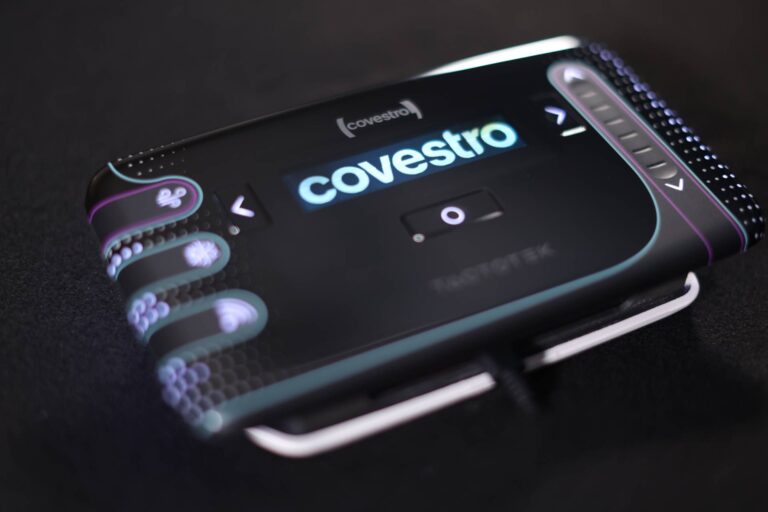
Covestro has developed an innovative process for recycling polycarbonate, i.e. polychain plastics. In this process, plastics are converted back into their monomers, a precursor of plastics, so that they can be fed back into the production process as alternative raw materials. At Covestro in Leverkusen, the technical implementation of chemical recycling is now beginning on a pilot scale. On the way to industrial scale, the process is still being optimized and is undergoing further development stages.

“As a manufacturer of plastics such as polycarbonate, we naturally have a responsibility in dealing with these important materials, including at the end of their product life. Our advantage is: we know how our products are designed and can therefore conduct targeted research into recycling solutions,” says Dr. Thorsten Dreier, Covestro’s Chief Technology Officer. “The chemical recycling of polycarbonate is another example with which our colleagues in development show that closed cycles are possible in the future. We need to use end-of-life plastics as a resource and reuse them as alternative raw materials to close the loop.”


The return of plastics through recycling replaces primary fossil raw materials in production. Comprehensive recycling thus contributes to climate neutrality and the protection of natural resources and the environment. Mechanical recycling of polycarbonate is already an important component of Covestro’s recycling strategy. The mechanical recycling process is used whenever waste streams are sufficiently pure and the recycled polycarbonate meets the requirements profile of the future application.

Chemical recycling works in a complementary way to mechanical recycling – it converts plastic building blocks back into monomers, i.e. their individual building blocks. These can be separated and serve as raw materials for future plastic. Chemical recycling can therefore make larger waste streams that are unsuitable for mechanical processes in particular accessible for recycling; it allows the production of plastics that meet the highest quality requirements. Covestro is therefore actively developing chemical recycling.

Chemolysis can directly close the polycarbonate cycle

The newly developed process, which was driven by an international team, is a specific chemolysis process adapted to polycarbonate. “Pre-sorted waste streams containing a product content of more than 50 percent polycarbonate can be recycled this way. This has been successfully demonstrated with various polycarbonate-containing plastic waste streams,” explains Markus Dugal, Head of Process Technology at Covestro. “With the help of this chemolysis, the cycle can be closed to a direct precursor of polycarbonate. This makes the recycling process very sustainable.”

Direct use of recycled product as raw material possible

The recycled product, a precursor of polycarbonate, can be mass-balanced and reused as a raw material for the production of polycarbonate without further processing. “Such high-quality recycled raw materials are needed for applications that require top quality. These include, for example, applications in the automotive sector with special requirements in terms of safety, optical transparency or aesthetics, and products in our everyday lives such as consumer electronics,” says Lily Wang, Head of the Engineering Plastics Business Entity.

Millions of euros will be invested

Following successful development in the laboratory, the next stage of development, the technical implementation of a continuous process, has already started. A pilot plant, which is currently in the planning stage, will be used to gather the experience needed for further expansion to industrial scale. Millions of euros will be invested in this over the next few years. The pilot plant will be built in Leverkusen, Germany.

At the same time, Covestro is driving forward further processes for innovative recycling of polycarbonate in its research laboratories. These include chemolytic alternatives, recycling with enzymes that break down the plastic, and smart pyrolysis. Promising alternatives can also be tested with the pilot plant.

Plastics are key to sustainable growth and a green future. To ensure that plastic products do not become waste at the end of their life, they must be reused as alternative raw materials. Innovative recycling is one of the four fields Covestro is actively driving forward on the road to a circular economy. Covestro is therefore stepping up its research into recycling methods, with an open approach to technology, and promoting innovative approaches such as chemical recycling.

www.covestro.com


#covestro #modernplasticsindia #indianplasticmagazine #modernplasticsaward #plasticnews #modernplasticsgermany #ginujoseph #modernplastic #plasticindia  #plasticrecycling #sustainability #modernplasticsglobalnetwork #modernglobalnetwork #modernplasticsaward2023 #plasticmagazine #PlasticIndustry  #modernplasticsmiddleeast #indianmagazine #innovations #modernplasticsamerica #modernplasticsbangladesh #modernplasticsasia #modernplasticsitaly

Integrating 3D Printing Into Prototyping & Production Scenarios — An Interview With Iterate Design and Innovation

Integrating 3D Printing Into Prototyping & Production Scenarios — An Interview With Iterate Design and Innovation

At the recent TCT 3Sixty event in Birmingham, 3DPRINTUK ran a competition offering vouchers to be used against the cost of future 3D printing work, which was won by leading design consultancy ITERATE Design and Innovation. Subsequent to this, we have worked with ITERATE to consider the use of 3D printing from the point of view of an eminent design agency, when it is a useful technology to be used in prototyping and production scenarios, and when it is best to bring 3D printing in-house, or to outsource to an expert 3D printing subcontract bureau such as 3DPRINTUK. In this article, we discuss all things 3D printing with Gethin Roberts, Managing Director at ITERATE, and a 20 year plus veteran working in the rapid product development / 3D printing niche.

Q. Can we start by getting a feel for what ITERATE do, and the sort of services that you offer?

GR. Well at ITERATE, I guess we are what would best be described as a dynamic team of design engineers that blends creative and technical expertise in order to develop new products from a design concept right through to production. ITERATE is unique within the industry as we enable customers to be ‘first-to-market’ through specialist knowledge of the discipline of Rapid Product Development. After studying a Masters degree in Rapid Product Development and spending a decade working in manufacturing I identified that many businesses are slow to respond to market demands as they take too long to conceive new products. As a result, I developed the ‘RPD Pathway’, which focuses on removing many of the barriers that prevent new products from getting to market. By following this stage-by-stage process, ITERATE can create exciting product experiences within a compressed time-frame, which helps customers to better manage their risk. Using this proven approach, we have successfully developed an array of products for the technology, consumer, industrial and healthcare sectors.

Q. Within this rapid product development framework, how fundamental is 3D printing / additive manufacturing, and how do you as a company use it?

GR. 3D Printing is at the forefront of our business. Every product we develop goes through an extensive phase of rapid prototyping in order to validate the design and prove every element; from its aesthetic appearance to its mechanical performance. We have an extensive in-house array of AM technologies that include Fuse Deposition Modelling (FDM) and Stereolithography (SLA) as well as injection moulding. Each process offers different strengths and should be applied based on individual customer requirements. For example, FDM leverages engineering polymers such as ABS, PC and PA6; however, surface finish is limited due to its layer upon layer bonding method. SLA utilises light cured polymers that perform less like engineering polymers; however, its laser based system enables a very high degree of accuracy to be achieved. Through a number of our production partners, we are able to offer additional processes such as vacuum casting, which is ideal for batch production of your product and will provide fantastic likeness to a fully manufactured item.

Q. So when you look at how you leverage AM in the product design process, what advantages does it offer over traditional manufacturing processes and do you still use those, or is it now very much AM being the go to technology when you’re looking at prototyping and production runs?

GR. Yes, we do still use traditional methods. It depends on the nature of the product we are working on. There are some really nice applications where we do actually use AM as the production method. But I think it is important to view AM realistically. It fits within a rapid product development process, just one of a number of tools and management processes that must work together to achieve timely and cost-effective new product introductions. Used in isolation, it can produce parts quickly. But unless you focus on streamlining the whole product development process this may mean you just end up with a part sitting on your desk for weeks waiting for other process steps to catch up. At ITERATE we do have in-house desktop SLA and FDM technologies, but these are only used for part validation, to check if parts fit together etc…, but they are not suitable for volume production. For this step we typically outsource to a qualified expert 3D printing subcontract bureaux.

As a company, we do a lot of work in the wearables sector. One customer we have been working with for five or six years, and during that time their product has evolved massively, with maybe 20 or 30 iterations over the period. For this client, all production is via AM, as it would be financially suicidal to retool every time a new iteration was developed. 3D printing is a perfect fit for product development in such dynamic sectors. It has afforded this company the ability to be able to introduce a small batch (maybe a few hundred), go to market, get customer feedback, and then respond with agility to changing customer or market requirements. Traditional manufacturing wouldn’t have allowed, so AM has really provided them with a competitive edge, and has allowed them to enter new markets at low risk.

Q. So obviously you’re playing on the agility of the manufacturing technique there, but how about its ability to promote design freedom?

GR. Absolutely, that’s of huge importance. The wearables product I’m talking about could not be manufactured using traditional production methods. It just wouldn’t have been possible because of the geometry and if using traditional processes would have to have been designed in a completely different way.

Q. So from your client’s perspective, the ability to offer AM as a production process, opens up all sorts of innovative possibilities for them?

GR. Yes definitely. If you put the production time savings by using AM to one side, I think the design time to actually create something for AM requires less thought in many ways than if you are designing for say injection moulding or casting. There are design rules for AM, but they are not so onerous. You can design, make a part, revise, make another part etc.. etc.. and so ultimately design time itself is considerable faster.

Q. Do you find there are limitations to the technology as well?

GR. Yes, surface finish is one, they still often still look like printed parts in my view. You know, they’re not looking as good as moulded parts.

Q. That plays obviously to a big issue at the moment in the sector, which is post processing. When you select a bureau, do you interrogate them about the post processing technologies they have?

GR. Yes, we often have that conversation. It is vitally important now when we are using AM to produce end-use production parts.

Q. What else informs your decision to choose one subcontract bureau over another?

GR. I wouldn’t underestimate the importance of delivery times, because that’s been a huge problem for us lately. Particularly with Brexit. Some 3D printing agencies are sintering most of their parts in continental Europe. That’s a pain as it adds hugely to the delivery time. For some of our customers they require parts a maximum of 48 hours after design completion. 5 days is impossible, but is increasingly what some prominent players are offering. Cost is also important, but I would argue today perhaps a close second to delivery times.

Q. In general terms, what level of understanding of AM do customers have when they work with you. Do they see it as a magic bullet, or today, do they understand that its usefulness needs to be curated intelligently?

GR. There are so many more of our customers today that have actually got 3D printers in-house. And so they’ll come to us and they might have a proof of concept that they think is suitable, but in many instances this is not enough. The wrong material may have been selected for example, or the part is being built in a sub-optimal way in the 3D printer, causing it to fail in certain areas. So I think that certainly people understand the benefits of AM more than they ever have, but beyond dabbling, they need the intervention of experts like us and 3DPRINTUK to optimise outcomes.

Q. Finally, in terms of what you’re doing, what would tip the balance for you to actually invest in the machines to fulfil AM production in-house?

GR. I don’t feel that we could be as efficient as a company that’s doing it every single day like 3DPRINTUK. We use bureaux so we can focus on what we do well, designing products. And you know, by using bureaux, we don’t have to worry about setting up the machine, optimizing parameters, getting into a whole load of things that we probably could if we wanted to, but we’ve got so many other things to be getting on with.

www.3dprint-uk.com


#3dprintuk #modernplasticsindia #indianplasticmagazine #modernplasticsaward #plasticnews #modernplasticsgermany #ginujoseph #modernplastic #plasticindia  #plasticrecycling #sustainability #modernplasticsglobalnetwork #modernglobalnetwork #modernplasticsaward2023 #plasticmagazine #PlasticIndustry  #modernplasticsmiddleeast #indianmagazine #innovations #modernplasticsamerica #modernplasticsbangladesh #modernplasticsasia #modernplasticsitaly
More Efficiency, Digitalisation, Safety and Health With Messer Technology

More Efficiency, Digitalisation, Safety and Health With Messer Technology

Cutting and digitalisation solutions increase productivity

The World’s international experts in gouging, cutting and coating will gather this year from September 11th to 15th at the SCHWEISSEN & SCHNEIDEN in Essen – the number 1 meeting point. The cutting experts from Messer Cutting Systems also could not fail to be there. Together with their colleagues from Messer Gas they will be presenting their newest innovations and tried and tested solutions for process optimisation in cutting technology. Efficiency, digitalisation, decarbonisation, safety, health protection – a rich, multifaceted programme awaits the fair visitor on the joint stand B13/23 in Hall 8 on about 530 m².

One of the main attractions from Messer Cutting Systems on the SCHWEISSEN & SCHNEIDEN will be the live demo of the ELEMENT 400. Equipped with oxyfuel and plasma technology as well as two additional marking tools, this thermal cutting machine is suitable for the largest variety of applications with the highest quality demands. The plasma bevel head Bevel-S promises maximum flexibility: complex contours, holes of bevels for weld preparations can be cut effortlessly. What is more, the platform makes high speed marking with proven and robust tools possible for fast and simple identification of various materials.

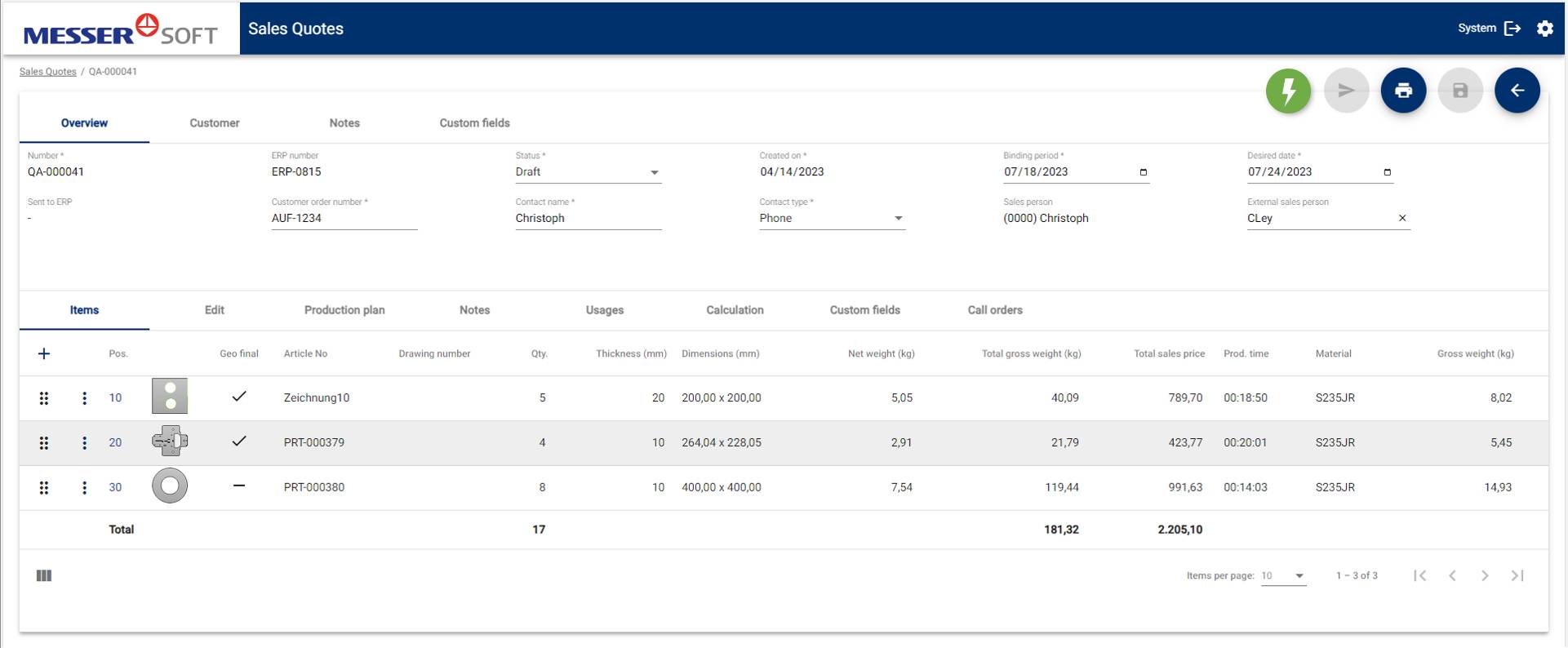
With the new version of OmniFab Sales Quotes you can nest your offers automatically and send them straight to the machine as an order.

Optimum conditions for automation in laser cutting technology

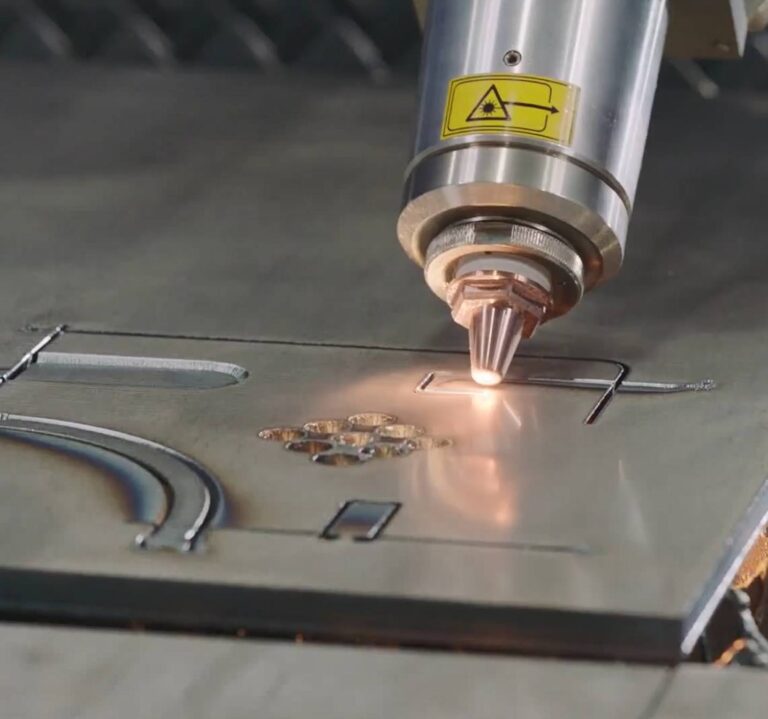
Automation is the key to increased productivity and the answer to the challenges of our time, such as lack of skilled personnel and resources. With its newest developments in laser cutting technology, Messer Cutting Systems has created outstanding conditions for successful automated production and is presenting these at the SCHWEISSEN & SCHNEIDEN. Often it is small things which bring the decisive advantage, for example in handling: To be able to handle components better after processing, Messer Cutting Systems have made it possible, for example, to leave micro bridges between the cut parts and the scrap frame. Thus, each part does not have to be picked up separately, rather the plate can be removed as one piece with a loading/unloading system or a shuttle table. This significantly reduces non-productive times. The bridges are so fine that they can be separated easily from the frame later.

Whoever wants to experience the laser cutting machine ELEMENT 400 L in action should also visit the Messer Cutting Systems stand. The experts will switch over to the factory in Groß-Umstadt for a live demonstration, to present the visitor with the remarkable dynamics and newest laser technology for the economical processing of XXL sheets.

Bring orders into production faster and more economically

Production planning brings an astonishingly large potential for increasing the efficiency in production significantly, simply and fast. Messer Cutting Systems demonstrates with an exhibition premiere at the SCHWEISSEN & SCHNEIDEN impressively how this can be achieved excellently and with little effort.

With the new version of OmniFab, the software suite for the digitalisation of production, cutting jobs can now be directly placed on the machine from the pre-calculation of customer quotations. With automatic component nesting, the step of CAD/CAM nesting software can be shortened or even completely bypassed. This increases the speed and significantly accelerates the process from submitting quotations to starting the order in production. For some applications this is a revolutionary and new way of working. It is made possible by the direct linking of the software to the Global Connect machine control. With the integration of the CAD/CAM software OmniWin, nesting plans can now also be transferred in real time to the machine. The user saves significant time, especially through the automatic pre-selection of all the parameters necessary for production.

As well as the emphasis on work preparation, the visitor to the fair will also experience on a total of four workstations how the digital solutions for production gain additional competitive advantages and make it easy to enter Industry 4.0.

More safety in oxyfuel technology with S.A.T.

Visitors to the SCHWEISSEN & SCHNEIDEN fair can also experience live and close up the complete world of oxyfuel equipment from Messer Cutting Systems with various combination torch systems for welding, brazing, heating, flame straightening and cutting. With the innovative new development S.A.T. (Safety Advanced Technology), the cutting experts will offer a special live demo highlight. The system contributes proactively to safety of users and workshops in that it automatically shuts off the gas feed should pressure drop, extinguishing the torch.

Sustainability with Messer Gas Solutions

The welding and cutting experts present on their joint stand innovative and proven gas solutions for process optimisation. With new gas mixtures and technologies from Messer, users can increase efficiency, increase safety, and improve their environmental balance.

A further focus is placed by Messer Cutting Systems on the hand plasma systems PLASMA CUTTER 75 and 125 in combination with the STABLECUT.

Sustainable production, health and operating protection and reduction of the CO2 footprint are increasingly the focus today. At the same time economical and productive solutions are as important as ever. This also has its effect on cutting technology and the selection of cutting gasses. HyCut is here a new, powerful and sustainable alternative to conventional oxyfuel application technology. On their joint stand there will be a quite special highlight for this: Messer and Messer Cutting Systems will present live at various stations which possibilities and advantages arise with HyCut.


#MesserTechnology #modernplasticsindia #indianplasticmagazine #modernplasticsaward #plasticnews #modernplasticsgermany #ginujoseph #modernplastic #plasticindia  #plasticrecycling #sustainability #modernplasticsglobalnetwork #modernglobalnetwork #modernplasticsaward2023 #plasticmagazine #PlasticIndustry  #modernplasticsmiddleeast #indianmagazine #innovations #modernplasticsamerica #modernplasticsbangladesh #modernplasticsasia #modernplasticsitaly

GPCA Signs Mou With GCC Accreditation Center (GAC) In Historic Industry Milestone

GPCA Signs Mou With GCC Accreditation Center (GAC) In Historic Industry Milestone

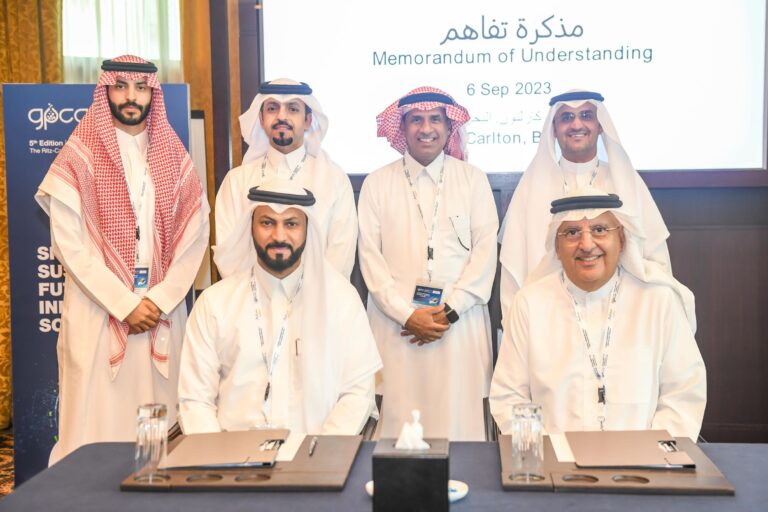
The Gulf Petrochemicals and Chemicals Association (GPCA), the voice of the chemical industry in the Arabian Gulf, has signed a Memorandum of Understanding (MoU) with the GCC Accreditation Center (GAC) to collaborate in the area of conformity assessment and accreditation and develop sustainable solutions for the petrochemical and chemical industry in the GCC region that will contribute to establishing a robust quality infrastructure.

The MoU will establish a framework that aims to improve the efficiency of conformity assessment processes in the region and ensure that chemical and petrochemical products and processes meet specified standards and regulations. Additionally, it is aimed at streamlining accreditation procedures, fostering conformity across various certification activities, and establishing a robust quality infrastructure within the GCC region.

Recognizing the critical importance of environmental preservation, the MoU highlights a shared commitment by both GPCA and GAC to combatting plastic waste. The agreement will involve the adoption of an efficient plastic pellets, flakes and powder management scheme to address plastic material leakage and safeguard marine environments and marine wealth regionally and globally, underlying GPCA members’ commitment to the Operation Clean Sweep program and foster a sustainable and circular plastic economy.

Dr. Abdulwahab Al-Sadoun, Secretary General, GPCA, commented: “I welcome this valuable partnership with the Gulf Accreditation Center which marks a significant milestone in the history of the region’s chemical and petrochemical industry, underlying its commitment to accountability, transparency and compliance. Together we will collaborate closely on raising the bar and welcoming a new era in conformity assessment and accreditation across the industry in the region.”

Eng. Moteb Al-Mezani, Director General of GAC, commented “We are thrilled to support the initiatives of the Gulf Petrochemicals and Chemicals Association (GPCA) and contribute with GAC internationally recognized accreditation services to achieve the goals of this Memorandum of Understanding that reflects our joint dedication to fostering excellence and sustainability in the chemical and petrochemical industry within the GCC region. Together, we will pave the way for a future marked by accountability, transparency, and compliance, ensuring that our industry meets the highest standards and contributes to a cleaner, more environmentally responsible world.”

www.gpca.org.ae.

#modernplasticsindia #indianplasticmagazine #modernplasticsaward #plasticnews #modernplasticsgermany #ginujoseph #modernplastic #plasticindia  #plasticrecycling #sustainability #modernplasticsglobalnetwork #modernglobalnetwork #modernplasticsaward2023 #plasticmagazine #PlasticIndustry  #modernplasticsmiddleeast #indianmagazine #innovations #modernplasticsamerica #modernplasticsbangladesh #modernplasticsasia #modernplasticsitaly  #cortecadvertising
Insert Moulding Machine BOY 35 E VV at the MSV in Brno / Czech Republic

Insert Moulding Machine BOY 35 E VV at the MSV in Brno / Czech Republic

At the 64th MSV International Engineering Fair, the German machine manufacturer and its Czech partner 1.PLASTCOMPANY, spol. s.r.o. will present a BOY 35 E VV in hall G1 / booth 19 and 20. The fair will take place in Brno, the second largest city in the Czech Republic, from 10th to 13th October 2023.

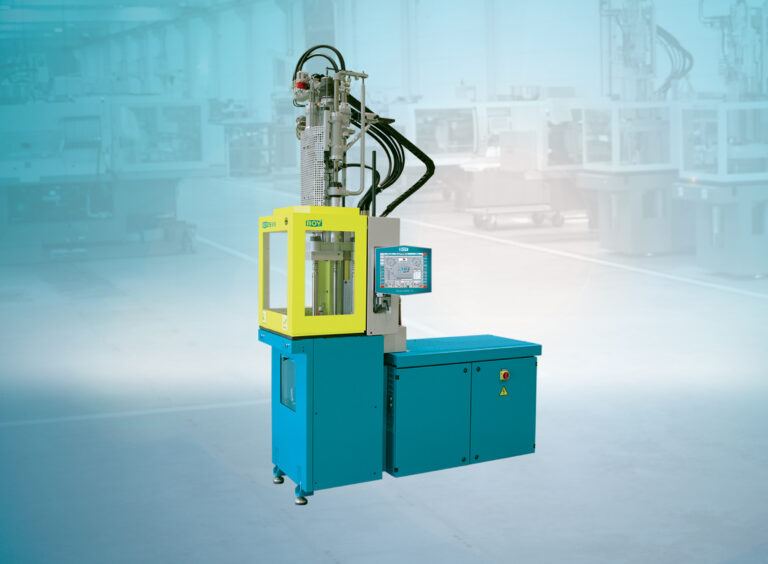
Key areas of the MSV are the topics Industry 4.0 and Digital Factory, i.e. digitalisation in production, one of the most important trends in the innovation process. Another topic is the circular economy – the handling of material resources, which is a high priority for the sustainable development. BOY attaches great importance to these topics and tries to implement them steadily and sustainably (see photo).

At the trade fair booth, the BOY 35 E VV will overmould torque wrenches. The BOY 35 E VV with vertical clamping and injection unit corresponds to a horizontal machine in its basic concept – only the injection and clamping unit have been arranged vertically by a 90° rotation. On all BOY insert moulding machines the lower clamping platen is fixed, thus preventing the insert parts from slipping during the clamping process. Shot weights up to max. 69.5 g (PS) for high-precision applications, compact dimensions, ample space for peripheral equipment on the machine frame and the possibility to also use smaller injection units make the BOY 35 VV the ideal solution for fully automatic insert moulding.

“Cooperativeness, professionality and technical knowledge are always in the first place for us. We specialise in the supply, assembly and service of mechanical-technical equipment for the plastics processing and its recycling,” underlines 1.PLASTCOMPANY, spol. s r.o., a company with a family tradition and a friendly team that has been working with BOY since 2005.

For further information visit http://www.dr-boy.de/


#drboy #modernplasticsindia #indianplasticmagazine #modernplasticsaward #plasticnews #modernplasticsgermany #ginujoseph #modernplastic #plasticindia  #plasticrecycling #sustainability #modernplasticsglobalnetwork #modernglobalnetwork #modernplasticsaward2023 #plasticmagazine #PlasticIndustry  #modernplasticsmiddleeast #indianmagazine #innovations #modernplasticsamerica #modernplasticsbangladesh #modernplasticsasia #modernplasticsitaly
Molecor (SEA) Sdn Bhd Will Participate in Thai Water from August 30th to September 1st 2023

Molecor (SEA) Sdn Bhd Will Participate in Thai Water from August 30th to September 1st 2023

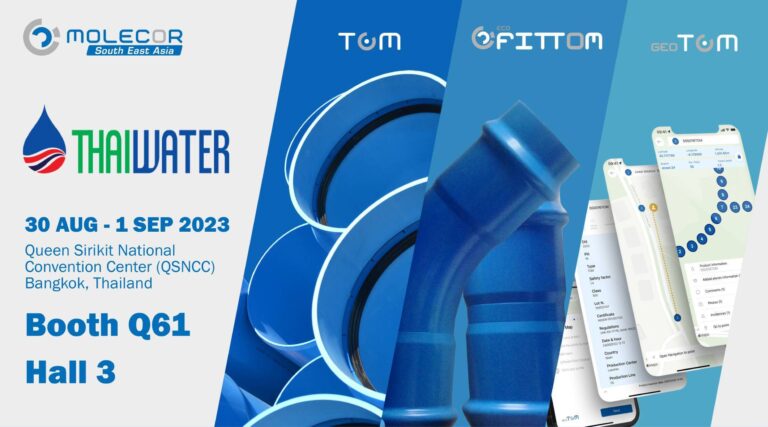
A new edition of Thai Water Expo will take place at the Queen Sirikit National Convention Center (QSNCC) in Bangkok, Thailand, from August 30th to September 1st 2023 and Molecor (SEA) Sdn Bhd will be on booth Q61 in Hall 3 with the latest innovations in the world of PVC oriented pressure piping. New diameters for TOM pipes, the ecoFITTOM range of fittings in PVC-O, the geoTOM application to geolocate pipeline networks and much more.

Thai Water Expo is the reference event for the water supply and sanitation management sector in the country. In its previous edition, the fair welcomed more than 10,000 visitors from more than 31 countries, both from the public and private sectors, during the three days it was held.

The fair offers a unique opportunity to learn about the latest developments in the sector and the new technologies that are reinventing water channelling and creating solutions for a more efficient and sustainable world. Molecor’s alignment with these values can be seen in the products presented at the fair.

The company’s continued commitment to oriented PVC has enabled it to develop an exclusive manufacturing process using air instead of water, which reduces the environmental impact of its manufacture and has broken the limits that previously restricted the use of the material. This has led to the production of TOM pipes, the only oriented pipes manufactured in nominal diameters from 90 to 1200 mm and ecoFITTOM, the first fittings produced entirely from oriented PVC to apply the advantages of the material to more parts of the water pipe network.

In addition, geoTOM, an application for digitalizing and geopositioning water piping projects in a simple and intuitive way, will be available for demonstration at the fair. The software developed exclusively by Molecor allows users to quickly obtain all the technical information of each of Molecor’s parts and enter the data of any other part, regardless of the manufacturer and product material, to manage networks efficiently. It also allows users to add comments, photos, manage incidents and much more.

www.molecorsea.com


#molecorsea #modernplasticsindia #indianplasticmagazine #modernplasticsaward #plasticnews #modernplasticsgermany #ginujoseph #modernplastic #plasticindia  #plasticrecycling #sustainability #modernplasticsglobalnetwork #modernglobalnetwork #modernplasticsaward2023 #plasticmagazine #PlasticIndustry  #modernplasticsmiddleeast #indianmagazine #innovations #modernplasticsamerica #modernplasticsbangladesh #modernplasticsasia #modernplasticsitaly

Foreign Minister of Switzerland visits Archroma in Pakistan

Foreign Minister of Switzerland visits Archroma in Pakistan

Archroma, a global leader in specialty chemicals towards sustainable solutions, was highlighted for its advanced sustainable practices and innovation in Pakistan by the Swiss Embassy. Foreign Minister of Switzerland, Mr. Ignazio Cassis who was on an official state visit to Pakistan visited Archroma Center of Excellence at Karachi on 9 July 2023 along with high-level officials and three Members of Swiss Parliament.

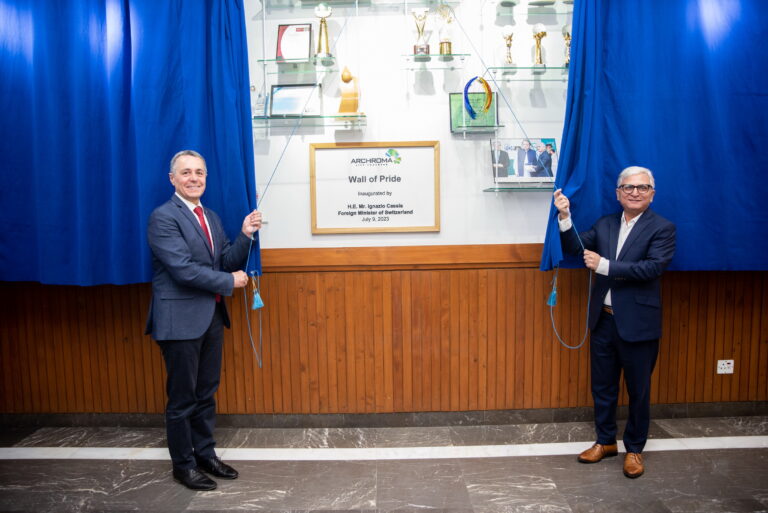
Mr. Ignazio Cassis was greeted by Archroma employees at the Archroma Center of Excellence. He inaugurated the company’s “Wall of Pride”, an impressive collection of recognitions, accolades and honors earned by Archroma in Pakistan since the company’s inception in October 2013.

Foreign Minister of Switzerland H.E. Mr. Ignazio Cassis felicitating Mr. Mujtaba Rahim at the inauguration of “Archroma Wall of Pride”.

Mr. Cassis visited the Research & Technology (R&T), Application, Analytical Laboratories & Training Academy spread on three floors at the Archroma Center of Excellence and saw the developmental work in progress. He was shown printing of multi-colored fabrics along with research based developmental analysis in the laboratories.

The globally acclaimed ‘Zero Liquid Discharge Sustainable Effluent Treatment Plant’ and the aniline-free* indigo produced at Jamshoro were the two of the main highlights showcased as best-in-class sustainable practices in the industry. Presentations and discussions were held on continued enhancement of these landmarks with the local industry.

“Sustainable practices of Archroma are most befitting for a specialty chemical company. We are delighted to get oriented with measures taken by Archroma Pakistan not only towards saving water by Zero Discharge Plant but also combating water pollution by producing aniline-free indigo. High standards of quality in the labs can be compared with any other global institution,” commented Foreign Minister of Switzerland Ignazio Cassis.

“Archroma is a torch bearer in saving natural resources and bringing the advantages of sustainable practices to the industry as well as the local community. The textile industry is emulating our best practices in their mills. We are therefore honored that Ignazio Cassis visited us and appreciated our engagement to transform our industry,” Mujtaba Rahim, CEO of Archroma Pakistan, said in his address.

www.archroma.com

High level delegation from Switzerland at “Archroma Wall of Pride”.


#archroma #modernplasticsindia #indianplasticmagazine #modernplasticsaward #plasticnews #modernplasticsgermany #ginujoseph #modernplastic #plasticindia  #plasticrecycling #sustainability #modernplasticsglobalnetwork #modernglobalnetwork #modernplasticsaward2023 #plasticmagazine #PlasticIndustry  #modernplasticsmiddleeast #indianmagazine #innovations #modernplasticsamerica #modernplasticsbangladesh #modernplasticsasia #modernplasticsitaly