24.5 C
Korea
Thursday, July 16, 2026
Home Blog Page 132

Zygo Announces Uniquely Durable & Repeatable Salt Fog Silver Coating

Zygo Announces Uniquely Durable & Repeatable Salt Fog Silver Coating

Due to unprecedented customer demand, Zygo Corporation — a business unit of Ametek Inc. — has developed a salt fog silver coating that can be applied to silver reflector optics used either in harsh marine salt spray environments or for optics exposed to extreme temperatures (from -62OC to +800C).

Because of the fact that it possesses the highest broadband reflectivity, the lowest emissivity, and the lowest polarization splitting of all metals, silver is used in the most demanding visible and infrared mirror applications such as space-based sensors, and large telescopes. It out-performs gold and aluminum which have lower levels of reflectivity. However, silver is much more prone to atmospheric corrosion, and is easily tarnished and corroded in air —and even more so in harsh environments — which negatively effects its reflectivity and overall optical performance.

Salt fog silver is a silver mirror coating that offers high reflectivity from visible through to infrared wavelengths. A protective layer of salt fog silver is added to standard metallic silver coatings ensuring that optics are better able to resist corrosion and mechanically induced damage.

Standard protective measures are not suitable to protect a silver reflector in a marine environment. Most existing industry solutions are sub-optimal and either exhibit rapid degradation in the field, the formation of pin hole blemishes in the coating, or generally inconsistent performance. For optics typically used in maritime defense applications and in astronomy and top-end research applications, such issues are not acceptable, and a salt fog silver solution is required.

Jennifer Chen, Sr. Product Manager at Zygo says, “Very few coating houses offer a salt fog silver solution, without which numerous applications will fail in the field or suffer from dramatically reduced service life. Zygo began working on salt fog silver coatings back in 2016, driven by the requirements of one particular customer project, but over the last few years has seen a significant increase in interest from customers needing salt fog silver protection to help optical component survival in harsh and extreme environments, or when exposed to particularly low or high temperatures. The salt fog silver coating capability now places Zygo in a strong position as one of the only optics companies in the world that can offer this level of protection to the optics it manufacturers for defense, military, astronomy, and research applications.”

The salt fog silver coating capability is the result of much work undertaken by Zygo’s world-class coating design engineers and technicians who work closely with the company’s optical manufacturing teams. With Zygo also being a pre-eminent supplier of optical metrology equipment, customers can take advantage of a “one stop shopping” advantage, which simplifies the supply chain, reduces program risks, and reduces overall project timelines. Such a vertically integrated supplier is crucial when it is critical that your optical substrate meets operational requirements after a coating is applied.

Chen continues, “There are a very few companies that provide coatings that protect silver reflector optics in harsh environments, and Zygo’s salt fog silver coating exhibits superior spectral performance and spectral uniformity than any alternatives. Our salt fog silver coating is especially durable, passing the adhesion cellophane tape test, and showing no degradation when exposed to 95-100% humidity at 120oF over 24 and 240 hours. It also passed the moderate abrasion test (50 strokes with a minimum force of one pound) and the lifetime operational durability test (-55oC to +55oC at a rate of 4oC per minute for chamber air temperature between extremes, holding at extreme chamber air temperature for one hour for 20 cycles).”

Some customers request extended testing to be able to make an accurate evaluation of the likely service life of a silver mirror coating. This is frequently done via salt spray or salt fog testing, which is a way of measuring the corrosive impact of harsh marine environments on optics. It is standard that components used in harsh marine environments are evaluated to tight military specifications in controlled conditions.


“Chen concludes, “Our salt fog silver underwent an extended 5-day salt fog test, a lifetime storage durability test (-62oC to +80oC at a rate no greater than 5oC per minute between extremes, holding at extreme temperature for 8 hours over 4 cycles), as well as a solubility and cleanability test, which requires immersion in Isopropyl alcohol or methyl alcohol, Acetone, and Ethyl alcohol for a minimum or 10 minutes each. ZYGO’s salt fog silver coating passed all these performance requirements, which when coupled with its high repeatability makes it uniquely a uniquely reliable protection for silver reflector optics. In addition, while ZYGO’s salt fog silver coating has proved highly effective for silver reflector optics, the company continues to research its adherence to other substrate materials.”

To ensure quality for its customers, Zygo maintains complete control over every facet of optics manufacturing from grinding and polishing, to coating and assembly. At each stage of production, skilled opticians meticulously test and verify the components using sophisticated measuring instruments, most of which are designed and manufactured by Zygo. As such the company holds a unique position as a precision optics manufacturer and welcomes the opportunity to discuss its vertically integrated approach to optics development, and how the use of its salt fog silver coating may be beneficial in specific customer applications.

www.zygo.com


#modernplasticsindia #plasticmagazine #indianmagazine #indianplasticmagazine #modernplasticsaward #ginujoseph #modernplastic #plasticindia #plasticnews #plasticrecycling #modernplasticsglobalnetwork #modernglobalnetwork #modernplasticsaward2023 #PlasticIndustry #modernplasticsgermany #modernplasticsmiddleeast #modernplasticsamerica #modernplasticsbangladesh #modernplasticsasia #modernplasticsitaly #gneuss #zygo


Notedome European General Manager, Victor Dias, Based in Hamburg, Germany, Celebrates One Year in This Role.

Notedome European General Manager, Victor Dias, Based in Hamburg, Germany, Celebrates One Year in This Role.

Victor extensively travels across Europe to establish and strengthen NOTEDOME business relationships with European polyurethane moulders and distributors, and he regularly visits the manufacturing facility, technical service laboratory, and the team located in Coventry, UK.

The NOTEDOME focus is to build sales growth on over 40 years of polyurethane knowledge in speciality polyurethane elastomer development and manufacture. With a slogan on why “Compromise when you can Optimise“ the Notedome team use their knowledge and the versaltile chemistry of polyurethanes to develop bespoke systems to meet customer specific applications and process needs

With over 30 years of experience in the field of polyurethane elastomers all over Europe, Victor possesses extensive knowledge and expertise in the industry.
Victor’s multilingual abilities enable him to effectively communicate with individuals at all levels within organizations, from directors to the workforce. His command of languages allows meaningful conversations with NOTEDOME’s partners and customers, and a good understanding of their specific needs and requirements.

Victor Dias’s is committed to fostering strong business partnerships and to facilitating technical support for NOTEDOME polyurethane moulders throughout Europe.

www.notedome.com


#modernplasticsindia #plasticmagazine #indianmagazine #indianplasticmagazine #modernplasticsaward #ginujoseph #modernplastic #plasticindia #plasticnews #plasticrecycling #modernplasticsglobalnetwork #modernglobalnetwork #modernplasticsaward2023 #PlasticIndustry #modernplasticsgermany #modernplasticsmiddleeast #modernplasticsamerica #modernplasticsbangladesh #modernplasticsasia #modernplasticsitaly #gneuss #notedome

Global Players From All Over the World at the Metal Trade Fair Summit 2024 in Düsseldorf

Global Players From All Over the World at the Metal Trade Fair Summit 2024 in Düsseldorf

wire and Tube set new standards

With over 2,000 exhibitors from 65 countries, wire and Tube 2024 will once again impressively assert their position as leading international trade fairs for the key industries of wire, cable, tubes, pipes and their supplier industries.

Over 100,000 square metres of the Düsseldorf Fairgrounds are occupied. Trade visitors from all over the world are expected. With around two thirds of the exhibitors, wire and Tube are among the trade fairs with the highest internationality in Messe Düsseldorf’s portfolio. They come mainly from the strong European production countries, from the USA, Central and South America, Asia and the African continent.

“The Düsseldorf trade fair venue is the absolute front-place for the wire and Tube sectors when it comes to presenting innovations from the relevant industries to a broad, international audience,” says a delighted Daniel Ryfisch, Director wire/Tube & Flow Technologies at Messe Düsseldorf.

In addition to the classic themes such as machinery and equipment for wire, cable and tube production, processing and end products, wire and Tube place a strong focus on topics such as stainless steel, hydrogen, plastic tubes, cutting and slitting technologies and e-mobility. In addition, the topics of fastening and joining technologies, spring manufacturing technology and glass fibre technologies continue to move to the fore.

The main industries here are the chemical, oil and gas sectors, the automotive industry, the construction sector and the entire telecommunications sector.

wire 2024 occupies exhibition halls 9 to 17: wire, cable, wire products and technologies are scheduled in halls 9 to 12 and hall 15. Meet China`s Expertise can be found in Hall 14. Hall 16 will become a special hall for fastening and fixing technologies and for spring making technology, including their end products such as screws, grooves, eyelets and technical springs. This creates an exclusive, separate technology area here. The large area for heavy, space-consuming mesh welding machines will be located in the central Hall 17.

Tube 2024 occupies exhibition halls 1 to 7a: tube accessories, tube manufacturing and the tube trade are located in halls 1, 3, 4, 5, 6 and 7a. A new feature is the special area for plastic tubes in Hall 1, which provides the space for plastic tubes that they currently occupy with increasing tendency in the manufacturing and processing industries.

Forming and bending technology is to be found in Halls 5 and 6, and pipe processing technology in Halls 6 and 7a. Machinery and equipment will follow in Hall 7a. Hall 7 is once again reserved for Chinese pipe producers and pipe processors with Meet China’s expertise.

Numerous specialist forums, congresses and tours such as the international meeting of experts from the sectors, a hydrogen and e-mobility congress, the ecoMetal-trails and the daily after-business-chill enrich the range of events in the exhibition halls and on the open-air site.

www.wire-tradefair.com
www.Tube-tradefair.com


#modernplasticsindia #plasticmagazine #indianmagazine #indianplasticmagazine #modernplasticsaward #ginujoseph #modernplastic #plasticindia #plasticnews #plasticrecycling #modernplasticsglobalnetwork #modernglobalnetwork #modernplasticsaward2023 #PlasticIndustry #modernplasticsgermany #modernplasticsmiddleeast #modernplasticsamerica #modernplasticsbangladesh #modernplasticsasia #modernplasticsitaly #gneuss #wiretradefair #Tubetradefair

Domestic Coal Production Remains On Growth Path in Q1; Prices Ease

Domestic Coal Production Remains On Growth Path in Q1; Prices Ease

Synopsis

  • India’s coal production reached a new milestone of 223.36 Million Tonne (MT) during Q1 FY24, an 8.6% y-oy growth, driven by a 9.8% y-o-y increase in production by Coal India Limited (CIL). This is an all-time high volume of coal produced in India in the first quarter of a financial year. The power sector continued to be the largest consumer of domestic coal, accounting for 82% of the total despatches during Q1 FY24.
  • Total coal imports surged by 14% y-o-y to 47.27 MT during Q1FY24, with non-coking coal accounting for 64% of the imports.
  • Under the seventh round of coal block auction, which commenced in March 2023, about 103 fully explored, partially explored, coking, non-coking, lignite etc. coal mines are being offered. In this round, 35 bids have been received for 18 coal mines.
  • “The domestic coal production remained healthy in Q1FY24 and is expected to reach the government’s target of 1 billion tonnes in FY24, a 13% growth y-o-y, driven by an increase in overall coal production by CIL and captive mines. The Government of India is also taking various initiatives to reduce dependency on imports for domestic demands which are expected to fructify in the medium-long term. The coal prices have cooled off and nearing the pre-pandemic level from the previous year’s high. CareEdge Research expects the coal prices
    to remain muted during this fiscal, however, they will continue to be higher than the pre-Covid-year price averages,” Tanvi Shah, Director, CareEdge Advisory & Research, said.

Domestic Production Witnessed Healthy Growth in Q1FY24

Domestic coal production stood at 223.36 MT during Q1FY24, registering a growth of 8.6% y-o-y. CIL continued to be the largest producer of coal accounting for 78.6% of the total production during Q1FY24. CIL’s production grew by 9.8% y-o-y to 175.5 MT during this period.

Coal production from captive mines increased by 5.7% y-o-y in Q1FY24, contributing 13.8% to total coal production during the quarter. The production from Singareni Collieries Company Limited (SCCL) grew by 1.2% y-o-y in Q1FY24 to 30.8 MT.

Chart 1: Coal Production (MT)

India’s coal production has grown by 47% over the past 9 years to reach 893.08 MT in FY23. Under the Action Plan for FY24 by Ministry of Coal, the production target for FY24 is set at 1.0 BT which is expected to be achieved through improvement in overall production, efficiency and adoption of new technologies. The incremental output is also expected from a ramp-up in the production of operational captive mines and the commencement of production from mines being auctioned by the ministry. The growth is also the result of improvement in efficiency of the coal supply chain ensuring smooth distribution across India.

The Government launched ‘Mission Coking Coal’ in August 2021, under which a target of producing 140MT of coking coal by 2030 has been set compared to production of 60.8 MT in FY23.

The government’s initiatives including the amendment of the Mines and Minerals Act, of 1957 to permit the captive mines to sell up to 50% of their annual coal production in the open market after meeting the end-use plant requirements, production through Mine Developer and Operator (MDO) mode, increase in use of mass production technologies, expansion of existing projects and privatization of coal blocks, 100% Foreign Direct Investments, Single Window Clearance etc., will continue to boost domestic coal production in the medium-long term.

The Ministry of Coal under the “Coal Mines (Special Provisions) Act 2015 and Mines & Minerals (Development & Regulation) Act 1957 has auctioned 86 coal mines to date under six tranches, out of which 74 coal blocks have been issued vesting orders. The estimated revenue generated by these auctions is approximately Rs. 33,200 Crores.

Power Sector Consumed 82% of Total Coal Supplies in Q1FY24

The aggregate coal despatch to the power sector was 198.1 MT during Q1FY24, an increase of 2.9% y-o-y. Power sector accounted for 82% of the total coal despatches during Q1 FY24. The despatches to captive power plants grew by 80.9% y-o-y and there was a 17% y-o-y increase in supply for other sectors as the power sector demand normalised compared to previous quarter.

Chart 2: Coal Despatch (MT)

The average number of rakes available per daydecreased by 4% y-o-yduring Q1FY23 due to constraints in railway logistics. The Ministry of Coal in association of Ministry of Railways is constructing 13 railway lines for expansion of coal distribution capabilities. Further, the Ministry of Coal in line with PM Gati Shakti is taking up 67 First Mile Connectivity (FMC) Projects with capacity of 885 MT in 3 phases costing Rs. 26,000 cr. to develop multimodal connectivity.

Table 1: CIL’s Rake Supply towards Power Sector (Average Number of Rakes Per Day)

Plant Load Factor for Coal-based Power Plants on the Rise

Coal-based power generation accounted for more than 69% of total power generated in Q1FY24. The PLF1 of coalbased power plants improved to 70.26% in FY24 (April-May) from an average of 64.15% in FY23, primarily due to higher coal availability.

As of June 30, 2023, the coal stock at non-pithead power plants has improved to 12.5 days compared to 8.5 days in June 2022, which is well above the critical stock levels of below 7. As per CEA, pithead power2 plants have around 85% of their normative stock available as of June 30, 2023, while non-pithead plants3 have only around 48% of their normative stock available.

The coal stock of the power plants is regularly monitored by Inter-ministerial Secretary-level. As on December 2021, the Government has also issued revised coal stocking norms which mandate the power plants to stock sufficient coal to be maintained between 12 to 17 days for pithead plants and 20 to 26 days for non-pit headed plants with month-wise variation according to the coal despatch and consumption.

Chart 3: Plant Load Factor (Coal-based Power plants)

Coal Imports Increased in FY24(April-May), Led by Non-coking Coal

Coal imports increased by 14.04% y-o-y to 47.27 MT in FY24 (April- May). Non-coking coal, mainly used in power generation, cement and metals sectors, accounted for 64% of the total coal imports. Over 70% of the non-coking coal is imported from Indonesia and South Africa while coking coal is majorly imported from Australia.

In January 2023, the power ministry directed the thermal power plants to import coal to achieve imported to domestic coal blending at the rate of 6% for the remaining period of the current fiscal and H1FY24. The move was targeted to reduce the coal shortfall anticipated during the summer months. However, to reduce dependence on imported coal over the medium-long term, the Government has been taking various initiatives including auctioning of coal blocks for commercial mining, FDI under the automatic route, expansion of existing mines, opening of new mines under CIL and development of evacuation infrastructure.

The Government has launched the ‘National Coal Gasification Mission’ under which 100 MT of coal will be gasified and liquefied by 2030. Under this scheme, a 50% rebate on revenue share will be provided to all future coal block auctions subject to at least 10% of the coal produced being gasified. This initiative is expected to reduce the imports of natural gas, methanol etc and meet the domestic demand. An outlay of Rs 6,000 crores is being proposed under this scheme.

International Coal Prices Softened Further in Q1FY24

During Q1FY24, the average coal prices for Indonesian coal, South African coal and Australian coal were 25%, 61% and 58% lower,respectively, as compared to prices during the same period in FY23. Coal prices have been softening since November 2022 as the increase in supplies from South Africa and Columbia has alleviated the demand crunch in European countries caused by the reduction of coal imports from Russia.While the prices have dropped compared to FY22, they have remained above the pre-Covid-year price averages. The coal prices are expected to stay muted in the current fiscal due to sufficient availability of coal in the global market, subdued global demand and gradual adjustments of the global markets to the Russia-Ukraine war.


#modernplasticsindia #plasticmagazine #indianmagazine #indianplasticmagazine #modernplasticsaward #ginujoseph #modernplastic #plasticindia #plasticnews #plasticrecycling #modernplasticsglobalnetwork #modernglobalnetwork #modernplasticsaward2023 #PlasticIndustry #modernplasticsgermany #modernplasticsmiddleeast #modernplasticsamerica #modernplasticsbangladesh #modernplasticsasia #modernplasticsitaly #gneuss

Alio Industries Nanometer-Level Motion Control Systems Advance the Art of Micro-Electronic Testing & Assembly

Alio Industries Nanometer-Level Motion Control Systems Advance the Art of Micro-Electronic Testing & Assembly

Precision motion control systems play a vital role in ensuring high quality and consistency in micro-electronic assembly and testing, particularly when it comes to accurate and repeatable positioning of test probes. ALIO Industries (an Allied Motion Company) is at the forefront of innovation in this area, and is able to provide motion systems that meet the incredibly exacting requirements that are common-place in such applications.

In micro-electronic assembly, the components are incredibly small and delicate, requiring precise placement and alignment. Precision motion control systems, equipped with advanced servo motors and encoders, enable micro-electronic manufacturers to position test probes with micron-level accuracy, reducing the risk of misalignment and potential damage to the sensitive components. This accuracy is critical for verifying the functionality of each individual component and ensuring that they work flawlessly within the intricate circuitry of electronic devices.

In addition, micro-electronic testing demands a high degree of consistency to detect even the slightest defects or variations in performance. Precision motion control systems allow for repeatable positioning of test probes during testing processes, ensuring that each component is examined under identical conditions.

By minimizing positional errors, these systems enable reliable and consistent data collection, reducing the likelihood of false positives or negatives in the testing results. This level of consistency is essential in producing reliable electronic devices, as any deviation or inconsistency in testing could lead to faulty products and costly recalls.

Bill Hennessey, President of ALIO Industries says, “The scale of the components being manipulated when testing and assembling micro electronic devices is regularly on the order of micrometers requiring reliable positioning in the low two-digit nanometers. At such small scales, even the slightest inaccuracies in positioning can lead to faulty connections, misaligned components, or inaccurate test results. At ALIO, we innovate high precision nanometer-level motion solutions that can overcome the challenges of testing and assembling micro-electronic devices by employing advanced technologies and design principles. Our solutions incorporate the most accurate linear motors on the market and high-resolution encoders to achieve nanometer-level positioning accuracy. Ironless linear motors offer precise and fast motion with outstanding responsive control at high bandwidths, ensuring that even the tiniest adjustments are made accurately. High-resolution encoders provide real-time feedback, allowing for closed-loop control and immediate correction of any positioning deviations.”

ALIO’s solutions also integrate sophisticated control algorithms and error compensation techniques to enhance accuracy further. Advanced control algorithms optimize motion trajectories, ensuring smooth and accurate movements. Error compensation techniques identify and correct systematic errors, such as thermal effects or nonlinearities, which can adversely affect positioning accuracy. By combining these technologies, ALIO’s high precision nanometer-level motion solutions can reliably and consistently address the challenges posed by microelectronic assembly and testing at such minuscule scales.

Hennessey continues, “ALIO’s rotary and linear motion systems provide high precision down to the nanometer level; excellent bi-directional repeatability, high levels of precision and accuracy, even after thousands or millions of cycles; fast response time, quickly responding to changes in position requirements, allowing for efficient and rapid testing and assembly processes; and minimal backlash ensuring that positioning remains accurate and consistent, even when changes in direction are required. As such, our precision motion control systems are indispensable tools in micro-electronic assembly and testing, guaranteeing the utmost accuracy and repeatability in positioning test probes and contributing to the overall quality and reliability of electronic products.

ALIO’s team of experts can be contacted today to discuss your specific testing and assembly requirements.

www.alioindustries.com


#modernplasticsindia #plasticmagazine #indianmagazine #indianplasticmagazine #modernplasticsaward #ginujoseph #modernplastic #plasticindia #plasticnews #plasticrecycling #modernplasticsglobalnetwork #modernglobalnetwork #modernplasticsaward2023 #PlasticIndustry #modernplasticsgermany #modernplasticsmiddleeast #modernplasticsamerica #modernplasticsbangladesh #modernplasticsasia #modernplasticsitaly #gneuss #alioindustries

Researchers Develop 3d Printed Bandage That Delivers Innovative Treatment for Diabetic Foot Ulcers

Researchers Develop 3d Printed Bandage That Delivers Innovative Treatment for Diabetic Foot Ulcers

Researchers from Queen’s University Belfast have designed a new 3D printed bandage, known as a scaffold, which presents an innovative method of treatment to heal diabetic foot ulcers (DFUs).

The research is the first of its kind and is a breakthrough for diabetes management. The findings have been published in the journal Biomaterials Advances.

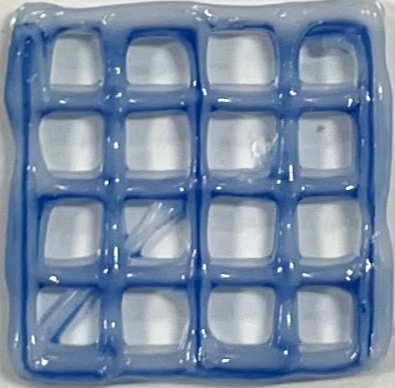
The new discovery combines lipid nanoparticles and hydrogels, which are used to create personalised skin-like 3D printed scaffolds. These scaffolds have the ability to release both a bulk and sustained release of antibiotic loaded molecules to treat diabetic ulcers.

This combination has been shown to greatly improve patient outcomes and has the added benefit of being a more sustainable, efficient and cost-effective method of treatment as these scaffolds in the future can be “easily” produced within the hospital setting.

This approach will also cut time for medical professionals and improve patient care, as the wound dressing can be monitored and provide the treatment needed without the need to be taken on and off repeatedly in order for the medical professionals to check the healing process.

The research team was led by Professor Dimitrios Lamprou from the School of Pharmacy at Queen’s University Belfast, in collaboration with Ms Costanza Fratini (Erasmus Visitor), Mr Edward Weaver (PhD Student from the School of Pharmacy at Queen’s), Dr Sofia Moroni (PhD Student between Queen’s University and the University of Urbino Carlo Bo), Ms Robyn Irwin (PhD Student from the School of Pharmacy at Queen’s), Dr Yahya Dallal Bashi (Postdoctoral Researcher from the School of Pharmacy at Queen’s), Dr Shahid Uddin (Industrial Collaborator), Professor Luca Casettari (University of Urbino Carlo Bo), and Dr Matthew Wylie from the School of Pharmacy at Queen’s.

Diabetes is a lifelong condition that causes a person’s blood sugar level to become too high. It is among the top ten causes of deaths worldwide. DFUs are a serious complication of diabetes, affecting approximately 25% of diabetic patients. When identified, over 50% are already infected and over 70% of cases result in lower limb amputation.

Researchers Develop 3d Printed Bandage That Delivers Innovative Treatment for Diabetic Foot Ulcers

As a strategy to manage DFUs, skin alternatives and wound dressings are successful treatments as they keep the wound environment “under control”, whilst providing bioactive compounds that help to manage infection and inflammation and promote tissue repair.

This is a complex process that requires several combined therapeutic approaches. As a result, there is a significant clinical and economic burden associated in treating DFU. Furthermore, these treatments are often unsuccessful, commonly resulting in lower-limb amputation.

The use of drug-loaded scaffolds to treat DFUs has previously been shown to be successful by the same team. To create this new scaffold, the research team used a 3D bioprinting technique that combines, in one single filament, two different bioinks.

The inner core of the filament is a nanocomposite hydrogel that contains lipid nanoparticles encapsulated with thyme oil. The outer shell of the filament is represented by a hybrid hydrogel and enriched with free thyme oil. Thyme oil and other essential oils, have a promising future as an all-natural antibiotic replacement, helping address the issue of increasing incidences of antimicrobial resistance.

This combination provides two different release ratios of the drug molecule; a bulk release for the first 24 hours and a sustained release for up to 10 days. This enables an initial disease prevention post-administration, which may be the highest-risk time, followed by sustained infection prevention during the following days of antimicrobial efficacy.

Commenting on the importance of this study, Professor Dimitrios Lamprou, lead on the project and Chair of Biofabrication and Advanced Manufacturing from the School of Pharmacy at Queen’s University Belfast, said: “This innovative, personalised, and sustainable approach, provides the healing needed for the diabetic foot ulcers, to avoid any complications, and enables doctors to monitor the healing constantly. This avoids needing to remove dressing constantly, which can provoke infection and delay the healing process. Medical professionals also do not need to change the drug dosage as this double release, supports that need.”

Dr Matthew Wylie, Lecturer from the School of Pharmacy at Queen’s University Belfast and responsible for the in vitro antibacterial activity evaluation of these novel bandages, said: “Diabetic foot ulcers are chronic wounds highly susceptible to infection which can lead to limb- or life-threatening complications. Our natural liposomal antibacterial approach has shown promising initial antibacterial results highlighting the potential of this strategy to prevent bacterial colonisation during the crucial early stages of wound healing, as well as longer term protection of the wound.

“Improved wound management will not only enhance patient quality of life but could reduce the need for traditional antibiotic therapy, a key aim in the fight against antimicrobial resistance development.”


#modernplasticsindia #plasticmagazine #indianmagazine #indianplasticmagazine #modernplasticsaward #ginujoseph #modernplastic #plasticindia #plasticnews #plasticrecycling #modernplasticsglobalnetwork #modernglobalnetwork #modernplasticsaward2023 #PlasticIndustry #modernplasticsgermany #modernplasticsmiddleeast #modernplasticsamerica #modernplasticsbangladesh #modernplasticsasia #modernplasticsitaly #gneuss

ReNew and Gentari Announce Strategic Collaboration for 5 GW Renewable Capacity in India

ReNew and Gentari Announce Strategic Collaboration for 5 GW Renewable Capacity in India

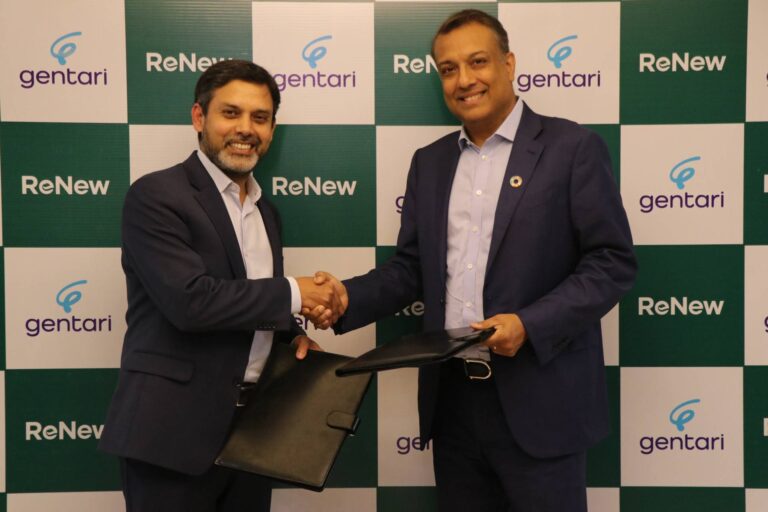
ReNew Energy Global Plc (“ReNew”) (Nasdaq: RNW, RNWWW), India’s leading decarbonisation solutions company, through its subsidiary ReNew Power Pvt. Ltd. (ReNew) and clean energy solutions provider Gentari, through its subsidiary Gentari Renewables India Pte. Ltd., have executed key terms to collaborate on a 50:50 joint venture in clean energy solutions. The term sheet was exchanged between Sushil Purohit, Chief Executive Officer of Gentari and Sumant Sinha, Founder, Chairman and CEO of ReNew.

As part of this proposed joint venture, Gentari and ReNew will collaborate to explore investments into the development of renewable assets including solar, wind and energy storage, to achieve a target of 5 GW in renewable energy capacity. The collaboration between the parties follows Gentari’s initial investment for a 49% equity stake in ReNew’s 403 MW Peak Power project in May this year.

As partners, Gentari and ReNew can accelerate their decarbonisation objectives, enabling Gentari to make substantial progress in expanding its renewable energy portfolio and achieving its global ambition to build over 30 GW in renewable energy capacity by 2030. For ReNew, this partnership ties in with its strategy of collaborating with long-term partners, accelerating renewable energy transition and meeting its net zero target by 2040.

“We are elated to embark on this strategic collaboration with ReNew, as it holds tremendous potential for accelerating the development of renewable assets in India. With our aligned vision and extensive expertise, we aim to drive rapid progress in expanding India’s renewable energy capacity and fostering sustainable growth,” said Sushil Purohit, Chief Executive Officer of Gentari.

Sumant Sinha, Founder, Chairman and CEO of ReNew said, “We are delighted to welcome Gentari as a strategic partner in our goal of accelerating the clean energy transition. This partnership will be crucial in developing innovative solutions which will contribute significantly to India’s 2030 goal of achieving 500 GW of installed renewable energy capacity.”

www.gentari.com
www.renew.com


#modernplasticsindia #plasticmagazine #indianmagazine #indianplasticmagazine #modernplasticsaward #ginujoseph #modernplastic #plasticindia #plasticnews #plasticrecycling #modernplasticsglobalnetwork #modernglobalnetwork #modernplasticsaward2023 #PlasticIndustry #modernplasticsgermany #modernplasticsmiddleeast #modernplasticsamerica #modernplasticsbangladesh #modernplasticsasia #modernplasticsitaly #gneuss #gentari #renew

FMI’ Analyst view: “Sustainability Superstars: How Advanced Composites Drive Green Innovation”

FMI’ Analyst view: “Sustainability Superstars: How Advanced Composites Drive Green Innovation”

The advanced composites market is anticipated to flourish at a steady CAGR of 9.1% between 2023 and 2033. The market is expected to hold a market share of US$ 107.30 billion by 2033 while the market is likely to reach a value of US$ 44.91 billion in 2023.

Growing demand for advanced composites in the sports goods, aerospace, and military industries is projected to ramp up the market for advanced composites. The demand for carbon fiber and s-glass fiber composites in the aerospace and defense sector and increased demand for carbon fiber composites in new end-use industries like civil engineering, medicine, and pipes and tanks are key growth drivers for the global advanced composites market.

The industrialization of developing nations like China, India, and Japan also contributes to market expansion. The demand for advanced composites in the construction industry is anticipated to increase, along with the demand for specialist goods that are ecologically safe.

The advanced composites market share suffered greatly during the pandemic. The market has only just begun to recover from the production halts and reductions. To meet the growing demand from multiple end-use sectors, the leading advanced composite key players are closely investing in the production of thermoplastic composites.

What Drives the Advanced Composites Market Growth?

Demand for advanced composites is likely to be high since they are being used in aerospace and defense equipment, which benefits from their increased performance by reducing the weight of the equipment. Also, the advanced composites market is anticipated to benefit from the rising demand for these materials in the production of turbines. Globally expanding wind turbine installations are probably going to help fuel the market expansion further.

Demand for advanced composites is surging due to the industry’s use of sophisticated composites made of carbon and glass. In addition, a cost-benefit resulting from the integration of the manufacturing and distribution channels leads to market size growth.

What Restraints the Advanced Composites Market?

The product’s high price is anticipated to impede market expansion. Owing to the increased costs brought on by automation and the use of pricey high-performance resins, there is less demand for advanced composites.

Developing and marketing advanced composites that are superior and have varied uses at a price point that the majority of people across the world can afford is one of the key problems that the advanced composites market is anticipated to face during the forecast period.

What are the Opportunities Prevailing in the Advanced Composites Market?

Advanced composites market trends are offering immense development and profit possibilities during the forecast period. Due to this, the market participants are making significant investments in research and development.

The goal is to create a new generation of advanced composites that is higher quality, lighter, and has more creative and practical applications than prior generations, creating profitable opportunities for the market.

Country-wise Insights

What is North America’s Outlook for the Advanced Composites Market?

North America dominated the market with a market sales share of more than 36.9% in 2021.

The product’s demand in North America was estimated to be worth over US$ 12.0 billion in 2021 as a result of the expanding demand in the automotive, aerospace, and defense industries. North America has one of the large automotive industries in the world, with the United States being among the top automakers.

Large markets, large consumer disposable income, mass manufacturing efficiency, and a wide range of products have all contributed to North America’s advanced composites expansion.

How Europe Aids the Advanced Composites Market?

In Europe, the market represented a sizable portion of total revenue in 2021. It is anticipated that the increased demand for sustainable renewable energy might positively affect the installation of wind turbines in Spain, Germany, and the United Kingdom.

Onshore and offshore wind energy plant installation is increasing, and this is likely to support advanced composites market growth in the area. After Asia, Europe, and Oceania, North America is the region with the fourth-highest number of wind energy farm installations. Further, the demand for wind turbine manufacturing is anticipated to increase as a result of the expanding wind energy farms and the growing need for renewable energy sources. This is projected to propel the market share.

What is the Competitive Outlook of the Advanced Composites Market?

The advanced composites market is competitive due to the presence of numerous reputable manufacturers and suppliers. Leading advanced composites market participants concentrate on providing clients with customized solutions, which results in a high switching cost for consumer businesses.

Recent Developments:

Toray Advanced Composites reports that it has finished a long-term supply arrangement with Joby Aviation for the composite material used in its aircraft in December 2020. Toray’s carbon fiber composite materials might be used by a California-based aircraft manufacturer to develop quick, inexpensive, and emissions-free aerial ridesharing for global communities.

Impossible Objects and Owens Corning signed a joint development agreement in May 2021 to work on developing new materials for Impossible Objects’ composite-based additive manufacturing (CBAM) technology.

Momentive Performance Materials Inc., has introduced new composites for multi-industrial usage under its performance materials segment. The focus is to produce solutions for sustainability with enhanced research and development efforts.

www.futuremarketinsights.com


#modernplasticsindia #plasticmagazine #indianmagazine #indianplasticmagazine #modernplasticsaward #ginujoseph #modernplastic #plasticindia #plasticnews #plasticrecycling #modernplasticsglobalnetwork #modernglobalnetwork #modernplasticsaward2023 #PlasticIndustry #modernplasticsgermany #modernplasticsmiddleeast #modernplasticsamerica #modernplasticsbangladesh #modernplasticsasia #modernplasticsitaly #gneuss #futuremarketinsights

Tailwind for Even More Clean Energy

Tailwind for Even More Clean Energy

  • Arburg wind turbines supply electricity for the company’s own use
  • Wind energy provides the electricity equivalent of around 340 households
  • Use of the regional power line expansion

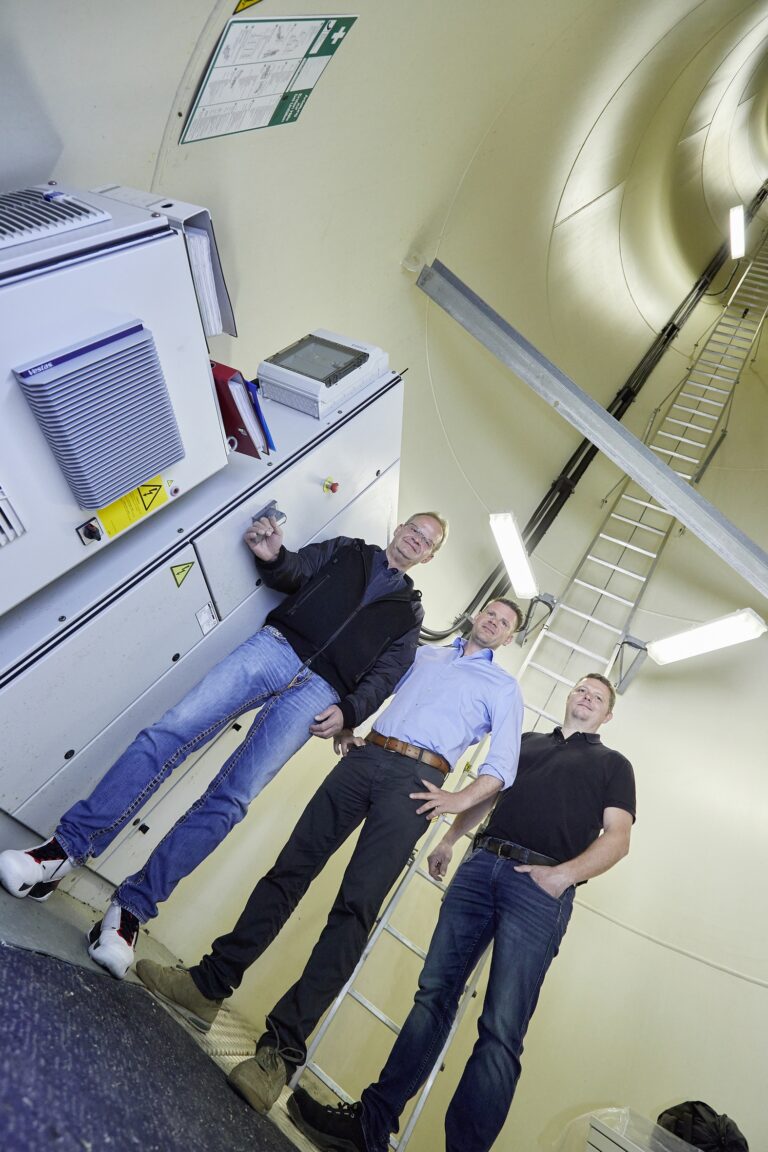
Nature offers sun and wind in abundance and with it, endless possibilities for generating electricity from free resources. Arburg has been doing this for a long time and has now intelligently expanded its sources of clean energy once again. Two wind turbines that have already been in operation since 2001 have been producing electricity for the company’s own use since the end of January 2023.

This increase in regenerative energy was made possible by the expansion of the regional 20 kV power grid and the clever use that Arburg’s forward-looking management team made of the synergy effects that arose when the overhead power lines were laid underground. Michael Hehl, Managing Partner, says: “Connecting the wind turbines to our in-house power grid and using the energy generated for Arburg made perfect sense, especially in the current situation. As part of the 20 kV expansion of the Lossburg power grid, we were able to limit the costs of integration.” The company still had to invest several hundreds of thousands of euros in this 2.4-kilometre-long cable connection, but it was money well spent according to Michael Hehl since by feeding the wind energy generated into the grid, Arburg can use the electricity equivalent of around 340 households in the company itself.

Regional energy and even more CO2 savings
With this move, Arburg is consistently pursuing its goal of becoming even more independent of fossil raw materials through the use of natural resources. Generating and using regional energy is also another step towards increased carbon neutrality. Florian Schmitz, head of the Building Services department, calculates: “The cost of the power line to the wind turbines will have paid for itself in less than five years. With the additional 1.7 megawatts of generator power, we are adding another pillar to our regional regenerative energy concept. The direct connection is only logical: to generate energy directly where it is needed.” He notes that for Arburg, wind energy is the logical complement to its geothermal energy system and the nine photovoltaic plants with a total output of 2.75 MWp.

Power generation at a height of 99 metres
The wind turbines not only provide additional electricity for Arburg, but also offer exciting insights into the technology of these behemoths that tower 99 metres into the Black Forest sky. The simple explanation for this height is that wind must have a certain strength in order to generate electricity at all. So the higher the wind turbine, the stronger the wind blows on top. Under normal conditions, the tips of the 26-metre-long rotor blades, which cover a total of 2,124 square metres, reach a top speed of 200 kilometres per hour. To prevent the turbine from self-destructing through excessive rotation, the blades always rotate in a way that stops them from becoming too fast in the first place. They reach a maximum of 31.4 revolutions per minute. The control technology and generator are located in a nacelle the size of a standard car garage.

Further information about Arburg can be found at www.arburg.com


#modernplasticsindia #plasticmagazine #indianmagazine #indianplasticmagazine #modernplasticsaward #ginujoseph #modernplastic #plasticindia #plasticnews #plasticrecycling #modernplasticsglobalnetwork #modernglobalnetwork #modernplasticsaward2023 #PlasticIndustry #modernplasticsgermany #modernplasticsmiddleeast #modernplasticsamerica #modernplasticsbangladesh #modernplasticsasia #modernplasticsitaly #gneuss #arburg

Asahi Kasei Begins Licensing of Design and Manufacturing Technology for Lith-ium-ion Capacitor as Next-generation Energy Storage Device – Novel Doping Method Enables Enhanced Capacity and Improved Input/output Performance at Lower Manufacturing Cost Using Generally Available Materials and Equipment

Asahi Kasei Begins Licensing of Design and Manufacturing Technology for Lith-ium-ion Capacitor as Next-generation Energy Storage Device – Novel Doping Method Enables Enhanced Capacity and Improved Input/output Performance at Lower Manufacturing Cost Using Generally Available Materials and Equipment

Asahi Kasei has begun licensing of technology for the design and manufacture of lithium-ion capacitors (LiCs) based on its proprietary lithium pre-doping technology. The novel proprietary doping method ena-bles LiCs to be manufactured at lower cost with generally available materials and equip-ment which are used for manufacturing lithium-ion batteries (LiBs), while enabling the design and manufacture of LiCs with increased capacity and improved input/output per-formance.

The licensing includes not only Asahi Kasei’s intellectual property related to LiC technology, but also technical expertise such as cell design and manufacturing with pilot equipment. By licensing its technology, Asahi Kasei expects to support licensees around the world to significantly reduce LiC development times and achieve low-cost LiC manufacture utilizing existing equipment.

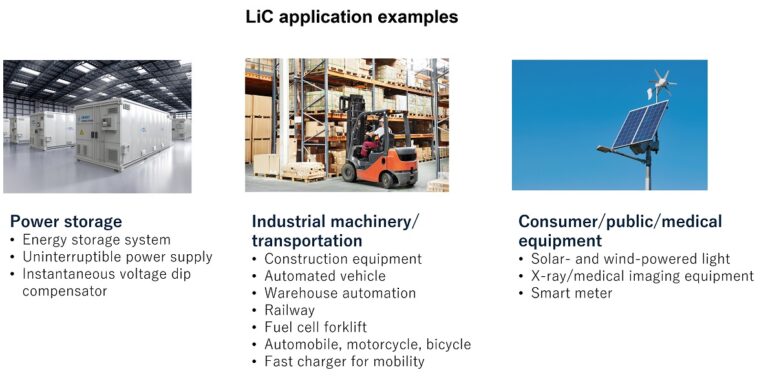
Demand for energy storage devices is forecasted to continue rising due to the spread of electric mobility and increased use of renewable energy. The LiC is a next-generation energy storage device that uses the same material as an electric double layer capacitor (EDLC) for the cathode and the same material used as a LiB for the anode. As LiCs have higher input/output characteris-tics than LiBs, they are suited to fields where instantaneous power is needed, and can be quickly recharged. Also featuring long cycle life and high safety, LiCs are expected to be used in mobility applications such as electric trams and buses which charge at each stop instead of using power from overhead lines.

In the growing field of energy storage systems (ESS) for renewable energy such as solar and wind, it is possible to extend the service life of LiBs by using LiCs in conjunction to reduce the LiB charge/discharge load. This is expected to reduce both running costs and environmental impact through less frequent replacement of LiBs, generating less waste.

The conventional LiC manufacturing process requires expensive materials for pre-doping, such as perforated foil and lithium metal foil. Furthermore, as lithium metal is highly reactive and hazardous, additional costs are incurred to maintain a safe working environment.

Asahi Kasei developed a low-cost pre-doping method using inexpensive lithium carbonate as the source of lithium ions, eliminating the need for expensive materials such as perforated foil and lithium metal foil. With this novel doping method, lithium carbonate is included in the cathode and pre-doping is performed at initial charging, when nearly all of the lithium carbonate decomposes, and lithium ions transfer to the anode. This not only allows the manufacture of LiCs using materials and equipment similar to those used in the manufacture of LiBs, but also enables capacity and input/output performance to be raised by a factor of 1.3 or more (compared to Asahi Kasei’s con-ventional LiCs).

Asahi Kasei has already licensed this technology, and will continue offering it to other licensees in order to support further adoption and application development of the LiC as a next-generation en-ergy storage device which contributes to the world’s sustainability.

Lithium ions are pre-doped in the anode, keeping the anode potential lower than the electrolytic solution potential, allowing a larger energy density due to improved withstand voltage and in-creased capacitance of the capacitor itself compared to conventional EDLC.


#modernplasticsindia #plasticmagazine #indianmagazine #indianplasticmagazine #modernplasticsaward #ginujoseph #modernplastic #plasticindia #plasticnews #plasticrecycling #modernplasticsglobalnetwork #modernglobalnetwork #modernplasticsaward2023 #PlasticIndustry #modernplasticsgermany #modernplasticsmiddleeast #modernplasticsamerica #modernplasticsbangladesh #modernplasticsasia #modernplasticsitaly #gneuss