Shared values as the foundation of a strong partnership
HB-Therm has appointed Arburg as a second distributor for its entire product range in Spain. With the headquarters of the Spanish subsidiary in Arganda del Rey, south-east of Madrid, and a further location in Montcada i Reixach (Barcelona), Arburg will further strengthen HB-Therm’s market presence in Spain.
In addition to the globally respected Thermo-6 temperature control units, the expanded portfolio also includes the new Flow-6 flowmeters and flow controllers. With Thermo-6 and the Gate-6 interface server, digitalisation is becoming an integral part of HB-Therm customers’ daily production processes — in line with Arburg’s machine technology.
This step recognises the long-standing and close cooperation between the two companies, which has proven successful since 1 January 2024 in Portugal and for many years across Asia. In these markets, HB-Therm is represented by Arburg in China and Hong Kong, as well as in Indonesia, Malaysia, Singapore and Thailand.
The Thermo 6 temperature control units feature speed-controlled pumps and various integrated software assistants as standard, offering maximum efficiency combined with maximum process and production reliability.
Comprehensive service and sales network
A key success factor of the partnership is Arburg’s well-established and extensive service and sales network, on which HB-Therm can rely.
“This secures us an excellent market position, which we intend to expand further, particularly in the important European market of Spain,” emphasises Kurt Klopfenstein, CSO at HB-Therm.
“Arburg and HB-Therm have long shared common values that make our cooperation especially efficient and partnership-driven. These include the highest quality standards, centralised production at a single location, and short regional supply chains.”
The Thermo 6 temperature control units in size 62 expand the product portfolio for particularly demanding requirements. They enable flow rates of up to 140 L/min and heating capacities of up to 32 kW.
Family-owned companies working successfully together
Both HB-Therm and Arburg are family-owned companies. Through their innovations, both have repeatedly driven the plastics industry forward in recent years. HB-Therm’s temperature control technology and Arburg’s injection moulding machines work closely together via the shared OPC UA interface, enabling comprehensive data exchange and consistently advancing process digitalisation.
The partnership has been further deepened through customer-specific customisation. Special versions of the Thermo-6 units are now available as so-called A1 units. These can be clearly identified by their distinctive special colour and a screensaver featuring the Arburg logo. In addition, the temperature control units are fully integrated into arburgXworld, where all relevant information — including data from the digital twin — can be accessed.
The resulting synergies can be fully leveraged in customers’ production environments. HB-Therm’s high quality standards are reinforced by a globally unique lifetime warranty covering the heater and flowmeter of the Thermo-6 and the entire measuring section of the new Flow-6.
This creates the best possible conditions for successful joint market development — now also in Spain with Arburg as a new distributor.
Sustainability As A Success Factor In The Cosmetics Industry
As the world’s leading trade fair for processing and packaging solutions, interpack brings together decision-makers and experts from a wide range of industries – from food, pharmaceuticals and cosmetics to chemicals and consumer goods. Sustainability is a central issue across the board. In the cosmetics industry in particular, the growing environmental awareness of consumers and regulatory requirements are driving innovation along the entire value chain, with packaging playing a key role. Current developments are demonstrating how manufacturers, machine builders and material suppliers are translating these challenges into market-ready solutions.
The ecological aspect is moving further into the focus of cosmetics packaging, with reduction of the carbon footprint being a key issue. In that context, manufacturers are coming under pressure from legal regulations such as the EU Packaging Regulation. However, a large number of new developments, from the switch to paper-based materials to the use of recycled materials, demonstrate that the industry has long been making progress on that score.
The plastic laminate tube from an Italian manufacturer features a lacquer with scented microcapsules that release a rose fragrance when rubbed.
Interpack exhibitor Greiner Packaging clearly formulates the vision of tomorrow’s cosmetics packaging: recyclable, lightweight, based on PCR plastics and with a reduced carbon footprint. To that end, the packaging manufacturer’s Design & Prototyping department DesPro has been developing refill solutions such as Trigger Refill, a refill bottle for multiple dosing, featuring an integrated dosing unit for precise millilitre-level dispensing, or the refill funnel “Refill Funnel” for soap, dishwashing liquid, or shampoo concentrates. The concept: a funnel-shaped package, the base of which is sealed with a strip, is placed on an empty bottle; the lower strip is pulled off to the side and then the main sealing film is removed from the top. The resulting air flow empties the concentrate contained in the packaging into the bottle, before water is topped up via the funnel so that no product is wasted. During production, up to 100 percent rPET can be used.
A screw-on brush applicator allows cosmetics to be applied directly from the tube.
Cosmetic tubes with added value
In the tube segment, which according to the European industry association Etma accounts for around 50 per cent of European production in the cosmetics sector, manufacturers are increasingly focusing on functional added value. Tubes enable precise dosing, provide hygienic protection for sensitive formulations and can be combined with smart caps, roll-on systems or applicators.
One current example is a joint project by interpack exhibitor PackSys and the Tubex Group: they have developed an aluminium tube with a screw-on brush applicator that allows precise application of liquid formulations to the skin or nails. Aluminium’s excellent barrier properties provide reliable protection against oxygen ingress and extend the shelf life of sensitive contents.
The JAM 42 fills and closes plastic and glass bottles in various formats and sizes.
Paper-based cosmetics packaging on trend
Product packaging is a key component of Scope 3 emissions coming from companies in the cosmetics industry. And so, in addition to plastic reduction, the focus is increasingly shifting to fibre-based materials. The “Pulp in Action” consortium, which brings together 50 players from the cosmetics industry, aims to drive forward the development of paper-based primary packaging. The first prototypes were recently presented; they include waterproof paper shower gel tubes as well as refill bags and portion sachets with a high paper content. Bio-based coatings provide the necessary barrier properties against moisture and grease.
There is also new impetus in the luxury segment: a US packaging manufacturer has created a patented refill jar made from moulded cellulose for Guerlain’s luxury skincare product “Orchidée Impériale”; a demonstration that sustainable materials are also finding acceptance in the high-price segment.
At the upcoming interpack, machine manufacturers in Düsseldorf will once again be showcasing innovations in the filling and packaging of cosmetics. Flexible solutions are in particular demand, to cope with the increasing array of variants. The Marchesini Group, for instance, has complete packaging lines in its portfolio, including the AXO 1000 automatic tube filling machine and the JAM 42 monoblock machine, which fills viscose products as well as liquid and foaming products such as nail varnish, perfume, cleaning agents or creams and is able to process a wide range of cap types.
A case study from Schubert shows what automated filling and packaging solutions can look like in practice. The packaging machine manufacturer has commissioned a compact TLM Power Compact filling line with cobots for natural cosmetics company Annemarie Börlind, which processes glass and plastic containers in a wide range of formats. Thanks to the multi-transport unit, hygienic design and CIP cleaning, the system fulfils both sustainability and efficiency requirements.
The aluminium cartridge is a recyclable refill solution.
Well protected inside aluminium
Another area of innovation is decorative finishing. All4Labels and interpack exhibitor Actega rely on Actega’s Ecoleaf technology with Starshine on-demand metallisation. Metallic effects on cosmetics packaging can be achieved without PET carrier films, which significantly reduces plastic consumption and cuts CO₂ emissions by up to 80 per cent. At the same time, the technology opens up new creative scope for labels in the personal care segment.
The new Nivea Creme Natural Touch consists of ingredients of natural origin and the iconic tin is made from 95 per cent recycled aluminium.
Recently established Swedish company Meadow aims to make use of the global recycling infrastructure for aluminium and will be presenting its new capsule technology at interpack. This transforms an aluminium can into a ready-to-use pre-fill solution which, taking the form of a cartridge, can be filled with soap, shampoos and other products and inserted into a reusable dispenser.
Brand manufacturers are also actively driving packaging innovations. The iconic blue Nivea cream jar from Beiersdorf has now been launched in a version made from 95 per cent recycled aluminium – containing a vegan version of the skincare classic.
Digital transparency is also becoming more important: with the EcoBeautyScore, cosmetics companies are currently establishing a Europe-wide environmental assessment system that covers the entire product life cycle. Packaging plays a central role here, as it contributes significantly to Scope 3 emissions. The system evaluates products over their entire life cycle, from raw material extraction to disposal, and for now comprises four product categories: shampoo, conditioner, shower gel and facial care products. A global expansion is planned. “EcoBeautyScore is the transparency tool that the beauty industry has been waiting for. For the first time, brands can communicate their environmental impact in a scientifically sound, consistent and clear way,” says Jean-Baptiste Massignon, Managing Director of the EcoBeautyScore Association.
WITTMANN At Chinaplas 2026 In Shanghai Performance Meets Cost-Effectiveness – From Local Production
WITTMANN auf der Chinaplas 2026: Halle 4.1, Stand D41
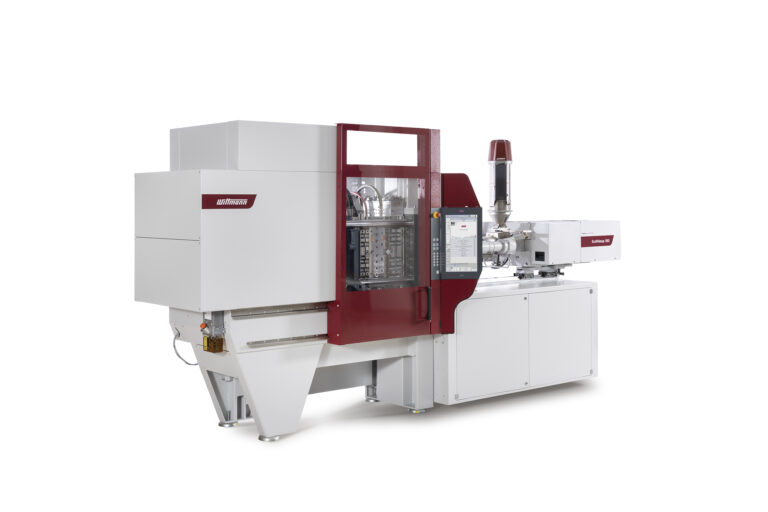
At Chinaplas 2026, the WITTMANN Group is setting a milestone. For the first time, an injection molding machine will be presented that from now on is being produced at the company’s own facility in China. The all-electric EcoPrimus combines precision and efficiency with very high cost-effectiveness. With a total of three live machine exhibits and a comprehensive presentation of auxiliaries and automation solutions, WITTMANN will be presenting itself as an innovative partner to the injection molding industry at Chinaplas 2026 from April 21 to 24 in Shanghai, China.
EcoPrimus: Focused on the essentials
The EcoPrimus, with a clamping force of 1000 kN, was specifically developed for high-volume single-component compact injection molding. Here, the new all-electric injection molding machine combines high precision, efficiency, and cost-effectiveness. It features a robust and compact design, and users do not have to compromise on ease of operation. Like all other current injection molding machine series from the WITTMANN Group, the EcoPrimus is equipped with the latest Unilog B8X machine control system. At Chinaplas, an EcoPrimus 100/350 demonstrates its high performance with the production of functional key rings made of PS.
Last December, WITTMANN inaugurated the expanded production plant in Kunshan. In addition to robots and auxiliaries, injection molding machines from the EcoPrimus Series will now also be produced locally. In addition, development capacities will be expanded in China. “This will enable us to implement local requirements even faster and in a more targeted manner. Our customers will benefit from the WITTMANN Group’s global technology plat-form,” says Kevin Wang, General Manager of WITTMANN in Kunshan.
The all-electric EcoPower is at home wherever precision, efficiency, and cleanliness are required—in both thermoplastic and elastomer injection molding. During Chinaplas 2026, an EcoPower will produce sealing rings from liquid silicone.
EcoPower: Precision and efficiency for LSR
Also the second live machine exhibit demonstrates the efficiency of WITTMANN’s all-electric injection molding machine technology. An EcoPower 110/210 is used to produce liquid silicone rubber (LSR) sealing rings in a 16-cavity mold with a single shot weight of 1.7 grams. Worldwide, applications involving silicone are becoming increasingly important. This trend is being driven by modern medical technology on the one hand and electromobility on the other. Both industries exploit the outstanding range of properties offered by LSR. Compo-nents made of liquid silicone can be used in a particularly wide temperature range from -50 to +250 °C. They have good electrical insulation properties, very good weather and aging resistance, and high biocompatibility.
WITTMANN offers injection units specifically developed for processing liquid silicone, as well as many other LSR-specific options that cover a wide range of injection volumes and mold sizes for use on injection molding machines of various designs.
The all-electric EcoPower is at home wherever precision, efficiency, and cleanliness are important. It achieves high injection speeds and high dynamics and enables extremely precise control. Servo direct drives and the use of braking energy using WITTMANN KERS technology reduce energy consumption to a minimum.
The MicroPower was specifically developed for the production of small and micro parts. At Chinaplas, WITTMANN will present the production of vascular clips made of POM.
MicroPower: Everything it needs on a minimum footprint
Everything it needs for production in just two square meters – that’s what the unique Micro-Power concept offers for molding small and micro parts. The design of the machine allows the injection piston to reach the parting line of the mold. This reduces the mass cushion to a minimum and significantly reduces the sprue, if not eliminating it altogether. The result is higher material efficiency and improved quality consistency, as the pressure is transferred over a very short flow path.
During Chinaplas, a MicroPower 15/10 produces vascular clips made of POM with a single part weight of 0.003 g in a 4-cavity mold. The micro parts are demolded by the integrated vertically arranged scara robot and quality-checked by camera within the self-contained work cell. The good parts are deposited sorted by cavity. The work cell is equipped with a laminar flow box to ensure production under Class 7 clean room conditions in accordance with 14644-1.
Primus 118 is celebrating its Asian premiere. The new linear robot is a reliable and cost-effective solution for all pick-and-place applications and for use in simple automation cells.
Primus robot with increased load capacity
In the area of automation, WITTMANN will be presenting an Asian premiere at Chinaplas 2026. The new Primus 118 expands the range of applications for Primus linear robots for injection molding machines with clamping forces of up to 250 tons. Whereas the maximum payload in this size range was previously five kilograms, the new robot offers a maximum payload of up to eight kilograms. A new design with reinforced demolding and vertical axes as well as reinforced drives underpin the high performance of the Primus 118. The robot offers up to ten valve slots and thus various combinations of gripper and vacuum circuits. Up to eight vacuum circuits are possible.
Since the drilling pattern in the robot’s main beam has not changed compared to previous robot generations, the new Primus 118 can be easily integrated into existing systems. The Primus linear robot series is a reliable and cost-effective solution for all pick-and-place applications and for use in simple automation cells.
The Primus 118 works with WITTMANN’s proven R9 robot controller. This includes an OPC UA interface as standard for exchanging data with an MES and editing and saving programs on a PC. The R9 supports the user right from the program creation stage, saving time. The QuickNew Wizard guides even users with no prior knowledge safely and quickly through the process.
Tempro basic 120: Precise control with ease of use
In the auxiliaries exhibition area, several representatives from all product categories are on display live in Shanghai: temperature control units and water flow regulators, dryers and vacuum loaders, as well as granulators for in-house recycling.
These include, for example, temperature control units from the Tempro basic series. They are the cost-efficient choice for all applications which require precise temperature regulation and high operating comfort and still concentrate on the essentials. The new size 120 was developed specifically for large consumers.
The single-circuit temperature control units for applications up to 120 °C work with radial impeller pumps to enable high volume flows over a wide pressure range. The units are equipped with an automatic filling system including pressure monitoring and pressure gauges in the flow and return lines. The self-optimizing microprocessor control operates with an accuracy of ±1 °C. Thanks to a high-precision, servo step-motor-controlled proportional valve inside the cooling line, the temperature control units can respond even more accurately to fluctuaitons in the process. The flow rate is steplessly adjustable. Since the proportional valve does not require a membrane, service requirements are reduced and the service life of the device is extended. The highly precise control increases the energy efficiency of the application. A new feature across the entire series is a 3.5″ TFT LCD color display, which further simplifies the operation of the temperature control units. Compared to the previous seven-segment display, it provides a much better overview and intuitive menu navigation.
In-house recycling made easy: The G-Max XL granulator is designed for a throughput of up to 100 kilograms per hour.
G-Max XL granulator for clean, homogeneous regrind
During the four days of the trade fair, a G-Max XL granulator will be demonstrating how little it takes to obtain valuable raw material from sprues and production waste. The compact granulators of the G-Max series are suitable for soft to medium-hard plastics such as PP, PE, ABS, PU, or PC. The optimized rotor ensures clean, homogeneous regrind and high material throughput. The solid flywheel maximizes the inertia of the rotor to achieve significantly higher performance with the same energy input. With speeds of 200 rpm at 50 Hz, the number of unnecessary cutting repetitions is reduced. Thanks to the tiltable hopper, screen changes and cleaning can be carried out very easily without tools.
The G-Max XL model presented at Chinaplas 2026 is the largest in the series. It is designed for a throughput of up to 100 kilograms per hour.
Complete solutions from a single source
When it comes to material handling, automation, injection molding machines and mold temperature control, in-house recycling, digital technologies, or complete solutions from a single source, WITTMANN is the reliable partner for all industries that require high-quality and affordable plastic products, such as packaging, medical technology, automotive, and household appliances. “Our expanded production facility in Kunshan represents WITTMANN’s transformation from a single-unit supplier to a full-service total solution expert,” emphasizes Kevin Wang. “Here in China and Asia, we can now offer our customers integrated system solutions from a single source that are produced entirely locally.”
Maguire Showcases Complete Materials Control Solutions At MD&M West 2026 — From Ultra-Low Energy Drying To Fully Integrated Blending And Feeding
Maguire Products, a global leader in gravimetric blending and material handling systems, will exhibit at MD&M West 2026, demonstrating how processors can improve efficiency, reduce energy consumption, and gain total visibility across their production processes.
On display in Booth 4439, Maguire will feature its ULTRA-150 vacuum dryer alongside a fully integrated Fusion-controlled blending, feeding, and conveying system, offering visitors a complete view of next-generation materials handling — from drying through feeding and blending.
MAGUIRE FUSION THROAT
ULTRA-150: Ultra-Low Energy Drying for Medical, Cleanroom Processing and More
Leading the showcase is Maguire’s ULTRA-150 dryer, the industry’s first ultra-low energy vacuum dryer, designed to deliver fast, consistent drying with a fraction of the energy consumption of conventional desiccant systems.
The ULTRA-150 uses a clean vacuum drying process that eliminates desiccant beds, regeneration cycles, and high-maintenance components, reducing energy use by 60–80% and dramatically shortening drying times, while increasing overall production uptime.
With its compact footprint and low-maintenance design, the ULTRA-150 is ideally suited for medical, cleanroom, packaging, and technical molding applications — virtually any environment where material quality, process stability, and energy efficiency are critical.
“Processors today are looking for smarter, more connected systems that deliver real efficiency gains,” said Frank Kavanagh, Global VP of Sales & Marketing at Maguire. “From ultra-low energy drying with ULTRA to fully integrated control with Fusion, we’re showing how material handling can be simpler, more efficient, and far more intelligent than ever before.”
MAGUIRE FUSION FLOOR
Cleanroom-Ready Fusion System: Blending, Feeding, and Conveying — Unified
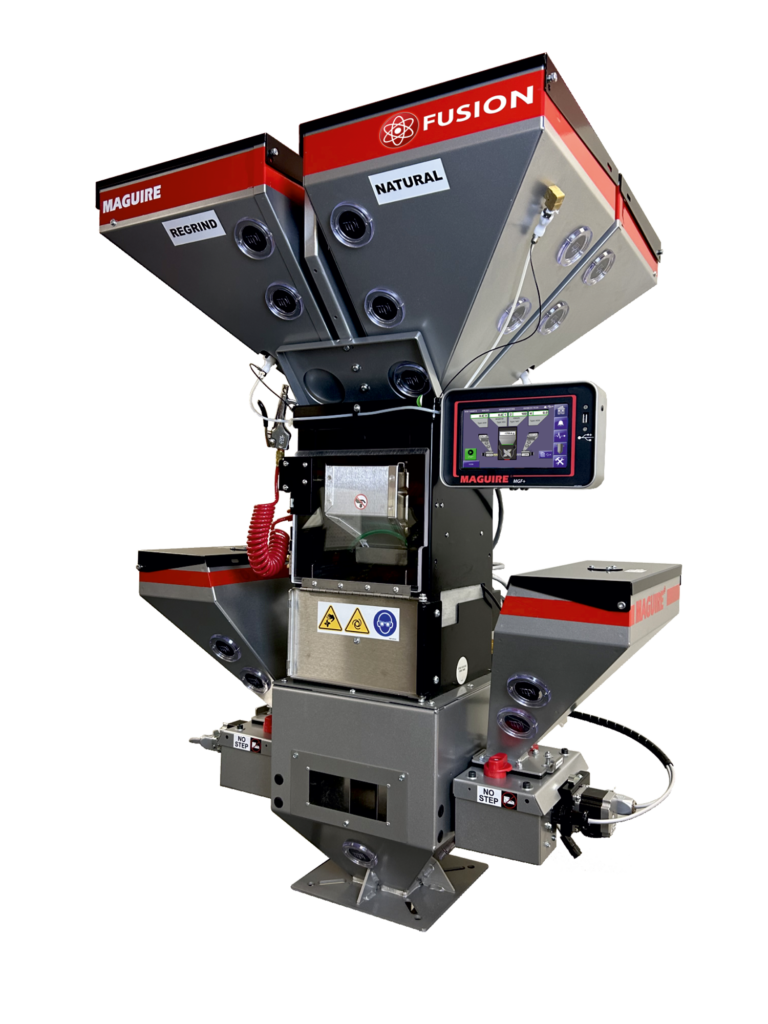
Also on display is a demonstration of Maguire’s Fusion platform, which integrates blending, feeding, conveying, and extrusion control (when required) into a single touchscreen system. Fusion can be installed on the machine throat, as a floor-mounted system, or on a mezzanine to suit different production layouts.
This cleanroom-friendly configuration demonstrates how processors can consolidate blending, feeding, and conveying into a single coordinated system, enabling rapid color and additive changes without stopping the blender — all managed from a single intuitive touchscreen interface with complete process data.
By integrating core material handling functions into one connected platform, Fusion delivers on Maguire’s design philosophy: “Intelligent Simplicity”— fewer systems, fewer interfaces, and better process control.
“MD&M is the perfect environment to demonstrate these systems,” added Kavanagh. “ULTRA and Fusion are ideal for high-performance, clean manufacturing environments where accuracy, efficiency, and process visibility really matter.”
MAGUIRE FUSION MEZZANINE
One Booth. One Control Philosophy. Total Process Insight.
Together, the ULTRA-150 dryer and Fusion-controlled system represent Maguire’s holistic approach to materials handling — giving processors the tools to reduce energy costs, minimize waste, improve part quality, and simplify operations across molding and extrusion applications.
The booth will also feature Maguire’s Tracker software platform, providing plant-wide visibility across Maguire equipment. Tracker enables processors to remotely monitor and control blenders, feeders, dryers, and conveying systems; review material consumption; track alarms; and generate detailed process reports to support smarter decision-making and continuous improvement.
The ULTRA energy savings calculator will also be available on the stand, allowing processors to compare their existing drying systems with ULTRA’s vacuum drying technology and instantly estimate annual energy savings, operating cost reductions, and CO₂ sustainability impact.
New Nozzle Technology For Snow Jet Cleaning In Automated Paint Shops Improved Paint Finish Thanks To Innovative Rotating Nozzle
Snow-jet cleaning has established itself as the state of the art when it comes to coating plastic add-on parts. To improve cleaning quality and thus the paint finish, a company specializing in interior and exterior parts for the automotive industry has optimized the snow-jet cleaning machines that are integrated into its automated paint shops by replacing the standard nozzles with an innovative rotary system.
The takeover by Aequita SE & Co. KGaA around a year ago has set the course for the future of the long-standing KTX GmbH, as well as for further growth. Based in Weissenburg, Bavaria, with branches in Solingen, Serbia and the USA, the company specializes in innovative interior and exterior parts for the automotive industry, covering the entire production chain from design right through to final assembly. Its high-quality trim solutions are manufactured on injection molding machines with a clamping force of 80 to 3,200 tons. One of the company’s core competencies, which it also offers as a service at its headquarters, is subsequently painting the parts.
When painting interior parts for so-called A-areas, clean surfaces are a must, as even the smallest dust particles and fibers cause surface irregularities. Photo: acp_AWB_KTX_Lack_CO2_cKTX
Focus on continuous process improvement
The parts are coated in paint shops from Venjakob Maschinenbau GmbH, which feature integrated CO2 snow-jet cleaning systems. “It is essential that surfaces are absolutely clean, especially if parts are to be painted with a high-gloss piano black finish. The tiniest dust particles or fibers are enough to cause surface irregularities and thus rejects,” explains David Heidrich, Head of Paint Shop at KTX in Weissenburg. “We are therefore always interested in solutions that allow us to further optimize our processes.” One such opportunity presented itself when the head of department met a former colleague from technical school. He was now working as an application engineer at acp systems AG, a global technology leader with its quattroClean snow-jet technology. The technology uses liquid, recycled carbon dioxide as a cleaning medium, which is guided through a wear-free, two-substance ring nozzle. The carbon dioxide expands on exiting the nozzle to form fine CO2 snow, which is then bundled by a separate jacket jet of compressed air and accelerated to supersonic speed. On impacting on the surface to be cleaned, the jet of snow and compressed air develops a combination of thermal, mechanical, solvent and sublimation effects. The interaction of these four mechanisms of action remove particulate contamination right down to the submicrometer range and also filmic contamination reliably and reproducibly. Since the crystalline carbon dioxide sublimates completely during the process, the cleaned surfaces are dry and free of residues.
Improved cleaning results proven in tests
In order to compare the performance of acp’s technology with that previously used, tests were arranged at KTX. Initially, an array equipped with six nozzles was implemented, which was manually guided over the parts outside the feed section of the paint shop. “The paint finish was definitely better on the parts cleaned manually with the nozzle array,” reports Thomas Leimeister, Head of Surface Development at KTX. “We therefore decided to work with acp to further develop this solution for integration into our paint shop.” It was important to maintain the reliability of the existing cleaning module from Venjakob and to integrate the new cleaning unit into the paint shop’s existing control system, which was made possible by the excellent cooperation between the companies involved.
Rotating nozzle as a solution
The new rotating system developed by acp proved to be the ideal solution for the task at KTX. This nozzle technology makes it possible to remove loose, particulate contaminants from surfaces effectively with lower carbon dioxide and compressed air consumption. The nozzles are available with a fixed 45° spray angle, and an adjustable spray angle via adapters. The rotary unit can be fitted with different wings. “Through trials with a manually guided jet unit featuring three rotating nozzles, acp has demonstrated that equally good or even better cleaning results can be achieved,” notes David Heidrich.
The use of the new rotary nozzle system for cleaning before painting ensures improved process quality and process stability for the high-quality trim solutions manufactured by injection molding. Photo credit: KTX GmbH
Integration of a unit with three rotary nozzles
The unit was integrated into the KTX cleaning module using a four-wing rotary unit equipped with three nozzles. The spray angle can be adjusted to suit the specific part. The rotary unit is mounted on the linear system of the cleaning module, which required some minor conversion work at the time. “We brought Venjakob on board to synchronize the control technology of the new jet unit with the paint shop, “ explains Thomas Leimeister. “The cooperation between the two companies and with us was excellent and characterized by a spirit of partnership. All the challenges that arose during the changeover were mastered smoothly,” reports his colleague. During the conversion, which was carried out as a pilot project, some optimizations and fine-tuning of the spray angles were necessary after commissioning in order to achieve optimum cleaning results.
Technical and economic success
KTX has been using the new cleaning solution in series production since August 2024. The company is extremely satisfied with the results and plans to equip further paint shops with the cleaning solution. “Technically, we have been able to significantly improve our production process, including process stability. We are also gaining added value from a commercial perspective,” notes David Heidrich. “And last but not least, we have learned a lot from this project, which means that further conversions can be carried out with less effort,” adds Thomas Leimeister.
Clean, Compatible And Easy To Handle: Hosokawa Alpine With New Granulate Intake Unit For Extruders
Hosokawa Alpine presents a newly developed granulate intake unit for extruders. The innovation impresses with its simple handling, harmonises perfectly with other Alpine system components, and reliably prevents dust deposits. As a result, users benefit from greater process reliability and consistently high product quality.
Simple function with slide valve and metal separator
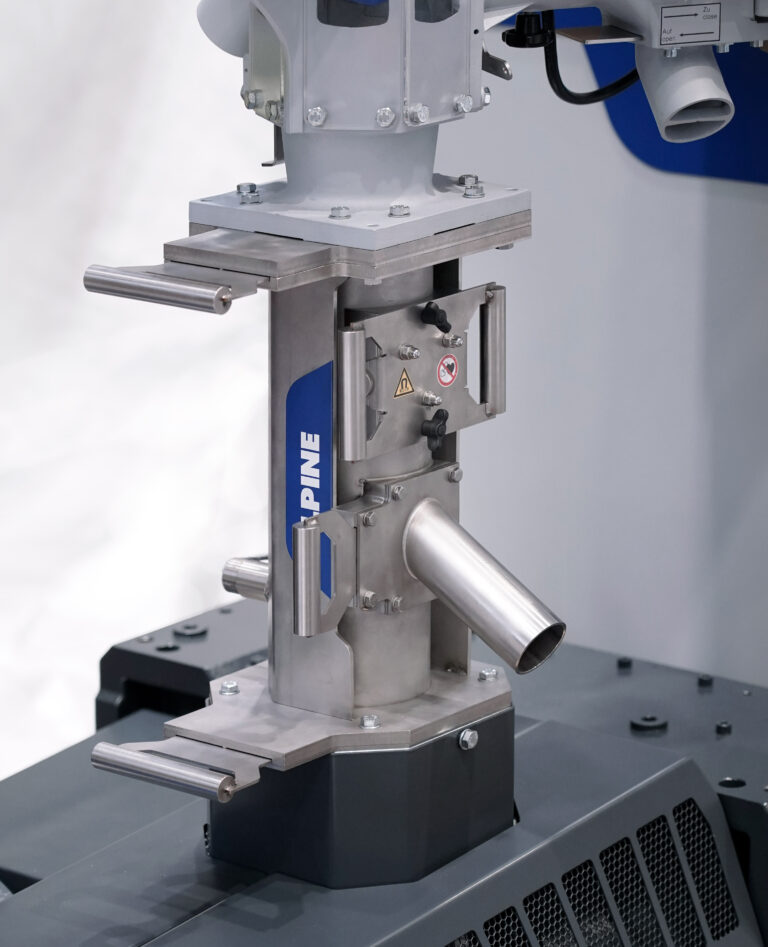
The granulate intake unit links the dosing unit of a blown film line with the feed throat of the extruder. At Hosokawa Alpine, the granulate intake unit includes three fully integrated slide valves and a metal separator.
A first slide valve can be installed together with a metal separator at the customer’s request. It is located below the dosing unit and empties the metal separator. After the slide has been closed, the remaining granules run into the extruder. The magnetic bar drawer of the metal separator can then be taken out to remove any metal particles. The magnetic bar drawer itself consists of three encapsulated magnetic bars with highly efficient neodymium magnets. The second slide valve is a resin drain to discharge residual granules from the system.
The third slide is located before the extruder throat and can be operated manually or, on option, pneumatically via the ExVis process control from Hosokawa Alpine. When emptying the extruder screw, the slide valve is closed to interrupt the supply to the extruder. The extruder screw is thus emptied rapidly, and any loss of resin is minimised. This saves customers time, energy and material.
Easy handling and top film quality
The granulate intake unit is easy to operate and perfectly matched to the other components of an Alpine blown film line. “This means our customers only have one point of contact: Hosokawa Alpine. They receive the complete service and necessary spare parts directly from us,” explains Bernd Bayer, Director R&D at Hosokawa Alpine. Furthermore, the granulate intake unit makes a significant contribution to the quality of the film bubble. “No additional adapters are required for our new granulate intake unit so that the granules can pass through perfectly. This means that there are no dead areas where dust or angel hair could settle. As a result, there is no contamination of the film bubble,” continues Bayer.
The resin dedusting system from Hosokawa Alpine removes dust from the granulate before it enters the dosing units of the extruder, thereby significantly improving film quality.
Utilising synergies within the company: new resin dedusting system
To further improve film quality, Hosokawa Alpine is developing a dedicated system for resin dedusting. There is a need as a lot of dust and angel hair is produced during storage and transport of the resin until it finally reaches the extruder. Dust and angel hair may produce specks in the film and impair the optical quality of the film, thus it is a good idea to remove the dust from the granulate before it enters the dosing units of the extruders. Dedusting not only reduces contamination in the extruders, but also significantly improves the film quality. Hosokawa Alpine’s new dust extractor is the result of a co-operation with the other business segment of the Augsburg-based mechanical engineering company: Systems for powder and particle processing. “Benefitting from the know-how of our in-house powder experts, we have developed a product that not only offers high dedusting quality but is also suitable for granulate dedusting in other applications,” concludes Bayer.
Consistent Standardization For More Flexibility Rauschert Is Setting New Benchmarks In Injection Molding With Linear Robots From WITTMANN
For Rauschert Steinbach, WITTMANN linear robots have almost completely replaced six-axis robots in the plastics processing shop. The new automation concept enables maximum flexibility. Here, the W828 model plays the essential part.
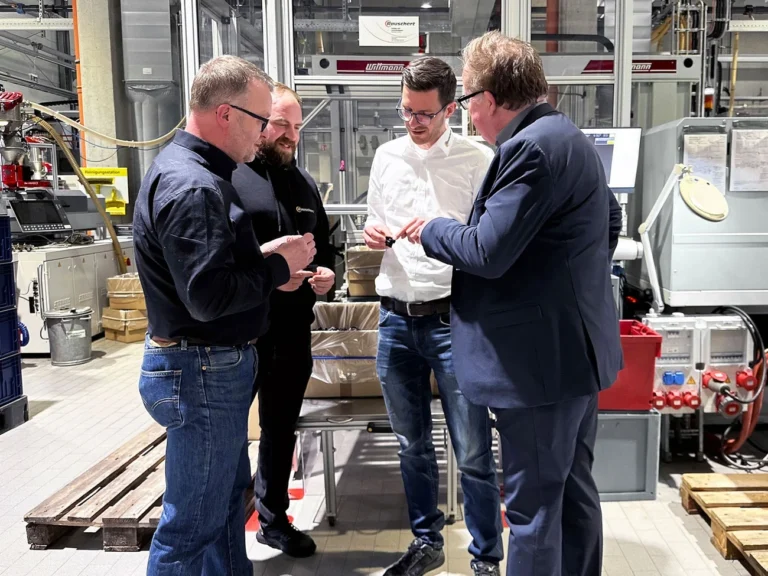
The plug components being passed round in the conference room during our visit to Paul Rauschert Steinbach GmbH, based in Steinbach am Wald in Southern Germany are quite complex. They consist of fiberglass-reinforced Polyamide with contact pins pressed in. The parts are destined for use in automobile air suspension systems. In fact, there are two plug models involved, which are being produced inside a 1+1-cavity mold on a 100-ton injection molding machine. A total of 600,000 units are leaving the plant each year.
Today, the plug housings are produced fully automatically. There is now less manual work, and the idle times have been completely eliminated. The production staff can now be employed much more efficiently. This successful move towards automation was part of a comprehensive standardization project, which Rauschert has implemented across its entire plastic parts sector to maximize flexibility and efficiency.
Linear robots from WITTMANN play a vital part in the standardized automation cells at Rauschert.
As a family-run business with two facilities in Germany, as well as several international subsidiaries, Rauschert has been a leading developer and producer of ignition components, engineering ceramics and molded plastic parts for 125 years. “With our value chain across three interconnected production segments, including in-house tooling and plant manufacturing, we are unique world-wide”, says Udo Jakob, Purchasing Manager at Rauschert, and emphasizes: “Plastic valve bodies with VOSS threading are one of our special strengths.” Rauschert products are used in household, heating, electrical and high-temperature technologies, as well as in the automotive sector.
The injection molding equipment at the facility in Steinbach consists of 28 machines. Visitors immediately notice the equipment’s clear-cut structure and uniform appearance. The 14 most recently acquired injection molding machines are all already equipped with a standardized automation cell. Its core in each case is a WITTMANN W828 linear robot. “We have designed and built the automation cells ourselves. Thanks to standardization we were able to install the automation very quickly. That is precisely the strength of this system”, Jakob points out.
The automation cells all include the robot’s working area, an automation station for insertion, assembly and inspection tasks, feeder units and the outfeed conveyor belt, which is laid out to accommodate boxes of different shapes and sizes, including even Euro pallets. “Everything is now possible from manual removal right up to complex, fully automatic insertion jobs”, comments Alexander Förtsch, Maintenance Manager at Rauschert in Steinbach am Wald, with pleasure.
These plugs are used in automotive air suspension systems Two different models are being produced.
Robots as masters of the entire cell
The plugs for the air suspension systems in vehicles fully exploit the potential of the standardized automation cells the manufacturing process starts with preparation of the pins and injection molding of the plug housings. The W828 linear robot then demolds the housings and passes them on to fully automatic downstream processing. Here, the pins are fused with the housings and then presented to a camera for 100 per cent inspection.
“The crucial point of our new standard is total integration into the control system”, emphasizes Büchner. “In each case, the WITTMANN linear robot is the master of the downstream work steps following injection molding.” “The openness of the WITTMANN system is something special”, underscores Manuel Rommel, CIP Manager for molded plastic parts at Rauschert. “We discussed this concept with various robot manufacturers. Only WITTMANN was able to offer this integrated solution without any additional control device.”
With the new automation cells, the Rauschert team has managed to create a standardized automation system which covers a great variety of different requirements. This is necessary, for they have a total of more than 300 molds in active use, and their customer base is heterogeneous. “The numbers of units range from 500 up to 3 million”, is how Büchner describes the challenge. “That requires great flexibility. We also find it important to have some backup options. In this way, we ensure continuous delivery capability. If one of our machines has an unplanned standstill, we can quickly transfer the mold and the automation system involved to another machine. Thanks to standardized automation, this is possible without any problems – similar to ‘plug and play’.”
A total of 14 production cells are each equipped with a standardized automation cell.
Setup times minimized
In regular operation, too, short setup times make an important contribution to competitive overall efficiency. Four or five setups are carried out in every shift. “Since the startup of our standardized automation cells, we can also begin production of a new batch during the night shift, when there is only one machine setter on site. All the setter has to do is just load the program without having to program anything himself”, Förtsch emphasizes. “Previously, setups were only possible during the day, when the fixture construction team was present.”
Particularly large time consumers were the six-arm robots, which were formerly more frequently in use inside the injection molding hall, before the standardization process. “Following setup, we were often still busy with teaching for a considerable time. With the linear robots, by contrast, many steps happen intuitively, and therefore much faster”, reports Rommel.
The standardization project has significantly increased both flexibility and productivity of the injection molding production at the plant in Steinbach am Wald, and simultaneously improved the consistency of quality as well. An additional benefit is greater sustainability. “Through the optimization of setup times, we are now able to utilize our production cells more effectively, which has a positive effect on our energy balance”, explains Tobias Büchner. The objective of a new project will be to calculate the CO2 footprint for every plastics product. For this aspect, too, is becoming increasingly a decisive factor for competitiveness.
Hydraulic Presses From Wickert For The Manufacture Of Safety-Related Components In The Defense Industry
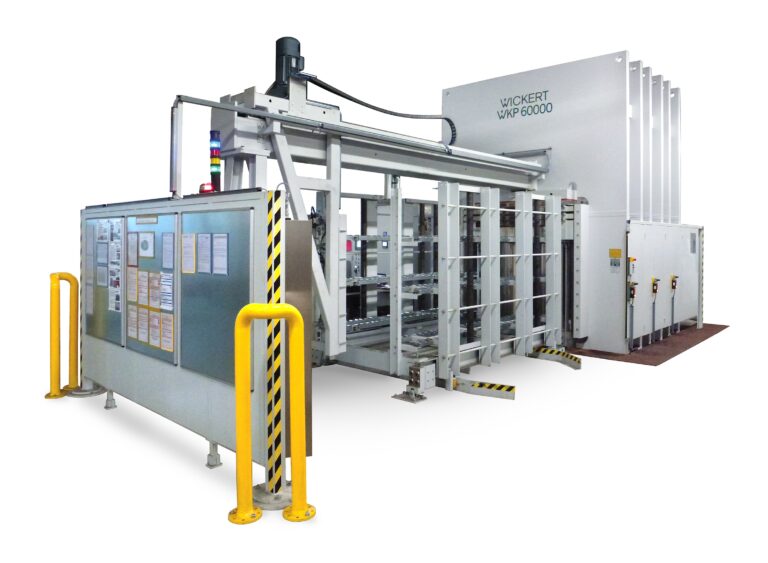
Wickert Maschinenbau considers itself well positioned for the manufacture of safety-related components in the defense industry. For many years, the German family-owned company has been developing and manufacturing complete systems consisting of hydraulic composite presses with automated loading and unloading and efficient temperature control for customers in the defense sector.
Steve Büchner, sales engineer, emphasizes: “We have earned the long-standing trust of customers in the defense sector, who manufacture complex safety-critical components on our high-precision press systems.”
The systems process fiber-reinforced composite high-performance materials such as aramids and high-performance polyethylenes such as PEEK, PTFE, and UHMWPE. They are often heated together with glass, ceramic, and metal fibers made of aluminum oxide, silicon carbide, boron carbide, aluminum, and armor steel in composite presses and pressed into fiber-reinforced panels
Wide range of applications
The systems can be used to process numerous thermosets and thermoplastics. These include, for example, fiber-reinforced high-performance composite materials such as aramids and high-performance polyethylenes such as PEEK, PTFE, and UHMWPE (ultra-high molecular weight polyethylene). They are often heated together with glass, ceramic, and metal fibers made of aluminum oxide, silicon carbide, boron carbide, aluminum, and armored steel in composite presses and pressed into fiber composite panels.
Customers use Wickert’s press systems to manufacture armor for protecting civilian and military vehicles, ships, and aircraft from gunfire, – including for military and civilian vehicles, aircraft, and ships. The systems are equally suitable for the production of ballistic protection plates for personal protection, such as helmets and shields.
All press systems are manufactured in Germany to customer specifications
Wickert develops and manufactures all hydraulic composite presses according to customer-specific requirements at its headquarters in Landau. They have a modular design and are individually adapted with regard to pressing force, temperature control, and automation. The machines are designed precisely for the desired tools or – in the case of corresponding confidentiality requirements – prepared in a way that allows customers to carry out the adaptation themselves.
Numerous design options
The company offers its customers a wide variety of options when designing press systems. Processing temperatures of up to 500 °C are possible, as are freely selectable press forces of over 100,000 kN, built up within seconds.
On request, heating rates of 55 Kelvin per minute and cooling rates of up to 100 Kelvin per minute can be achieved. All systems are characterized by high temperature homogeneity with a deviation of less than 5 °C across the entire press surface.
The dimensions of the presses and their precision heating plates can also be freely selected. One of the outstanding features is the precision of the systems with plane parallelism of less than 0.1 mm and a maximum side offset of 0.02 mm.
High productivity
Smart design and fast pressure and temperature control save energy and shorten the production cycle. This increases output and enhances flexibility in production scheduling.
On request, the press systems can include automation solutions, including raw material handling, press operation, removal, and post-processing. Planning is carried out by Wickert’s in-house development department, which designs individual concepts for automation and special solutions. This allows systems with fully automated production to be implemented.
In addition, presses and peripheral components can be networked with other plant participants and higher-level process control systems as part of a smart factory setup.
Complete plant from a single source
On request, Wickert can take on the entire project management as a general contractor, from planning to commissioning. The worldwide service includes real-time remote maintenance and on-site support.
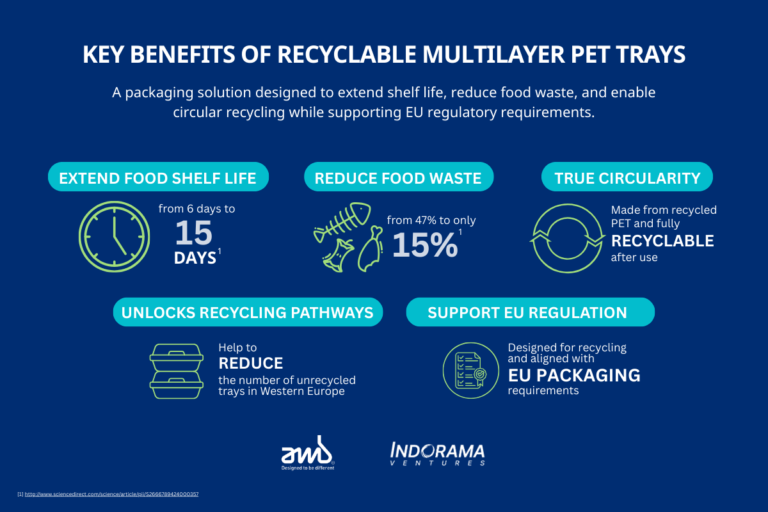
The two companies have jointly developed a tray structure that embeds recycled PET flakes within the core, while applying virgin food-grade PET to the outer layers. The design matches the performance — food safety, optical clarity, sealing — that brand owners and regulators require, while substantially increasing recycled content. Most importantly, the tray also remains recyclable after use, creating a material-to-material circular loop that keeps PET in high-value applications.
This initiative helps to position Europe at the forefront of sustainable packaging, offering retailers and brand owners a scalable drop-in alternative to downcycling. The solution fully aligns with future recyclability and recycled-content requirements under the PPWR, including the target of reaching an average of 30% recycled content in plastic packaging by 2030.
Turning a challenge into a circular solution
Multilayer trays are essential in protecting food products, extending shelf life and reducing food waste. A 2024 case study showed PET Trays extended shelf life from 6 to 15 days, reducing average food waste from 47% to 15%1.
While PET trays deliver strong shelf-life performance, the next frontier is ensuring that more of this valuable material stays in circulation. Today, around 30% of PET trays in Europe are collected for recycling2— a rate that is set to rise as innovative technologies and industry partnerships such as these take hold. To fully unlock this potential, developing effective recycling pathways for multilayer trays is essential to reducing waste and lowering greenhouse gas emissions.
Paolo Cescutti, Chief Procurement Officer, AMB Spa
“This solution demonstrates that multilayer trays can meet circularity goals in practice, not just on paper,” said Paolo Cescutti, Chief Procurement Officer at AMB Spa. “It proves that innovation and collaboration can unlock new recycling pathways, even for the most complex packaging waste streams.”
“A scalable innovation like this enables the tray industry to maintain high performance while moving decisively toward Europe’s circular-economy ambitions,” said Andy Motta, Business Director for Europe and Türkiye, CPET, at Indorama Ventures. “It reflects our commitment to solutions that strengthen recycling systems.”
Andy Motta, Business Director for Europe and Türkiye, CPET, Indorama Ventures
Production of the new multilayer tray structure is already active at Indorama Ventures’ Verdun Recycling facility in France. Finished trays are being supplied to customers in the UK, with broader European deployment in progress.
This announcement builds on the successful 2023 collaboration between Indorama Ventures and AMB Spa, which laid the foundation for advancing PET tray recyclability. Since then, the partnership has progressed from concept development to full-scale production of complex multilayer trays, enabling tray-to-tray recycling through a design-for-recycling approach and delivering a fully circular solution for high-performance food packaging.
Aseptic innovation, designed for India’s dynamic dairy market
India remains not only the world’s largest dairy producer, but one of its most rapidly changing, too. Rising awareness for health, accelerating urbanisation and a surge in demand for functional dairy beverages are currently reshaping the market. From high protein drinks to probiotic formulations and low sugar options, consumers increasingly expect convenient, nutritious products with extended shelf lives.
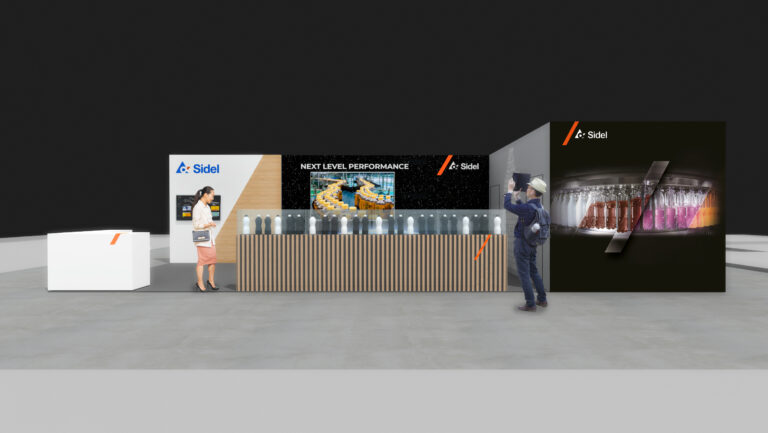
At Booth F4A, Sidel will demonstrate how its pioneering aseptic portfolio directly responds to these needs. With more than 53 years of global expertise and over 400 aseptic systems installed worldwide, Sidel brings a proven, future‑ready toolkit to dairy manufacturers across the region of South Asia.
“As demand surges for safer, longer‑lasting and value‑added dairy products across the region, Sidel will demonstrate how its aseptic technologies are helping producers raise food‑safety standards, unlock new growth opportunities and deliver the next generation of dairy beverages with greater efficiency, reliability and confidence with highest safety,” comments Harbinder Kathuria, Vice President South Asia, Sidel.
Aseptic Combi Predis: performance, protection and efficiency all in one
A key focus of Sidel’s presence at the event is the Aseptic Combi Predis, the company’s flagship integrated blow–fill–cap solution. Its dry preform sterilisation technology delivers powerful food‑safety performance while significantly lowering resource use.
By sterilising packaging at the preform stage, the system minimises contamination risk, streamlines production and supports uninterrupted operation. It removes the need for empty‑bottle handling and storage, boosts overall efficiency and advances sustainability goals through reduced water and chemical consumption. The technology also extends shelf life, enabling producers to distribute products more widely while maintaining freshness.
As the latest evolution of the Aseptic Combi Predis range, the Aseptic Predis X4 is a flexible, high-performance packaging solution that further advances aseptic technology through its enhanced design and digitalisation capabilities.
Leveraging decades of expertise in sesitive products and PET packaging, Sidel has continuously innovated for 53 years to meet evolving market and consumer needs. Sensitive beverages require careful handling, and the Predis X4 reflects Sidel’s long-standing commitment to aseptic excellence.
Its wide aseptic output range supports multiple production speeds and product types. As an industry benchmark, the Aseptic Predis X4 features innovative QSense filling, the safest valve for aseptic PET packaging of teas, juices, nectars, isotonics and liquid dairy, including UHT and soy milk, and can run up to 240 hours of continuous production without stopping for cleaning or sterilisation
Elevating food-safety and quality standards with Qual‑IS
Sidel has also recently introduced Qual-IS, a digital quality‑control platform designed to support the growing needs of India’s aseptic dairy and beverage producers. The system centralises key quality functions such as sampling plans, laboratory management, traceability, HACCP oversight, calibration records and overall quality status into one accessible interface across mobile devices, desktop and production‑line human-machine interfaces.
For companies entering the aseptic market, Qual-IS provides an intuitive way to manage the shift with confidence, while established producers gain a real‑time, consistent method to oversee multiple sites and streamline decision‑making. By strengthening quality control and food‑safety practices, Qual IS helps manufacturers keep pace with India’s rapidly expanding demand for safe, nutritious, long‑shelf‑life drinks while protecting product integrity as they scale.













 Aseptic innovation, designed for India’s dynamic dairy market
 Aseptic Combi Predis: performance, protection and efficiency all in one
 Sidel’s Aseptic Predis X4 for sensitive beverages
  Elevating food-safety and quality standards with Qual‑IS