22.1 C
Korea
Friday, July 10, 2026
Home Blog Page 83

Bioplastics Manufacturer Gaia Biomaterials Secure $5 Million Rights Issue.

Bioplastics Manufacturer Gaia Biomaterials Secure $5 Million Rights Issue.

Swedish bioplastics manufacturer Gaia Biomaterials has successfully concluded a $5 million rights issue. The rights issue is backed by the Swedish state owned greentech venture capital fund Almi Invest Greentech, and private international and domestic investors. Funds will be used to expand market penetration in the United States, India, and other targeted markets. 

Gaia Biomaterials is unique as the company’s home-compostable material, Biodolomer, is based on limestone, one of the most commonly available minerals on earth. Biodolomer can replace fossil plastic in everything from drinking cups to grocery bags. It is fully compostable with a minimal carbon footprint and does not result in any micro-plastics during the composting process.

“We have a revolutionary and proprietary technology, we have the production capacity, and we have done our market testing,” says Peter Stenström, CEO.

GAIA Biomaterials CEO, Peter Stenström

“Now, the time has come to expand our market presence. We will use our funds to expand our global network of commercial agents and train and support them.”

One of the key investors is the Swedish state-owned greentech venture capital fund, Almi Invest Greentech.

“We look for great commercial and environmental potential combined” says investment manager Jörgen Bodin. “Although we look at about 300 companies yearly we only invest in a handful”
Gaia Biomaterials has a proven track record of living up to its promises. Their product has an enormous potential as it is both climate-positive and will reduce waste and microplastics.”

Happy Dolphin compostable Beer cup in AbuDhabi

Gaia’s material was recently used in beer cups for the Formula 1 final in Abu Dhabi. It is also used in a variety of disposable products to replace fossil plastic, from health-care aprons to drinking straws, food containers, and planting pots.

“There are very few limits,” Stenström continues. Our material can be used in various production techniques, including film blowing, bottle blowing, thermoforming, injection, and extrusion coating, with no changes in machinery. This makes it easy for brand owners to drastically reduce their CO2 emissions and reduce the waste mountain problem.

Today, Gaia has a production capacity that can be scaled up to 50,000 tons/year within the existing structure.

“The need for plastic replacement is recognized globally, and we are witnessing tremendous interest in our offerings. Responding to the high demand from brand owners, we are currently expanding our network of commercial agents worldwide.”

www.gaiabiomaterials.com

#Almi#Greentech#Gaia#modernplasticsaward#plasticnews#modernplasticsgermany #ginujoseph#modernplastic#plasticindia#plasticrecycling#sustainability #modernplasticsglobalnetwork#modernglobalnetwork#modernplasticsaward2024 #plasticmagazine#PlasticIndustry #modernplasticsmiddleeast#indianmagazine #modernplasticsamerica #modernplasticsbangladesh #modernplasticsasia #modernplasticsitaly

Cosmo Synthetic Paper Innovative Brands Compatible With Diverse Print Media

Cosmo Synthetic Paper Innovative Brands Compatible With Diverse Print Media

• These brands under Cosmo Synthetic Paper will address the multiple requirements across various sectors and segments of the print industry and are compatible with diverse print media.
• Each brand provides unique solutions to the print market with its durability and longevity.

Pushing the boundaries of possibilities, Cosmo Synthetic Paper (CSP), an innovative vertical of Cosmo Films, is leading the pack in synthetic paper manufacturing, with a commitment to excellence and innovation. With a focus on durability, printability, and sustainability, Cosmo Synthetic Paper is announcing 8 brands to address the myriad requirements of the printing business and provide cutting-edge solutions.

Being an alternative to traditional paper in applications where durability and longevity are desired, such as commercial printing, tags & labels, retail & packaging, identification & credentials, and outdoor applications.

Speaking about the extensive brand range of Cosmo Synthetic Paper, Mr Kulbhushan Malik, Global Business Head, Cosmo Films said, “These latest ranges under the Cosmo Synthetic Paper is to provide numerous solutions for various end users in the printing industry and is compatible with diverse print media. Our synthetic paper is an increasingly popular choice among businesses looking for innovative, cost-effective, durable, and sustainable paper-based solutions. We are confident the segmentation and branding of our offering will assist our buyers make the right choice in choosing the right paper and improving our client base.”

Cosmo Synthetic Paper’s wide range of synthetic paper includes:

• CSP Classic [CSPR-2 (M)]: Uncoated, water-resistant Synthetic substrate suitable for Commercial printing applications.
• CSP Unicoat [CSPR-2 (M) TC]: Coated printable surface on Top side, ideal for vibrant printing applications.
• CSP Dualcoat [CSPR-2 (M) BTC]: Both sides Coated printable surface, ideal for applications demanding high-quality printing.
• CSP FlexoTuff [CSPR-2 (M) FLEXI]: Both sides coated high tear resistant synthetic film.
• CSP DigiLux [CSPR-2 (M) HR BTC]: Tailored for Digital/Laser printing.
• CSP DigiLux – MW [CSPR-2 (MW) BTC]: Both sides coated synthetic paper with enhanced whiteness, designed for digital/laser printing.
• CSP Indigo [HP Indigo]: Seamlessly compatible with HP Indigo presses.
• CSP Graphic [CSPR-2 (M) BTC]: Ideal for producing large-format graphics like posters, banners, billboards, and signage.

www.cosmofilms.com

#CosmoFilms#indianplasticmagazine#modernplasticsaward#plasticnews #modernplasticsgermany#ginujoseph#modernplastic#plasticindia#plasticrecycling #modernplasticsglobalnetwork#modernglobalnetwork#modernplasticsaward2024 #plasticmagazine#PlasticIndustry#modernplasticsmiddleeast#indianmagazine #modernplasticsamerica#modernplasticsbangladesh #modernplasticsasia#modernplasticsitaly

INEOS Takes A Major Step Forward in Southern France Completing the Acquisition of Totalenergies’ Petrochemical Assets

INEOS Takes A Major Step Forward in Southern France Completing the Acquisition of Totalenergies’ Petrochemical Assets

INEOS has now acquired Naphtachimie, Gexaro and Appryl, which were 50:50 Joint Ventures between INEOS and TotalEnergies at Lavera in Southern France.

The deal includes one of Europe’s largest steam crackers with an annual capacity of 720,000 tonnes of ethylene, an aromatics business with an annual capacity of 270,000 tonnes and a polypropylene business with an annual capacity of 300,000 tonnes.

A number of other infrastructure assets are also contained in the deal including part of TotalEnergies ethylene pipeline network in France.

Xavi Cros, CEO of INEOS Olefins & Polymers South says, “We are very pleased to confirm that today we have completed the acquisition of TotalEnergies’ petrochemicals assets at Lavera. We will now fully integrate these businesses and pipelines, which are valuable strategic assets that will further enhance the INEOS portfolio.”

INEOS has today completed the acquisition of TotalEnergies’ 50% share of Naphtachimie (720 ktpa steam cracker), Appryl (300 ktpa polypropylene business), Gexaro (270 ktpa aromatics business) and 3TC1 (naphtha storage) announced on July 5th.

These businesses have until today been joint ventures between the two companies. A number of other infrastructure assets have also been acquired including part of Total Energies ethylene pipeline network in France.

INEOS will now fully integrate the Naphthachimie, Gexaro and Appryl petrochemical businesses, assets and infrastructure into INEOS Olefins & Polymers South at Lavera in Southern France. Gexaro which is located on the Lavera refinery site will continue to be operated by Petroineos.

Xavi Cros, CEO of INEOS Olefins & Polymers South adds,

“We are pleased that we have today completed the acquisition of Total Energies petrochemical assets at Lavera. This is a major step forward for the INEOS French and South European businesses. We will now fully integrate these assets and enhance the competitiveness of our offer.”

www.ineos.com

#INEOS#indianplasticmagazine#modernplasticsaward#plasticnews #modernplasticsgermany#ginujoseph#modernplastic#plasticindia#plasticrecycling #modernplasticsglobalnetwork#modernglobalnetwork#modernplasticsaward2024 #plasticmagazine#PlasticIndustry#modernplasticsmiddleeast#indianmagazine #modernplasticsamerica#modernplasticsbangladesh#modernplasticsasia #modernplasticsitaly

Rajoo Engineers Limited Wins the SIES SOP STAR 2023 Award for Pentafoil-POD-AX

Rajoo Engineers Limited Wins the SIES SOP STAR 2023 Award for Pentafoil-POD-AX

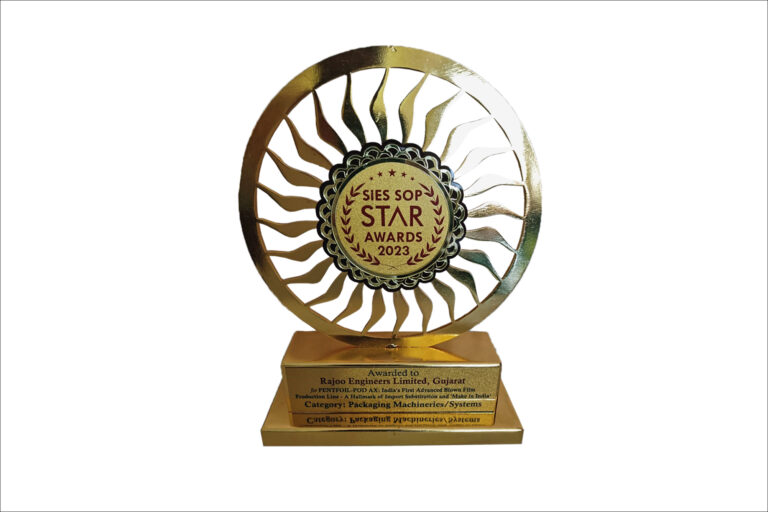
Rajoo Engineers Ltd, a pioneering force in the field of plastic processing machinery, has been recognized with the prestigious SIES SOP STAR 2023 Award for their groundbreaking innovation, the PENTAFOIL-POD-AX, the five layer (POD) blown film line for flexible packaging. The award from South India Education Society School of Packaging, Mumbai (SIES- SOP), presented in acknowledgment of excellence in import substitution and ‘Make in India’ initiatives, highlights the transformative impact of Rajoo’s indigenous technological advancements.

The PENTAFOIL-POD-AX represents a paradigm shift in the realm of multilayer blown film production, embodying self-reliance and reducing dependency on imported technologies. It is a hallmark of India’s manufacturing potential, symbolizing the nation’s capability to create and implement innovative solutions domestically.

Ms. Khushboo Chandrakant Doshi, Managing Director of Rajoo Engineers Ltd,

expressed her delight on receiving the Award, saying, “We are honored to receive this prestigious award, which underscores our commitment to innovation and self-reliance. The PENTAFOIL-POD-AX is a testament to India’s manufacturing prowess and our dedication to fostering indigenous technological advancements. This recognition further motivates us to continue pushing the boundaries of excellence in the field of plastic extrusion machinery. The team has worked relentlessly towards continual product development and innovation to enable us to offer not just new products but help us evaluate the customers’ needs and endeavor to meet them and walk the extra mile ensuring customer satisfaction.”

Additionally, the PENTAFOIL-POD-AX prioritizes sustainability in its manufacturing processes. It incorporates energy-efficient extruders, automatic thickness monitoring and control, and reduced material waste, aligning with sustainable manufacturing practices and fostering environmental responsibility. By embracing sustainability, Rajoo underscores its commitment to the well-being of the environment.

This value-for-money product eliminates the need for importing expensive foreign equipment, fostering self-sufficiency in plastic extrusion machinery manufacturing. Designed and assembled domestically, it contributes to India’s vision of becoming a global manufacturing hub, symbolizing the spirit of import substitution and ‘Make in India’ initiatives. Through this advancement, Rajoo is strengthening its commitment to innovation and excellence continues to drive the nation towards self-sufficiency in manufacturing.

www.rajoo.com

#RajooEngineersLtd#SIESSOPSTAR#indianplasticmagazine#modernplasticsaward #plasticnews#modernplasticsgermany#ginujoseph#modernplastic#plasticindia #plasticrecycling#modernplasticsglobalnetwork#modernglobalnetwork #modernplasticsaward2024#plasticmagazine#PlasticIndustry #modernplasticsmiddleeast#indianmagazine#modernplasticsamerica #modernplasticsbangladesh#modernplasticsasia #modernplasticsitaly

Innovating the Future: A Deep Dive Into D.R. Joseph’s Revolutionary Approach to Blown Film Extrusion

0

Innovating the Future: A Deep Dive Into D.R. Joseph’s Revolutionary Approach to Blown Film Extrusion

Navigating Challenges and Finding Solutions in Blown Film Extrusion

Could you please share a bit about your journey and experience in the blown film extrusion industry?

I’ve spent the past three decades immersed in the world of blown film extrusion, working with various technologies and witnessing the evolution of the industry firsthand. From troubleshooting to optimizing processes, I’ve encountered a wide array of challenges and have developed a deep understanding of the intricacies involved.

With your extensive experience, D.R. Joseph what are some common challenges faced in blown film extrusion, and how do you approach finding solutions?

In blown film extrusion, there are several common challenges that operators often encounter. These challenges can range from issues with film thickness consistency, bubble stability, to cooling problems. Here are a few of the most prevalent challenges and how I typically approach finding solutions:

Thickness Variations: Maintaining consistent film thickness is crucial for product quality and performance. Fluctuations in thickness can lead to issues such as weak points in the film or uneven appearance. To address this, the TDK500 Auto-Gauge Air Ring modulates air flow around the bubble to correct for gauge variances.  For example, if a zone around the bubble has thick gauge, an inline film thickness gauge reports this thickness to the TDK500 Air Ring, which then locally reduces the air flow, to permit that zone of film to stretch more to a more uniform thickness.  The TDK500 InstaGauge system performs this action continusly, and at an industry leading speed for quick gauge corrections.

Bubble Instability: Achieving and maintaining a stable bubble is essential for producing high-quality film. Factors such as airflow, extrusion rate, and cooling conditions can all impact bubble stability. We address this challenge with advanced internal bubble cooling (IBC) systems which provide precise control over layflat control and cooling rates, enhancing bubble stability and film quality.

Equipment Maintenance and Downtime: Finally, ensuring optimal performance and uptime requires proactive maintenance practices and swift troubleshooting techniques. DR Jospeh systems are equipped with on-screen troubleshooting aids, and sensors that can detect when and where an issue may have occurred.  From there, users can quickly get on screen aide to resolve the problem on the spot. Additionally, having a comprehensive maintenance schedule and access to reliable technical support can minimize downtime and keep operations running smoothly.  A network of local agents is available to provide support in the language and time zone that is necessary

TDK Side Cover


Overall, addressing these challenges in blown film extrusion requires a combination of technical expertise, meticulous process control, and the utilization of advanced technologies and equipment. By continuously striving for optimization and innovation, it’s possible to overcome these challenges and achieve consistent, high-quality film production.

Speaking of technology, could you elaborate on the benefits of the TDK-500 Automatic Air Ring with InstaGauge™ Control System in blown film extrusion?

The TDK-500 Automatic Air Ring with InstaGauge Control System is a game-changer in the industry. It offers precise control over air volume and velocity, ensuring uniform cooling and bubble stability. The InstaGauge Control System further enhances this by providing real-time monitoring and adjustment capabilities, allowing operators to make on-the-fly corrections to maintain optimal conditions. This level of automation and control significantly improves product consistency and reduces scrap, ultimately driving efficiency and profitability.

controllerHMI


How do you envision the future of blown film extrusion, particularly with advancements in technology like the TDK-500?The future of blown film extrusion is undoubtedly exciting, with technology playing a pivotal role in driving innovation and efficiency. As advancements like the TDK-500 continue to evolve, we can expect even greater precision, flexibility, and automation in the process. This will not only streamline production but also open doors to new possibilities in terms of material capabilities and product development.

Additionally, a focus on producer responsibility and environmental issues will highlight the importance of reducing resin usage, which can be achieved by tight gauge control.  Producers can then cut their resin usage by reducing the “overage” on film gauge to meet minimum film thickness requirements.

What are the key features and benefits of D.R. Joseph’s Internal Bubble Cooling (IBC) system, and how does it enhance high-speed, precision control in blown film extrusion?

D.R. Joseph’s Internal Bubble Cooling (IBC) system boasts several key features and benefits that significantly enhance high-speed, precision control in blown film extrusion. The system’s automated features streamline operation, allowing for real-time adjustments to maintain optimal conditions, thus reducing downtime and improving efficiency. This is an important point in todays industry with high operator turn-over, where training on manual tasks is lacking.  Automating the tough jobs of IBC control means less operator training, and tigher control of a fast and dynamic process that is required for good IBC control.

Can you provide insights into D.R. Joseph’s vision and mission, highlighting how they drive innovation and customer-centric solutions in the field of blown film extrusion?

At D.R. Joseph, our vision is to redefine excellence in the field of blown film extrusion by continuously innovating and delivering cutting-edge solutions to our customers worldwide. We envision a future where advanced technology and unparalleled expertise combine to revolutionize the industry, setting new standards of quality, efficiency, and sustainability.

Our mission is to empower our customers with the tools and resources they need to thrive in an ever-evolving market. We are committed to providing industry-leading products and services that drive productivity, enhance performance, and maximize profitability for our clients. Through ongoing research, development, and collaboration, we strive to anticipate market trends and exceed customer expectations, positioning ourselves as trusted partners in their success.

At the core of our vision and mission is a dedication to excellence, integrity, and customer satisfaction. We are passionate about pushing the boundaries of what is possible in blown film extrusion, and we are driven by a relentless pursuit of innovation and improvement. By staying true to our values and embracing change, we aim to shape the future of the industry and empower our customers to achieve their goal.

2024.npe.org

#indianplasticmagazine#modernplasticsaward#plasticnews#modernplasticsgermany #ginujoseph#modernplastic#plasticindia#plasticrecycling#modernplasticsglobalnetwork #modernglobalnetwork#modernplasticsaward2024#plasticmagazine#PlasticIndustry #modernplasticsmiddleeast#indianmagazine#modernplasticsamerica #modernplasticsbangladesh#modernplasticsasia#modernplasticsitaly

FDA Clears Borealis’ Borcycle M Recycled Plastics for Use in Food

0

FDA Clears Borealis’ Borcycle M Recycled Plastics for Use in Food-Grade Packaging

• Borealis receives two Letters of No Objection from the US Food & Drug Administration (FDA) that allow its Borcycle M post-consumer recycled plastics to be used in food-grade packaging in countries covered by FDA governance
• The move supports Borealis to meet growing demand for high-quality recycled materials suitable for demanding and contact-sensitive applications
• The decision marks a significant step forward in Borealis’ EverMinds™ ambition to accelerate action on plastics circularity

Borealis is pleased to announce that it has received Letters of No Objection (LNOs) from the US Food & Drug Administration (FDA) concerning the use of specific grades of its Borcycle M post-consumer recycled plastics (PCR) in food-grade packaging. This major achievement confirms Borealis’ position as a market leader in value-added solutions for the circular economy.

is Borealis’ transformational mechanical recycling technology that gives post-consumer plastic waste another life in an energy-efficient way. The FDA’s LNOs pave the way for Borcycle M-derived materials to be used in a specific range of demanding and sensitive applications, including cosmetics and personal care as well as food contact.

The FDA authority has issued two LNOs that allow Borcycle M PCR high-density polyethylene (HDPE) and polypropylene (PP) to be used up to 100% in certain dry food contact applications. Additionally, these recycled materials can constitute up to 10% of packaging for dry foods with surface oil and moist bakery products. The FDA’s LNOs are effective from January 2024 for recycled HDPE, and from February 2024 for recycled PP.

This represents another step in Borealis’ EverMinds™ ambition to accelerate action in plastics circularity. By enabling a wider range of products to be made from recycled plastics, the FDA’s LNOs will help to reduce the amount of plastic waste that ends up in incineration and landfill, as well as decrease dependence on virgin materials. They will also support Borealis to meet growing demand for high-quality, recycled materials suitable for demanding and sensitive applications.

“Our customers will be able to expand the use of value-added, recycled plastics within their portfolios. Combined with all of Borealis other sustainable offerings, this FDA clearance of selected grades of our Borcycle M portfolio for food-grade applications will help them achieve their sustainability targets and bring us all closer to a fully circular economy for plastics,” explains Jonatas Melo, Borealis Vice President for Performance Materials

Borealis is now poised to move forward with the development of selected food packaging applications from recycled HDPE and PP.

“This marks a major milestone for Borealis, helping us to live our purpose of reinventing essentials for sustainable living,” says Mirjam Mayer, Borealis Vice President Circular Economy Solutions.

The FDA’s LNOs apply in the United States of America, as well as other regions covered by FDA governance. In the EU, the FDA clearance will facilitate conversations on the use of these materials in high-end, contact-sensitive applications such as cosmetics and personal care packaging.

www.borealisgroup.com

#Borealis#FDA#indianplasticmagazine#modernplasticsaward#plasticnews #modernplasticsgermany#ginujoseph#modernplastic#plasticindia#plasticrecycling #modernplasticsglobalnetwork#modernglobalnetwork#modernplasticsaward2024 #plasticmagazine#PlasticIndustry#modernplasticsmiddleeast#Indianmagazine #modernplasticsamerica#modernplasticsbangladesh#modernplasticsasia #modernplasticsitaly

Arburg Exhibit at NPE 2024

0

Arburg Exhibit at NPE 2024

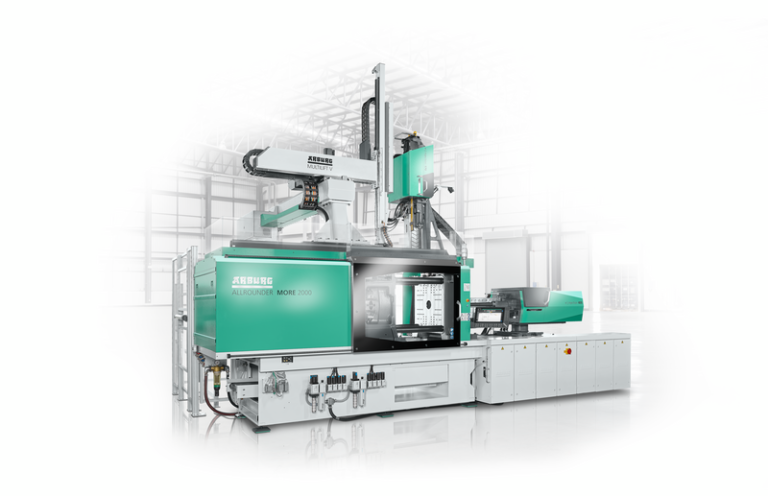
Allrounder More: Turnkey system producing two-component eyeglasses

• Multi-component injection moulding: Functional eyeglasses made from optical LSR and thermoplastic
• Turnkey system: Automated application “Engineered by Arburg USA”
• Partner stands: Further Allrounder machines producing temples, lanyards and cases for eyeglasses

A perfect example for the efficient production of high-quality plastic parts using injection moulding is a turnkey system based around an Allrounder More 2000. With the “two-component eyeglasses” application, Arburg (stand W 3743) will be demonstrating at NPE 2024 its renowned wide-ranging expertise in multi-component injection moulding, LSR processing, automation and networked production. Exciting for trade visitors: At the partner stands of Kistler (W3321), Shin-Etsu (S26055) and Adler (S31151), further components will be manufactured so that the eyeglasses can be supplemented with temples, lanyard and case

The production of ready-to-use two-component eyeglasses provides an impressive demonstration of Arburg’s extensive expertise and portfolio, which not only includes machine and process technology, but also robotic systems, control and digitalisation.

Two-component eyeglasses as a hard/soft combination

The Allrounder More machines are Arburg’s special series for multi-component injection moulding. They offer lots more space for moulds, rotary units, media connections and a usable ejector stroke as well as numerous optimised features for greater ease of use and simple maintenance. Precision is ensured by a highly dynamic electric toggle-type clamping unit with energy-efficient, liquid-cooled servo motors.

An Allrounder More 2000 will be producing eyeglasses made of optical LSR as well as frames made of thermoplastic (PA)


At NPE 2024, an Allrounder More 2000 with 2,000 kN of clamping force and two electric injection units will process optical liquid silicone (LSR) and thermoplastic (PA). The two-component eyeglasses are produced in a 1+1-cavity mould in a cycle time of around 85 seconds. First, the vertical injection unit moulds the frame made of PA. An index unit then rotates the pre-moulded part into the second station. There, a horizontal injection unit adds the soft LSR lens. Part handling is performed by a Yaskawa six-axis robot.

Central Gestica control system

As well as the two injection units (in sizes 400 and 100), the central Gestica machine controller also programs a Yaskawa industrial robot “powered by Arburg” directly with speed and ease. Temperature control devices and other peripheral equipment can also be integrated. This includes the LSR dosing unit from Elmet, which communicates with the Gestica via OPC UA and the Euromap 82.3 interface. This simplifies programming, as well as monitoring, storage and evaluation of process data.

Turnkey system “Engineered by Arburg USA”

With the fully automated application on show at the trade fair, Arburg Inc. will also be showcasing its turnkey expertise for the North American market. The experts at Arburg in the USA work closely with the company headquarters and contribute comprehensive specialist knowledge in order to find creative solutions and implement complete turnkey solutions tailored precisely to the specific requirements of the customer. This increases part quality, process reliability, availability, ability to create value and production efficiency. As a general contractor, the subsidiary looks after not only the implementation and installation, but also advance planning and service for its customers’ complete production cells.

Further eyeglasses components on partner stands

Of particular interest to trade visitors is the practical implementation of the idea to manufacture additional components completing the glasses at three partner stands at NPE 2024:
• An electric Allrounder 370 E Golden Electric will produce matching eyeglasses temples made of ABS at the Kistler stand (W3321). Part handling will be performed by an Integralpicker V. Visitors will also be able to have the temples personalised with their own name.
• Complementary lanyards made of LSR will be produced on an electric Allrounder 470 A at the Shin-Etsu stand (S26055).
• At the Adler stand (S31151), another electric Allrounder 470 A will be producing a matching glasses case made of PP.

www.arburg.com

#Arburg#indianplasticmagazine#modernplasticsaward#plasticnews #modernplasticsgermany#ginujoseph#modernplastic#plasticindia#plasticrecycling #modernplasticsglobalnetwork#modernglobalnetwork#modernplasticsaward2024 #plasticmagazine#PlasticIndustry#modernplasticsmiddleeast#indianmagazine #modernplasticsamerica #modernplasticsbangladesh#modernplasticsasia #modernplasticsitaly

The Zeppelin Group Successfully Concludes the Fiscal Year 2023 Despite Geopolitical and Economic Challenge

0

The Zeppelin Group successfully concludes the fiscal year 2023 despite geopolitical and economic challenge

The Zeppelin Group successfully closed the 2023 fiscal year with a revenue of 3.9 billion euros (2022: 3.8 billion euros), an EBITDA of 482 million euros (previous year: 437 million euros), and earnings before taxes of 154 million euros (previous year: 135 million euros). The Zeppelin Group anticipates a growing investment restraint in 2024 but sees opportunities in energy transition, rental services, and sustainable drive systems.

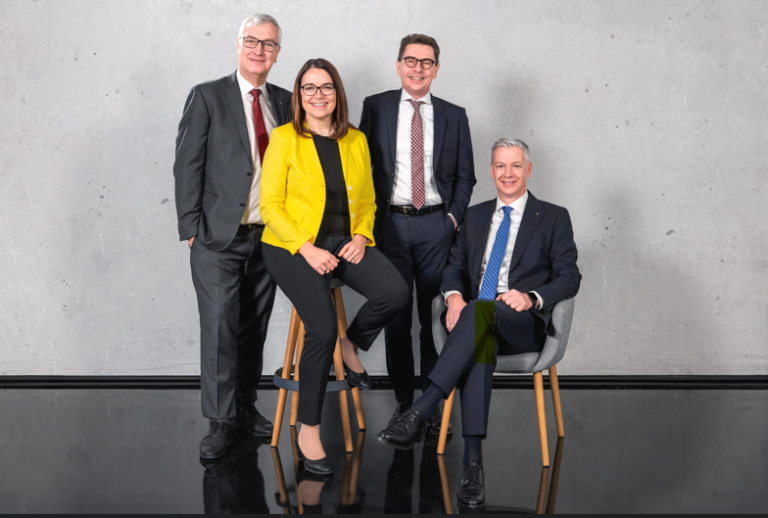
“Despite global, geopolitical and economic uncertainties, which led to a reluctance to invest and purchase across almost all of our business segments, Zeppelin was able to increase its revenue compared to the previous year. In addition to the improved delivery capability of our manufacturer partner Caterpillar and the high order backlog to be processed, the great commitment and impressive loyalty of our employees were decisive for this good result,” says Peter Gerstmann, Chairman of the Management Board of the Zeppelin Group.

Christian Dummler, Managing Director and CFO of the Zeppelin Group, emphasizes: “In 2023, we once again demonstrated our high level of resilience through the strategic orientation of the company. Even under increasingly challenging conditions, we were able to develop Zeppelin positively and successfully. The reaffirmed “A-” rating with a “stable outlook” from Creditreform Rating AG confirms the high creditworthiness and very low default risk. Special recognition was given to the fact that the Zeppelin Group was able to increase its sales and keep its operating result stable, although the effects of Russia’s war against Ukraine had a noticeable negative impact on sales and earnings in 2022.”

The Zeppelin Group can look back on a very successful fiscal year. This success is based on the constructive, responsible, and trustworthy cooperation between the management board, supervisory board, and employees. Investments in infrastructure, technology, and inorganic growth at a consistently high level secure the future viability of Zeppelin,” says Andreas Brand, Chairman of the Supervisory Board of the Zeppelin Group.

Development of Strategic Business Units

Despite decreasing order intakes over the course of the year, the business unit Construction Equipment Central Europe can look back on a year with high revenue growth due to the high order backlog. Due to political uncertainty and persistently high interest rates, as well as high price dynamics in construction, the demand for new construction machinery has decreased despite the necessary investments in infrastructure for energy, digitalization, maintenance, and transportation routes. The companies in the Scandinavian areas were also able to slightly increase their revenue performance, but they were not unaffected by the flattening construction economy.

Following the complete withdrawal from the construction and mining business in Russia, the Strategic Business Unit Construction Equipment Eurasia continues to fulfill existing obligations towards non-sanctioned customers in the agricultural sector. In Ukraine, Zeppelin continued its business activities despite adverse circumstances. In Uzbekistan and Armenia, the market for construction and mining machinery continued to develop positively.

In 2023, Zeppelin also grew inorganically. With the acquisition of the rental organization CP ApS in Denmark, Zeppelin further expanded its commitment to temporary rental solutions in Scandinavia and was able to significantly strengthen its market position in Denmark.

With a consistently high order intake for engine overhauls and repairs, growing new business for large heat pumps and emergency power systems, and the international marine yacht service, the business unit Power Systems increased both order intake and revenue and results compared to the previous year.

The markets of the business unit Plant Engineering have developed stably. Drivers of high demand were recycling solutions in the plastics and tires sector, as well as mixing solutions in battery processing.

Realignment of the Strategic Business Units Construction Equipment

In the middle of the year, Zeppelin responded to the new market conditions and customer expectations with the restructuring of the Strategic Business Units Construction Equipment.war of aggression by Russia against Ukraine and the subsequent withdrawal from Russia changed the requirements in the respective regions and necessitated a restructuring. The previous units Construction Equipment Central Europe, Nordics, and Eurasia were consolidated into the business unit Construction Equipment Germany / Austria and the business unit Construction Equipment International.

Outlook for Fiscal Year 2024

Matthias Benz will join the Mana Board of the Zeppelin Group on July 1, 2024, and will succeed Peter Gerstmann as Chairman of the Management Board on October 1, 2024. Peter Gerstmann has been Chairman of the Management Board of the Zeppelin Group since 2010 and has been with the company for 24 years. He announced early on that he would like to hand over this responsibility. He will be available to advise and support until the end of the year.

The Zeppelin Group expects a challenging economic environment in 2024 due to the tense geopolitical situation and the resulting investment reluctance of international customers. The development of the market in Germany is significantly influenced by a still difficult situation in the construction industry, which expects a strong decline in sales and rentals of construction machinery and equipment. In contrast, there are growth opportunities in comprehensive solutions in rentals, in energy / heat generation, standby power supply systems, as well as a strong positioning within the future markets of recycling and battery mass processing, and pioneering technologies in assistance systems, machine control, and digital service solutions.

www.zeppelin.com

#ZeppelinGroup#indianplasticmagazine#modernplasticsaward#plasticnews #modernplasticsgermany#ginujoseph#modernplastic#plasticindia#plasticrecycling #modernplasticsglobalnetwork#modernglobalnetwork#modernplasticsaward2024 #plasticmagazine#PlasticIndustry#modernplasticsmiddleeast#indianmagazine #modernplasticsamerica#modernplasticsbangladesh #modernplasticsasia #modernplasticsitaly

Covestro Inaugurates New Production Plant for Polycarbonate Copolymers

0

Covestro Inaugurates New Production Plant for Polycarbonate Copolymers

• World’s first production of Covestro using a solvent-free melt process for a wide range of polycarbonate copolymers
• Rapid market launch of new polycarbonate copolymers with customizable properties possible
• Wide range of applications, starting with the electrical/electronics and healthcare industries
• Investment in the mid double-digit million euro range

Covestro has finished its first plant for polycarbonate copolymers that can produce these high-quality plastics on an industrial scale at its Antwerp site in Belgium. The new platform technology, which the company developed itself, is based on an innovative, solvent-free melt process in combination with a new reactor concept. This makes polycarbonates with adjustable properties accessible, which have been developed and tested on a laboratory and pilot scale in recent years. The investment is in the mid double-digit million euro range and covers a pilot and a production plant.

In addition to the reduced complexity of the new production process, the connection to the existing infrastructure in Antwerp with four production lines for polycarbonate also has an advantageous effect, as it combines global scale in production with the flexibility of a stand-alone unit.

Sucheta-Govil-Chief-Commercial-Officer-of-Covestro


“The new production process is the first and only one of its kind in the world and enables us to offer a broad portfolio of material innovations,” says Sucheta Govil, Chief Commercial Officer at Covestro. “With the new plant, we can now produce and launch new polymer materials on an industrial scale much faster than before. This is the result of several years of development work by our research and process technology teams, as well as our long-term experience with polycarbonates. In our Solutions & Specialties segment, we focus on sophisticated products with a high pace of innovation, which is a key success factor since customer requirements change quickly. The new production line is a prime example of how we implement this strategy and support our customers to the best extent.”

“Compared to pure polycarbonates, the copolymers open up new possibilites for us to integrate further functionalities and properties into our materials,” explains Lily Wang, Global Head of the Engineering Plastics business unit. “These can range from improved mechanical properties, a higher resistance against chemical attack to an enhanced flame retardancy. By that, we can offer innovative materials that meet the high requirements of our customers in a wider range of applications. We will focus first on materials for the electrical, electronics and healthcare industries, while future innovations might focus on mobility and other trends.” To understand its customers’ needs, Covestro will showcase some of the products that could be produced with the new plant at the Chinaplas exhibition in Shanghai in April and looks forward to talking to customers about these innovative material solutions.

www.covestro.com

#Covestro#indianplasticmagazine#modernplasticsaward#plasticnews #modernplasticsgermany#ginujoseph#modernplastic#plasticindia#plasticrecycling #modernplasticsglobalnetwork#modernglobalnetwork#modernplasticsaward2024 #plasticmagazine#PlasticIndustry#modernplasticsmiddleeast#indianmagazine #modernplasticsamerica#modernplasticsbangladesh #modernplasticsasia #modernplasticsitaly

Controversial EU Packaging and Packaging Waste Regulation Approaches Adoption

0

Controversial EU Packaging and Packaging Waste Regulation Approaches Adoption

Details of the provisional agreement on the Packaging and Packaging Waste Regulation (PPWR) have been published, containing a number of wide-ranging elements which will reshape the packaging sector across the next two decades.
The regulation is now reaching its final stages but has faced a fraught journey through the various legislative chambers of the EU and has remained divisive among both legislators and the markets.
Under the provisional agreement the regulation will introduce:
• Mandated packaging recyclability.
• Minimum recycled content and reuse targets across packaging – albeit with potential derogations based on availability of recycled material.
• Mandatory deposit return schemes (DRS) and separate packaging collection targets
• New reporting and labelling obligations.
• The extension of extended producer responsibility (EPR) schemes.
• A restriction on the placing on the market of food contact packaging containing per- and     polyfluorinated alkyl substances (PFAS) above certain thresholds.
• A restriction on plastic collation films except for transportation purposes.
• The possibility of bio-based plastic contributing to recycling targets.
• The allowance of imports to count towards recycling targets provided they are of similar quality as domestic material and have been separately collected .
The Committee of the Permanent representatives of the Governments of the Member States to the European Union (Coreper) endorsed the Packaging and Packaging Waste Regulation on 15 March following amendments to the provisional agreement reached by the EU Parliament and EU Council (but not endorsed by the EU Commission) during the trilogue negotiations.
NEW RE-USE TARGETS
By 1 January 2030, 40% of most transport packaging used within the EU – including e-commerce – will need to be reusable and ‘within a system of reuse’. This includes pallets, foldable-plastic boxes, boxes, trays, plastic crates, intermediate bulk containers, pails, drums and canisters of all sizes and materials, including flexible formats or pallet wrappings or straps for stabilisation and protection of products put on pallets during transport.
From 2040 this will increase to 70%.  Some players said that this amounted to a defacto ban on flexible plastic transport packaging because of the difficulty in reaching the reuse target.
By 2030, 10% of grouped packaging boxes for stock keeping or distribution will need to be re-usable.
Controversially, cardboard boxes will be exempt from these reuse targets, which could see an increased shift to the material.
Dangerous goods transport packaging, large scale equipment transport packaging, and flexibles in direct contact with food and feed as defined in Regulation (EC) No 178/2002, and food ingredients as defined in Regulation (EU) No 1169/2011 will also be exempted.
By 2030, distributors of alcoholic and non-alcoholic beverage sales packaging will need to meet a 10% reuse target, which will increase to 40% by 2040. Some classes of alcoholic beverage, including highly perishable alcoholic beverages will be exempted.
RECYCLABILITY AND REUSE
By 2030 all packaging must be recyclable or reusable. To be classed as recyclable, packaging must be:
•  Designed for recycling.
•  Separately collected.
•  Sorted in to defined waste streams without affecting the recyclability of other waste streams.
•  Possible to be recycled so that the resulting secondary raw materials are of sufficient quality to substitute the    primary raw materials.
Packaging recyclability performance grades are to be established by packaging category and classified as grades A, B or C. After 1 January 2030 any packaging that falls below.
The European Parliament Committee on Environment, Public Health and Food Safety (ENVI) endorsed the provisional agreement on 19 March.
grade C will be restricted from sale in the market. After 1 January 2038 packaging classified below grade B will be banned from sale in the market.
Under the legislation, along with design for recycling assessments from 2035 an additional assessment will be added based on the weight of material effectively recycled from each packaging category – with the packaging categories under the design for recycling assessment established in Article 6 paragraph 6 of the provisional agreement.
The EU Commission will be given power to adopt delegated acts to establish the detailed criteria for the design for recycling criteria under the packaging categories, with criteria to be set-out by 1 January 2028.
Also from 2035, a requirement that material be ‘recycled at scale’ will be added to the recyclability assessment, with the EU Commission able to amend the thresholds.
The definition of packaging waste recycled at scale requires separate collection sorting and recycling of material across the EU as a whole (including of waste exports) in installed infrastructure for each of the packaging categories of at least 55% for all materials except for wood which requires at least 30%.
Assessments of recyclability will include the impact on recycling systems of the inclusion of things such as barriers, inks and labels.
By the end of 2026 the EU Commission will be required to prepare a report on ‘substances of concern’ that might negatively affect recycling or reusability, with additional restrictions added for those substances under recyclability assessments.
Member states will be able to request the EU Commission consider restricting substances they consider detrimental to recycling. Within 7 years from the date of application of the regulation, the Commission will be required to evaluate whether the design for recycling requirements have contributed to minimising substances of concern.
A five-year exemption on meeting recyclability targets will be given for innovative packaging, along with an exemption for medical goods and medical goods packaging, dangerous goods and packaging for food-contact material specifically made for infants.
Sales packaging made from lightweight wood, cork, textile, rubber, ceramic or porcelain is also expected to be exempted from most of the recyclability requirements.
MINIMUM RECYCLING TARGETS FOR THE PACKAGING CHAIN
Under the provisional agreement, from 1 January 2030, or three years after the introduction of the related implementing act (whichever is later) all plastic packaging placed on the market in the EU must include a minimum percentage of recycled content from post-consumer waste – by weight – of:
• 30% for contact sensitive packaging (this is generally packaging that comes into contact with food or medical supplies), excluding single-use bottles made from polyethylene terephthalate (PET) as the major component.
•  10% for contact sensitive packaging made from plastic materials other than PET, except single use plastic  beverage bottles.
•  30% for single use plastic beverage bottle.
•  35% for all other packaging.
By 2040, this will increase to:
•  50% for contact sensitive plastic packaging made primarily from PET, except for single use plastic beverage bottles.
•  25% for non-PET contact sensitive plastics, with the exception of single use beverage bottles.
•  65% for single use beverage bottles and all other plastic packaging.
The recycled content targets will allow the use of material from ‘third countries’ – those outside of the EU – the allowance of which has been one of the most contentious and heavily lobbied parts of the bill on either side of the argument.
Material from outside of the EU will need to have been separately collected, and have equivalent specification to the requirements listed in the PPWR, the Waste Framework Directive (2008/98/EC), and the Directive on the reduction of the impact of certain plastic products on the environment ((EU) 2019/904).
Medical packaging, transportation of dangerous goods, compostable plastic packaging and food packaging for infants and young children will be exempt from the recycled targets.
The Commission is obliged to adopt implementing acts establishing a methodology for the calculation and verification of these recycled percentages by 31 December 2026.
The Commission will be able to amend the targets based on “excessive prices of specific recycled plastics” and on the grounds that the amount of recycled content would pose a threat to human health or result in non-compliance with Regulation (EC) 1935/2004 – or to any plastic part representing less than 5% of the total weight of the whole packaging, which would typically include things such as functional barriers.
By 1 January 2028 the Commission will be required to assess the need for further exemptions from recycled content targets for specific plastic packaging based on a lack of suitable recycling technologies. It will have the power to introduce implementing acts to amend the recycled content targets based on those assessments.
Member states will also be able to exempt economic operators from the recycled content targets for 5 years as long as:
  • that Member State has reached 5 percentage points above the 2025 recycled targets for recycling of packaging waste per material.
  • It is expected to reach 5 percentage points above the 2030 target (as assessed by the EU Commission).
  • It is on track to meet waste prevention targets under the PPWR.
  • It has reached a 3% waste prevention by 2028 compared with a 2018 baseline.
  • The economic operators have adopted a corporate waste prevention and recycling plan that contributes to achieving the waste prevention and recycling objective.
The five year exemption can be renewed by Member States provided the conditions remain filled. This would appear to lead to the prospect of uneven trading conditions across the EU.
The targets will be calculated by year and manufacturing plant.
The 2030 targets under the PPWR will replace the targets set out in the Single Use Plastics Directive (SUPD) from 2030, but the pre-2030 targets in the SUPD will remain.
EPR schemes will be extended under the legislation and must be set-up to ensure that fees to producers (or those with producer responsibility in the case of imports) are sufficient to cover the ‘full waste management’ cost of packaging waste, but actual fees are not stipulated in the legislation.
The provisional agreement states that players contributing to EPR schemes should be given priority access at market prices to recycled material corresponding to the amount of packaging placed in a Member State by each individual economic operator.
SINGLE-USE PLASTICS, PACKAGING WASTE TO LANDFILL, AND PFAS BANS
There will be further bans on single-use plastics introduced by the PPWR, which remain broadly inline with those proposed in the EU Council’s bargaining position.
Significantly, for the recycled low density polyethylene (R-LDPE) flexible market this includes a ban on plastic film wrap grouping bottles, cans, tins, pots, tubs, or packets together in multi-packs at point of sale, but will not include wrap used for business-to-business distribution. This could also impact on pyrolysis-based chemical recyclers because post-consumer flexibles have been identified by the sector as a potential key feedstock source.
The agreement also includes a ban on food-contact packaging containing PFAS above certain thresholds.
There will also be a restriction on sending packaging waste that can be recycled to landfill or incineration, which could result in a higher sorting requirements and costs for waste managers.
BIO-BASED MATERIAL
By three years from the entrance in to force of the PPWR the EU Commission will be obliged to review the state of technological development and environmental performance of bio-based plastic packaging.
Following this, the Commission will be required to bring forth legislative proposals for targets to increase the use of bio-based plastics in packaging, this will include the possibility of bio-based material contributing to recycling targets for food-contact material where recycled material is not available. This is likely to impact most heavily on the polyolefins and polystyrene sectors.
CHEMICAL RECYCLING
The original commission draft appeared to clarify and support the use of chemical recycling as counting towards the targets as long as its end use is not for fuel or backfill.
In a blow for chemical recyclers, however, the wording around definition of recycling has been removed, and now refers back to Directive 2008/98/EC which forms the basis of the majority of EU recycling legislation definitions.
Directive 2008/98/EC defined recycling as “any recovery operation by which waste materials are reprocessed into products, materials or substances whether for the original or other purposes. It includes the reprocessing of organic material but does not include energy recovery and the reprocessing into materials that are to be used as fuels or for backfilling operations.”
This has left the legal status of chemical recycling uncertain, particularly for pyrolysis – the dominant form of chemical recycling in Europe – where mixed plastic waste is commonly converted to pyrolysis oil – a naphtha substitute – before being reprocessed into recycled plastics.
MEMBER STATE TARGETS AND DEPOSIT RETURN SCHEMES (DRSs)
Member state targets and obligations to implement DRSs remain broadly the same as in the EU Council’s bargaining position paper.
The exception is that the figure on the collection figure for member states to exempt themselves from a DRS scheme has been increased to 80% by weight of applicable packaging placed on the market for the first time in 2026, up from 78% in the EU Council’s bargaining position.
The legislation’s passage through the EU has been fraught, with the EU Commission objecting to the provisional agreement between the Parliament and the Council, and with widespread talk circulating in the run up to the vote that the members would not support it at Coreper.
These factors are understood to be behind the last minute amendments. The regulation now faces a final approval vote in the EU Parliament’s April plenary session, if it passes that vote it will be adopted in to law.Insight by Mark Victory.
#indianplasticmagazine#modernplasticsaward#plasticnews#modernplasticsgermany #ginujoseph#modernplastic#plasticindia#plasticrecycling#modernplasticsglobalnetwork #modernglobalnetwork#modernplasticsaward2024#plasticmagazine#PlasticIndustry #modernplasticsmiddleeast#indianmagazine#modernplasticsamerica #modernplasticsbangladesh#modernplasticsasia#modernplasticsitaly