18.1 C
Korea
Wednesday, July 15, 2026
Home Blog Page 125

MAAG Group Announces Leadership Change in America and China

MAAG Group Announces Leadership Change in America and China

MAAG Group is a broadly diversified global solutions provider of Pump & Filtration Systems, Pelletizing & Pulverizing Systems, Recycling Systems and digital solutions.

Aaron Kong, GM for MAAG China

Today, MAAG Group announced the appointment of Paul Merich, former Vice President MAAG APAC, as incoming VP/GM for MAAG Americas. Ueli Thuerig, President of MAAG Group: “Paul has played a key role in further development of MAAG China. With Paul we found the perfect match for our American business.” Paul Merich commented: “I am grateful for the opportunity and excited to embark on this journey with the MAAG America team.”

Aaron Kong, GM MAAG China, now succeeds Paul Merich. “We are happy to have Aaron accepting this position.” says Ueli Thuerig, President MAAG Group. “He started at MAAG Group one year ago as Sales Director and brings a wealth of experience with him having worked previously at renowned market leaders in the plastics machinery industry.”

The MAAG Group is further expanding its presence in China creating the prerequisites for continued growth in the People’s Republic. Particular focus is being placed on creating incremental production capacity and on the introduction of new products specifically for the Chinese market.The internationally operating MAAG Group, headquartered in Oberglatt, Switzerland, has been stepping up its localization strategy in China since 2022 and currently has 103 employees. One recent example: The assembly shop at the site in Jiading, a district of Shanghai, has recently doubled in size.
www.maag.com


modernplasticsindia #indianplasticmagazine #modernplasticsaward #plasticnews #modernplasticsgermany #ginujoseph #modernplastic #plasticindia  #plasticrecycling #sustainability #modernplasticsglobalnetwork #modernglobalnetwork #modernplasticsaward2023 #plasticmagazine #PlasticIndustry  #modernplasticsmiddleeast #indianmagazine #innovations #modernplasticsamerica #modernplasticsbangladesh #modernplasticsasia #modernplasticsitaly  #cortecadvertising

Starting a New Chapter of Life: 19 New Apprentices at NETZSCH

0

Starting a New Chapter of Life: 19 New Apprentices at NETZSCH

As every year on 01 September, the company NETZSCH Pumpen & Systeme GmbH was once again pleased to welcome new apprentices. The young people are the first apprentices to start their training at the NETZSCH Campus after the plant merger.

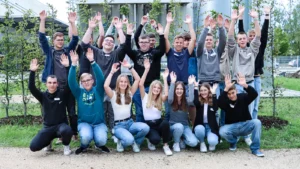
Big day for 19 young people: In the coming years, the apprentices will gain experience in eight different professions.

There was a great deal of excitement among the future apprentices, who are starting their careers in eight different trades. For the first time in a long time, an electronics technician for industrial engineering is also being trained. The young people were welcomed by Mr. Heidkötter, Managing Director of NETZSCH Pumpen & Systeme GmbH, on behalf of the entire management. Mr. Heidkötter made special mention of the importance of the new NETZSCH Campus for training.

Their eyes were shining, and there was a smile on their mouths. In addition to the anticipation, the 19 young people were excited about the new phase of their lives ahead of them this Friday morning. As every year on September 1, also in 2023, numerous new apprentices started their careers at NETZSCH Pumps & Systems in Waldkraiburg.

In the coming years, they will take their first steps in everyday working life at the specialist for conveying complex media in eight different apprenticeships. In addition to apprentices as industrial clerk, industrial mechanics, technical product designers, IT specialists for application development and system integration, and specialists for warehouse logistics and process mechanics, there is also an industrial electronics technician.

The excitement and anticipation about the upcoming phase of their lives were literally written all over the faces of the new apprentices. Nevertheless, the new apprentices Alexander Reiter, Andreas Kapser, Anna Maria Tratzl, Benjamin Winterer, Claudia Kiefinger, Christoph Schönberger, Daniel Huber, Julia Holzner, Korbinian Grill, Leni Hargasser, Leo Schindler, Leon Schönfeld, Markus Tauschhuber, Martin Geisberger, Maurice Douma, Paul Hipetinger, Raphael Bleicher, Samuel Spitlbauer and Sebastian Hütter had to clarify a few organisational things before they could start into the upcoming weeks. Following the welcome by the trainers in the Wolfgang Netzsch Arena at the NETZSCH Campus in Waldkraiburg and an initial short training session, buttered pretzels and cool drinks were served in a relaxed atmosphere. After the break, the new apprentices met Jens Heidkötter, managing director of NETZSCH Pumpen & Systeme GmbH. He addressed warm words to the new colleagues at the start of their new phase in life and was proud of the opportunities offered to the them.

“On behalf of the entire management, I would like to warmly welcome you. For the first time in the history of NETZSCH Pumpen & Systeme GmbH, we are all working together at one location in Waldkraiburg, and you will also benefit from this fact. The NETZSCH Campus offers outstanding working conditions and guarantees training at the very highest level with our new, state-of-the-art training facility and the NETZSCH Future Hub, a separate learning and recreation area for the apprentices. Therefore, you will be optimally prepared for your future career. This is something you can look forward to”, says Heidkötter.

Apprentices excursion and team building in Pullman City

Afterwards, a short game to get to know each other as well as the trainers and the youth and trainee representatives, was on the agenda. The new apprentices couldn’t believe that the first day in their working life had already ended and the weekend was just around the corner – time to process the new impressions. Before they go to their respective departments on Monday afternoon, they will have lunch together and a tour around the NETZSCH Campus. Finally, the next highlight is just around the corner: The apprentices excursion. The bus will take them to Voestalpine in Linz before they turn the night into day at the Western theme park in Pullman City, where team building is the main focus.

Dear apprentices, welcome to the NETZSCH family, and good luck with the new phase of your life!

www.pumps-systems.netzsch.com


#modernplasticsindia #indianplasticmagazine #modernplasticsaward #plasticnews #modernplasticsgermany #ginujoseph #modernplastic #plasticindia  #plasticrecycling #sustainability #modernplasticsglobalnetwork #modernglobalnetwork #modernplasticsaward2023 #plasticmagazine #PlasticIndustry  #modernplasticsmiddleeast #indianmagazine #innovations #modernplasticsamerica #modernplasticsbangladesh #modernplasticsasia #modernplasticsitaly  #cortecadvertising

NORMA Group Increases Profitability in the Second Quarter of 2023

NORMA Group Increases Profitability in the Second Quarter of 2023

  • Sales in Q2 2023 grew by 1.9 percent compared to the same quarter of the previous year to 324.0 million euros
  • Adjusted operating result (EBIT) increases to 27.1 million euros
  • Adjusted EBIT margin at 8.4 percent
  • Forecast for full year 2023 confirmed

NORMA Group grew slightly in the second quarter of 2023 and improved its profitability. Significant growth impulses were provided by the noticeably increased demand from the automotive industry and targeted price management. Lower demand in the area of ​​water management was more than compensated for.

According to figures presented today, consolidated sales increased by 1.9 percent to 324.0 million euros compared to the same quarter of the previous year ( Q2 2022 : 317.9 million euros). The company grew organically by 4.0 percent between April and June 2023 . Negative currency effects related to the US dollar reduced sales growth by 2.0 percent. Adjusted earnings before interest and taxes (adjusted EBIT) rose sharply by 21.2 percent in the second quarter of 2023 compared to the same quarter of the previous year to 27.1 million euros ( Q2 2022 : 22.3 million euros). The adjusted EBIT margin was 8.4 percent and was therefore also above the previous year’s value ( Q2 2022 : 7.0 percent). The operating net cash flow was EUR 31.9 million in the second quarter of 2023 , an improvement compared to the comparable quarter of 2022 ( Q2 2022 : EUR 26.4 million).

CEO Guido Grandi: “We completed a successful second quarter and launched the first initiatives from our Step Up growth program. We have improved our profitability both compared to the same quarter of the previous year and compared to the first quarter of 2023. We also managed to cushion the effects of inflation. Our global presence and our broad portfolio of connection technology for vehicles, water management, mechanical engineering and other industries make us robust – this is paying off in the currently subdued overall economic environment . “

Strong growth in Europe and Asia, decline in America

In the EMEA region (Europe, Middle East and Africa) the growth trend of the first quarter of 2023 continued: Sales rose significantly by 12.4 percent to 136.6 million euros in the second quarter of 2023 compared to the previous year ( Q2 2022 : 121 .6 million euros). Negative currency effects reduced growth insignificantly by 0.3 percent. The strong organic growth of 12.7 percent is based primarily on a good recovery in the automotive industry and increased demand for connection solutions for cars of all drive types . Sales also increased in the area of ​​industrial applications.

In the Americas region, sales fell by 6.9 percent to 144.5 million euros in the second quarter of 2023 compared to the same period last year ( Q2 2022 : 155.3 million euros). Organic sales fell by 5.2 percent; Currency effects additionally depressed sales development by -1.8 percent. After a strong quarter in the previous year, sales of connection technology for cars and commercial vehicles were lower. Water management products business was also lower after a very strong quarter last year, but improved compared to the first three months of 2023.

In the Asia-Pacific region, sales grew by 4.5 percent in the second quarter compared to the same period last year to 42.9 million euros ( Q2 2022 : 41.1 million euros). Organic sales rose sharply by 12.5 percent; Negative currency effects reduced sales growth by 8.1 percent. Above all, the increased demand from Chinese automobile manufacturers for connection technology compared to the previous year’s quarter, which was characterized by lockdown, led to a higher business volume in the region. The business with standard connection technology for water management and industrial applications, however, recorded lower sales than in the same period of the previous year.

First half of 2023: Growth and profitability in line with business expectations

In the first six months of the 2023 financial year, consolidated sales reached 639.0 million euros. This corresponds to an increase of 2.7 percent compared to the same period last year (H1 2022: 622.3 million euros). Organic sales grew by 3.1 percent in the six-month period; Negative currency effects reduced revenue by 0.4 percent. The adjusted earnings before interest and taxes (adjusted EBIT) amounted to a total of 49.7 million euros in the period January to June 2023 (H1 2022: 52.7 million euros). The adjusted EBIT margin was 7.8 percent ( H1 2022 : 8.5 percent). The operating net cash flow was negative at -12.9 million euros in the first half of 2023 (H1 2022: 9.8 million euros). One reason for this was investments in additional production capacities: In the first half of 2023, NORMA Group opened a new plant for water management products in the USA and expanded a location in China.

Guido Grandi: “NORMA Group performed well in the first half of the year. The business environment will remain challenging in the second half of the year. However, we have created a good starting position for the coming months and want to further increase our efficiency in production and logistics as the year progresses. We have identified a variety of growth opportunities in our strategic business areas of industrial applications, water management and mobility and new energies and will consistently exploit them.”

NORMA Group launched the five-year “Step Up” growth program in May 2023. The measures are divided, on the one hand, into growth and investment plans for the three strategic business units Industrial Applications, Water Management and Mobility and New Energies and, on the other hand, into measures to increase operational efficiency. With these measures, NORMA Group wants to ensure long-term profitable growth.

Forecast for 2023 confirmed

The Management Board confirms the expectations for the 2023 financial year published at the end of March with regard to growth, profitability and cash flow: NORMA Group is aiming for organic group sales growth in the mid-single-digit range for the year as a whole. In terms of profitability, the board expects an adjusted EBIT margin of around 8 percent for 2023 . The target value for the operating net cash flow is around 70 million euros.

www.normagroup.com


#modernplasticsindia #plasticmagazine #indianmagazine #indianplasticmagazine #modernplasticsaward #ginujoseph #modernplastic #plasticindia #plasticnews #plasticrecycling #modernplasticsglobalnetwork #modernglobalnetwork #modernplasticsaward2023 #PlasticIndustry #modernplasticsgermany #modernplasticsmiddleeast #modernplasticsamerica #modernplasticsbangladesh #modernplasticsasia #modernplasticsitaly #normagroup

Nexus Circular CEO Jodie Morgan to Receive 2023 ICIS Emerging Leader Award

Nexus Circular CEO Jodie Morgan to Receive 2023 ICIS Emerging Leader Award

ICIS is pleased to announce Jodie Morgan, CEO of Nexus Circular, as the winner of the 2023 ICIS Emerging Leader Award.

The award recognises a leader whose early contribution has driven excellence within their organisation, demonstrating strong leadership and making meaningful contributions to the chemical sector.

“We are leading the advanced recycling industry, making a positive impact addressing the challenges of used plastics in our environment,” said Jodie Morgan, CEO of Nexus Circular.

“With the support of committed investors and strategic offtake partners, our team is rapidly executing the next phase of growth to accelerate the circular economy for plastics and meet the outsized market demand for products that incorporate recycled plastic,” she added.

Since her appointment as CEO of Nexus Circular in November 2021, Morgan has overseen an equity raise of over $150 million, the securing of long-term contracts to supply pyrolysis oil feedstock to major polymers producers to produce circular virgin-quality plastics that offset fossil-based resources, and the expansion of manufacturing capacity at two sites.

“Nexus is playing a key role in the recycling ecosystem, with its technology able to process hard-to-recycle plastic waste, including films. Scaling up capacity will make a meaningful impact in enabling circularity,” said Joseph Chang, global editor of ICIS Chemical Business.

Morgan will receive the ICIS Emerging Leader Award later this year and appear in a video interview with ICIS following the ICIS Recycled Polymers Conference in Chicago, Illinois, US taking place from 7-8 November.

Atlanta, Georgia-based Nexus Circular utilises a proprietary pyrolysis technology and energy-efficient process to convert landfill bound plastics, predominantly films and flexible packaging, into a high quality ISCC PLUS certified pyrolysis oil. This can be fed directly into existing petrochemical assets and infrastructure without the need for post-treatment or further upgrading.

Nexus’ advanced recycling process can utilise high density polyethylene (HDPE), low density PE (LDPE), polypropylene (PP) and polystyrene (PS) waste plastics which represent approximately 60% of the plastic types produced.

Nexus Circular has multi-year offtake agreements with Shell, Chevron Phillips Chemical, Braskem and LyondellBasell. In January 2021, Cox Enterprises invested an additional $150 million to facilitate the rapid scaling of Nexus’ capacity which includes the expansion of the Atlanta, Georgia facility and the construction of a second facility in the Southeast.

www.icis.com


#modernplasticsindia #plasticmagazine #indianmagazine #indianplasticmagazine #modernplasticsaward #ginujoseph #modernplastic #plasticindia #plasticnews #plasticrecycling #modernplasticsglobalnetwork #modernglobalnetwork #modernplasticsaward2023 #PlasticIndustry #modernplasticsgermany #modernplasticsmiddleeast #modernplasticsamerica #modernplasticsbangladesh #modernplasticsasia #modernplasticsitaly #icis

With More Efficiency and a Lower Carbon Footprint to the Solar Race in Australia

With More Efficiency and a Lower Carbon Footprint to the Solar Race in Australia

  • New solar car “Adelie” makes rounds in Leverkusen
  • A lot of teamwork, passion and experience lead to optimized prototype
  • Covestro materials in the new vehicle and sports outfit of the team

With a highly efficient, self-developed solar car, Team Sonnenwagen wants to take part in the Bridgestone World Solar Challenge from October 22 to 29, 2023, the toughest solar race in the world, across the Australian outback. But before that, the team of students from RWTH Aachen University and Aachen University of Applied Sciences made a stop at Covestro’s headquarters in Leverkusen, Germany. In the Campus building there, the company hosted a farewell party for the students, who presented their new solar car “Adelie” and took it for several laps in public for the first time – without any fuel or charging station. Covestro shares the students’ enthusiasm for more sustainable mobility and has supported the team with innovative material solutions, professional exchange and as a main sponsor for about five years.

“I am amazed by the increased efficiency and energy savings you achieve with each new car model,” said Chief Technology Officer Dr. Thorsten Dreier in welcoming the guests. “The Covestro Adelie shows on a small scale what high-performance plastics can do for a sustainable future on a large scale. We are convinced that they are the key to sustainable mobility. That’s why we are consistently driving forward material innovations and recycling solutions together with our partners in industry and science.”

Optimization through teamwork

Even during the two-year development period of the Covestro Adelie, the teamwork of around 50 students led to success: aerodynamics, electrical engineering, driving strategy, chassis, powertrain and structure interlock perfectly. More than 200,000 hours of calculations were required to optimize the exterior shape, plus 10,000 workshop hours for the body, and many more days for electrical and mechanical components and the development of the driving strategy.

“A lot of work, heart and soul and the concentrated experience from our three predecessor models have gone into the Covestro Adelie,” confesses Clemens Odendahl, head of marketing at Team Sonnenwagen. “Now we hope to win the Challenger class, in which we are the only German team competing. There, it’s all about performance and maximum energy efficiency.”

Thanks to the optimizations, the structure of the new model weighs 16 percent less than that of its predecessor, the Photon, and the chassis even has 20 percent less weight. This improvement is also due to some Covestro materials, such as a battery cover made of the high-performance plastic polycarbonate and the construction of the seat shell with thermoplastic polyurethane. The Photon is also currently on campus and will remain there for some time.

“Adelie”, the latest Sonnenwagen model, turned a few farewell laps on a circuit specially set up in the Chempark – much to the delight of Covestro employees, who were able to watch the solar racer in action.

More sustainable outfit

But the Aachen-based tinkerers are not only committed to more sustainability on the road – their official outfit was also produced using alternative raw materials with fewer petrochemical components. Both the shoes and the shorts were provided by Covestro’s Chinese partner Huafeng. The two companies jointly developed a design for them using Huafeng’s HAPTIC textile coating system, which is made with Covestro’s partially bio-based Impranil CQ DLS/1 polyurethane dispersion.

Covestro wishes Team Sonnenwagen every success and victory in the Bridgestone World Solar Challenge. This time, 42 teams from 23 countries are taking part in what is probably the toughest solar car race in the world. Under harsh climatic conditions, they have to master the more than 3,000-kilometer route from Darwin to Adelaide as quickly as possible, right across the Australian outback.

www.covestro.com


#modernplasticsindia #plasticmagazine #indianmagazine #indianplasticmagazine #modernplasticsaward #ginujoseph #modernplastic #plasticindia #plasticnews #plasticrecycling #modernplasticsglobalnetwork #modernglobalnetwork #modernplasticsaward2023 #PlasticIndustry #modernplasticsgermany #modernplasticsmiddleeast #modernplasticsamerica #modernplasticsbangladesh #modernplasticsasia #modernplasticsitaly #covestro

3DPRINTUK Attains Certified Carbon Neutral Status

3DPRINTUK Attains Certified Carbon Neutral Status

Earlier this year, 3DPRINTUK announced its commitment to a sustainable approach to its additive manufacturing (AM) operations and outlined its “Road to Net Zero” plan. Today, the company is thrilled to announce that it has already taken a significant step towards this goal by attaining certified carbon neutral status, the first 3D printing service bureau to do this in the United Kingdom.

Thanks to its partnership with Climate Partner, 3DPRINTUK has gained a better understanding of its carbon footprint and identified ways to reduce it. The company has also been able to offset the emissions that it can’t eliminate through its current carbon reduction programme.

Through this collaboration, 3DPRINTUK has been able to offset an impressive 448,000 kg CO2, equally split between two supported projects: improved cookstoves in Uganda and wind energy in De Aar, South Africa. Both projects contribute to the UN Sustainable Development Goals (SDGs) and have been verified by Carbon Check (India) Private and TUV SUD South Asia Private Limited, respectively.

The improved cookstoves Uganda project aims to replace conventional and less efficient cookstoves in the country with improved cookstoves. Three objectives are being pursued: reducing fuel consumption, improving the health of the population in Uganda, and reducing deforestation.

The aim of the wind energy project in De Aar, South Africa is to harness the region’s wind energy potential to balance its energy needs in a sustainable way. The share of electricity now supplied by the wind farm would have otherwise been generated by fossil fuels. The wind power project avoids about 433,920 tonnes of CO2 emissions per year. In addition to the environmental benefits, the project assists the local community by creating jobs and improving the access to healthcare.

Commenting on this significant milestone, 3DPRINTUK CEO Nick Allen says, “We were very serious when we made the announcement about our Road to Net Zero initiative. We set ourselves some important goals as a leading 3D printing service provider, with the full intent to meet them as soon as practicably possible. Offsetting our carbon footprint and achieving certified carbon neutrality is a really great start, and we are proud of this achievement, but it remains just the start. We push on.”

www.3dprint-uk.co.uk


#modernplasticsindia #plasticmagazine #indianmagazine #indianplasticmagazine #modernplasticsaward #ginujoseph #modernplastic #plasticindia #plasticnews #plasticrecycling #modernplasticsglobalnetwork #modernglobalnetwork #modernplasticsaward2023 #PlasticIndustry #modernplasticsgermany #modernplasticsmiddleeast #modernplasticsamerica #modernplasticsbangladesh #modernplasticsasia #modernplasticsitaly #3dprint

Empowering Change: How Conscious Consumerism is Shaping a Sustainable Future

Empowering Change: How Conscious Consumerism is Shaping a Sustainable Future

Gen Z and modern millennials have spurned a revolution in the consumer market. Going beyond the brand names and marketing claims, these new-age consumers now dive deep into reading labels and considering the environmental and social impact of their purchases, giving rise to conscious consumerism.

Conscious consumers today want to not just know if the raw materials were sourced sustainably. Their concern goes beyond. They want to know if the workers producing this material worked in healthy conditions and were paid fair wages, the carbon impact of sourcing them from the said location, how much renewable and non-renewable resources were consumed in the process, etc. This makes room for more brands to enter the market, catering to varying concerns of the dynamic ecosystem. This everchanging market is the reason why in cluttered markets like beauty and personal care, there’s room for new brands to enter and takeup market share.“Sustainable buying has become a core value of new-age consumers’ buying behavior. With the growing awareness around understanding product sourcing and its aftermath, consumers are now doing their research, reading labels, etc. to ensure their actions have minimal if not zeronegative impact on the environment. Being an industry leader, we take it as our responsibility to offer our customers ample options that do not just fit their requirements but are also aligned with their values. As a result, we are developing innovative products made from recycled materials while continuously improving carbon footprint and waste generation. For example- we manufacture wipes with recycled polyester. This allows us to give waste products an extended life in the ecosystem. We also offer compostable and biodegradable wipes which do not leave a trace in the environment” says Yash Jaipuria, Chief Executive, Ginni Filaments.

The rising global trend is encouraging both new and upcoming, and veteran brands to adopt and integrate sustainability into their core value system and business operations. Companies that fail to embrace sustainability risk losing market share and credibility. Hence, fair trade initiatives, corporate social responsibility initiatives, and ethical company practices have now become standard practice. The changing dynamics in the ecosystem have led to reduced carbon footprints, waste reduction, conservation of biodiversity and vital resources, improved air quality, and more.

Ms. Vandana Tandan, Head of Markets India and Bangladesh, SIG Combibloc comments, “Growing consumer awareness around sustainability has encouraged more and more companies to come up with innovative, reliable and sustainable packaging solutions. At SIG, we have also evolved our offerings in numerous ways to ensure it becomes even more environmentally friendly and hence the first choice of our consumers. We are implementing energy-efficient manufacturing processes with an aim to minimize the industry& carbon footprint. Our cartons offer a smaller carbon footprint as compared to other alternative packaging. As an industry leader, we are making efforts to minimize food waste through portion control and optimized package sizes, another crucial aspect contributing to sustainability.”

Changing consumption habits towards sustainability means a major positive change in how people see their role as consumers. Conscious consumption can lead companies to more sustainable practices, which ultimately benefit the environment and society. As this trend continues, it has the potential to create a greener and fairer future for generations to come. However, it is important for consumers and businesses alike to maintain the commitment to sustainability thus making it a cornerstone of our global economy.
www.kaizzencomm.com


#modernplasticsindia #indianplasticmagazine #modernplasticsaward #plasticnews #modernplasticsgermany #ginujoseph #modernplastic #plasticindia  #plasticrecycling #sustainability #modernplasticsglobalnetwork #modernglobalnetwork #modernplasticsaward2023 #plasticmagazine #PlasticIndustry  #modernplasticsmiddleeast #indianmagazine #innovations #modernplasticsamerica #modernplasticsbangladesh #modernplasticsasia #modernplasticsitaly

The Critical Role of Risk Mitigation & Vertical Integration in Successful Micro Molding

The Critical Role of Risk Mitigation & Vertical Integration in Successful Micro Molding

In the area of micro molding, where precision and efficiency are critical, the role of vertical integration assumes fundamental importance. Accumold, a market-leading micro molding innovator has long championed the need for vertical integration to optimise micro molding outcomes, and in this exclusive Q&A article, Alex Anderson, Sales Engineer at Accumold systematically explores the crucial implications of vertical integration in micro molding projects. By elucidating the optimization of manufacturing processes, the stimulation of innovation, and the assurance of exceptional quality control, Alex imparts invaluable insights into how vertical integration has a transformative impact when undertaking often exacting micro molding projects for diverse clients across many industrial sectors.

Q. How does Accumold approach risk mitigation in a micro molding project, and what specific strategies or protocols do you have in place?

AA. The development of micro plastic parts and components involves multiple phases within a meticulously coordinated team. Design, materials, tooling, molding, validation, and assembly experts collaborate to achieve successful manufacturing at volume. In the micro manufacturing environment, where tolerances are measured in microns, unwavering attention to mitigating risks associated with non-adherence to these tight tolerances is crucial.

Micro molded parts, often weighing less than a gram and sometimes as light as less than 0.001 grams, often demand tolerances as low as 2 microns. For manufacturers unaccustomed to such levels of precision, the prospect of mass-producing parts with such dimensions and tolerances may seem insurmountable. However, micro molders like Accumold proficiently undertake this challenge on a daily basis, particularly in safety-critical applications where zero failure rates are imperative.

The paramount focus lies in meticulous attention to detail and process adherence. Micro molders must produce tiny parts with intricate features repeatably, attaining micron-level tolerances, all while maintaining cost-effectiveness and timely production. Hence, avoiding the need to revise designs, modify manufacturing processes, or recut expensive and time-consuming micro tools is of utmost importance. The guiding principle governing every activity throughout this complex process is to “get it right the first time.”

In addition, at Accumold we lay great store in having the right blend of people with experience, drive, organization, and communication strengths. Also we promote open communication to weed out unforeseen challenges, and we up-front set expectations about the timing of a project, qualification, and production.

Q. How does vertical integration within Accumold contribute to risk mitigation in in a micro molding project?

AA. Well essentially, we own the whole process, and there is no one else to blame. Our customers like to know this, and the fact that if there is a problem, it can be resolved with a single phone call to the salesman.

Put simply, vertical integration is a strategic structure which means that we own the supply chain for the products we make. Fundamentally, this is considered to be important as it implies a certain and robust degree of control over operations (something under particular scrutiny today as companies assess the damage inflicted by the disruption caused by the coronavirus pandemic), an ability to offer lower prices, and also having increased market control.

Vertical integration conveys a likely advantage over competitors, reinforced by the ability to provide a lower-cost, higher quality product or service to customers. Independence from suppliers in the value chain is key, as this allows control over costs, and the unpredictability that occurs when relying on 3rd party supply. Vertical integration increases process efficiency, and this promotes greater time efficiency and shorter lead times.

Q. What aspects of a micro molding project are vertically integrated at Accumold, and how does it help in mitigating risks related to supply chain dependencies or quality control?

AA. Well the whole 9 yards — quoting, DFM, tooling production, production runs, quality control, and assembly. Having all of this under one roof mitigates risk because we all operate working together, there is no blame to be shifted.

Over-riding everything, and again playing to the need for true vertical integration is the required customer/supplier relationship that is at the heart of successful micro molding projects. A micro molder is not a job shop, but is instead a product development partner, and this requires a close and productive relationship with customers. Fundamentally, a micro molder should be able to influence the tricky area of Design for Micro Manufacturing (DfMM). Micro molders understand issues such as design for tolerance achievement, optimal gate locations, flash and mismatch, and can give advice on prioritising and limiting critical dimensions, and material selection for optimal outcomes.

The objective of all micro molding projects is the timely, cost-effective, repeatable manufacture of often complex and extremely accurate parts and components. The key is to get it right first time, and this can only be achieved by all teams in each stage of the product development process — from design to automated packaging — being engaged early in the process. A great looking design may be impossible to tool. A customer’s innovative concept may seem like the next big (but small) thing, but it would not mold successfully in the material chosen etc… etc….

You get the picture. Collaboration early in the design phase addresses such potential issues, and this is obviously streamlined and more efficient if all departments work and reside in the same facility, i.e. there is true vertical integration.

Q. How does vertical integration enable you to have better control over critical components or materials and reduce the risk of delays or quality issues?

AA. Because we quote and build our tools we have a better understanding of customer needs and how changes can impact our customers whether minor or major. Critical components often require the input of multiple groups within our organization. Just because the tooling team can build a critical tooling component a certain way doesn’t mean they should, especially if the manufacturability of the plastic part isn’t considered.

This emphasizes the importance of an integrated approach in the product development process, particularly concerning tooling and its impact on customer needs. By quoting and building our own tools, we gain a deeper understanding of customer requirements and the potential implications of any changes, be they minor or major. In the context of critical components, collaboration among various departments within the company becomes crucial. The tooling team’s ability to construct a critical component in a particular manner does not automatically warrant its adoption, especially if the manufacturability of the plastic part is not taken into account.

The practice of quoting and building tools in-house allows Accumold to intimately comprehend the specific needs and expectations of our customers. This intimate understanding enables us to cater to customer requirements more effectively and respond swiftly to any modifications or enhancements requested during the development process. By maintaining a close relationship with the customer, we can offer a more tailored and satisfactory end product.

Recognizing the significance of critical components, we underscore the need for cooperation among various departments. Critical parts often involve complex considerations beyond tooling, such as design, materials, and manufacturing processes. Effective communication and collaboration between teams facilitate a holistic assessment of the component’s viability, ensuring that all relevant perspectives are considered before making crucial decisions.

There are potential pitfalls if we solely rely on the tooling team’s capabilities. While they may possess the technical expertise to construct a critical tooling component in a specific manner, overlooking the manufacturability of the associated plastic part can lead to complications during production. Therefore, it becomes imperative to involve manufacturing experts from the outset to assess the feasibility and efficiency of the proposed design and tooling approach.

Neglecting the manufacturability aspect can have adverse implications on both cost and time. Unforeseen challenges in the production process may result in delays and increased expense. Integrating manufacturability evaluations at an early stage allows us to identify and address potential issues, streamlining the manufacturing process and reducing overall costs.

By considering manufacturability concerns and involving various teams, Accumold fosters a culture of continuous improvement. Insights gained from past projects and collaborative efforts feed into the refinement of future processes and products, resulting in better outcomes and enhanced customer satisfaction over time.

Q. How does vertical integration enable you to maintain control over critical processes, such as inspection, testing, or post-processing, and mitigate risks associated with outsourcing these activities?

AA. Vertical integration in a micro molding scenario allows a company like Accumold to retain control over critical processes, such as inspection, testing, or post-processing, by internalizing these activities within their organization. By owning and managing these processes in-house, Accumold can implement standardized procedures, ensure strict quality control, and have better cost control. This approach also fosters streamlined communication and quicker decision-making, enabling continuous improvement and the ability to offer greater flexibility and customization to customers. Moreover, vertical integration mitigates risks associated with outsourcing, as it protects intellectual property, reduces reliance on external suppliers, enhances supply chain resilience, and provides faster turnaround times, all of which contribute to maintaining a competitive edge in the micro molding industry.

Q. In what ways does vertical integration contribute to a more streamlined and efficient workflow, reducing potential risks arising from handoffs between different entities or external suppliers?

AA. In a micro molding project, vertical integration plays a pivotal role in creating a more streamlined and efficient workflow, thereby reducing potential risks arising from handoffs between different entities or external suppliers. By encompassing critical processes like inspection, testing, and post-processing within their organization, companies like Accumold can maintain direct control over every stage of production. This seamless integration enables smoother communication, quicker decision-making, and the ability to address any issues promptly without relying on external entities. Consequently, there is a reduced likelihood of miscommunication, delays, or quality inconsistencies that may arise when multiple parties are involved. This level of control fosters a more cohesive and synchronized workflow, ultimately minimizing risks and ensuring a higher degree of quality and reliability in the micro molding process.

Q. What questions do you ask of your customers which gives you the feedback you need to give an insight into the value placed upon your capabilities and expertise?

AA. I ask customers what an ideal supplier looks like to them? Typically, they are caught off guard by this question but respond highlighting communication, lead time, or accountability. I also ask our customers what risks they see currently and in the future. This tell me what is most important to them during a project and allows me to prioritize accordingly. I in addition ask for an overview of their process once they receive their parts from us. Often times Accumold can provide additional value to our customers if we know where they are struggling. Finally, I ask what it is about their project they are worried about. This shows me their boundaries and what is likely to be unacceptable to them. It’s good to know what the hot points will be before you step on the land mine. For example, some customers are very worried about staying on schedule, and this tells me they probably want a weekly TEAMS meeting early in the week followed by a project summary late in the week. Some of my customers’ entire lives are their jobs, they are stressed out and will respond strongly to any negative feedback. In these cases its critical to have highlighted an issue early on otherwise it’s a surprise and nobody likes those.

www.accu-mold.com


#modernplasticsindia #plasticmagazine #indianmagazine #indianplasticmagazine #modernplasticsaward #ginujoseph #modernplastic #plasticindia #plasticnews #plasticrecycling #modernplasticsglobalnetwork #modernglobalnetwork #modernplasticsaward2023 #PlasticIndustry #modernplasticsgermany #modernplasticsmiddleeast #modernplasticsamerica #modernplasticsbangladesh #modernplasticsasia #modernplasticsitaly #accumold


Fraunhofer Institute Benchmarks AM Density Determination Technologies & Endorses Value of Dimensionics Density’s Solution

Fraunhofer Institute Benchmarks AM Density Determination Technologies & Endorses Value of Dimensionics Density’s Solution

The density determination of additively manufactured parts is crucial due to its impact on the structural integrity and performance of the components. Accurate density assessment enables manufacturers to ensure the quality and reliability of the parts. It also helps to identify defects, porosity, or voids within the material, which could compromise the strength and durability of the final product. By measuring density, manufacturers can verify if the additive manufacturing (AM) process has been executed optimally, guaranteeing that the parts meet the desired specifications and adhere to industry standards. Precise density determination plays a vital role in quality control, enabling efficient detection and rectification of any issues, ultimately leading to enhanced product performance and safety.

With this in mind, the Fraunhofer IAPT, Hamburg, Germany commissioned an independent study of the various AM density determination technologies available, and found that the automated density determination from Dimensionics Density is particularly recommended in areas where a statement on the density has to be made quickly or frequently, and the company’s solution allows machine approvals to be simplified, and thus the costs for quality assurance can be reduced.

The Fraunhofer report, entitled “Analysis of measurement methods for density determination in additive manufacturing” [DOWNLOAD HERE] in addition to the Dimensionics Density technology, also reviewed the use of micrographs, computed tomography, and the manual Archimedes method.

All methods are basically capable of determining the relative density of AM parts and components, but the Fraunhofer IAPT report found that there are substantial differences in accuracy, resolution, repeatability and the possibility of defect detection. Micrographs destroy the AM specimen, and while they can provide partial insight into the actual condition of pores in a part, the process is characterised by a lot of manual work, adding time and cost and relying on a high degree of expertise.

Computed tomography (CT) similarly requires the use of expensive expert operators, and while it can provide a realistic 3D image of the internal porosity of a part, it is restricted in the pore size that it can detect, and the price of CT equipment can be prohibitively expensive.

The Archimedes method is the easiest to use but can be the least accurate as it can be negatively impacted by changing environmental conditions, the accuracy of the balance, as well as the precision of the experimental procedure. It is difficult to reproduce the results, which are strongly influenced by human factors. Test specimens are never placed exactly the same on the balance, and the manual operation of the balances leads to measurement deviations.

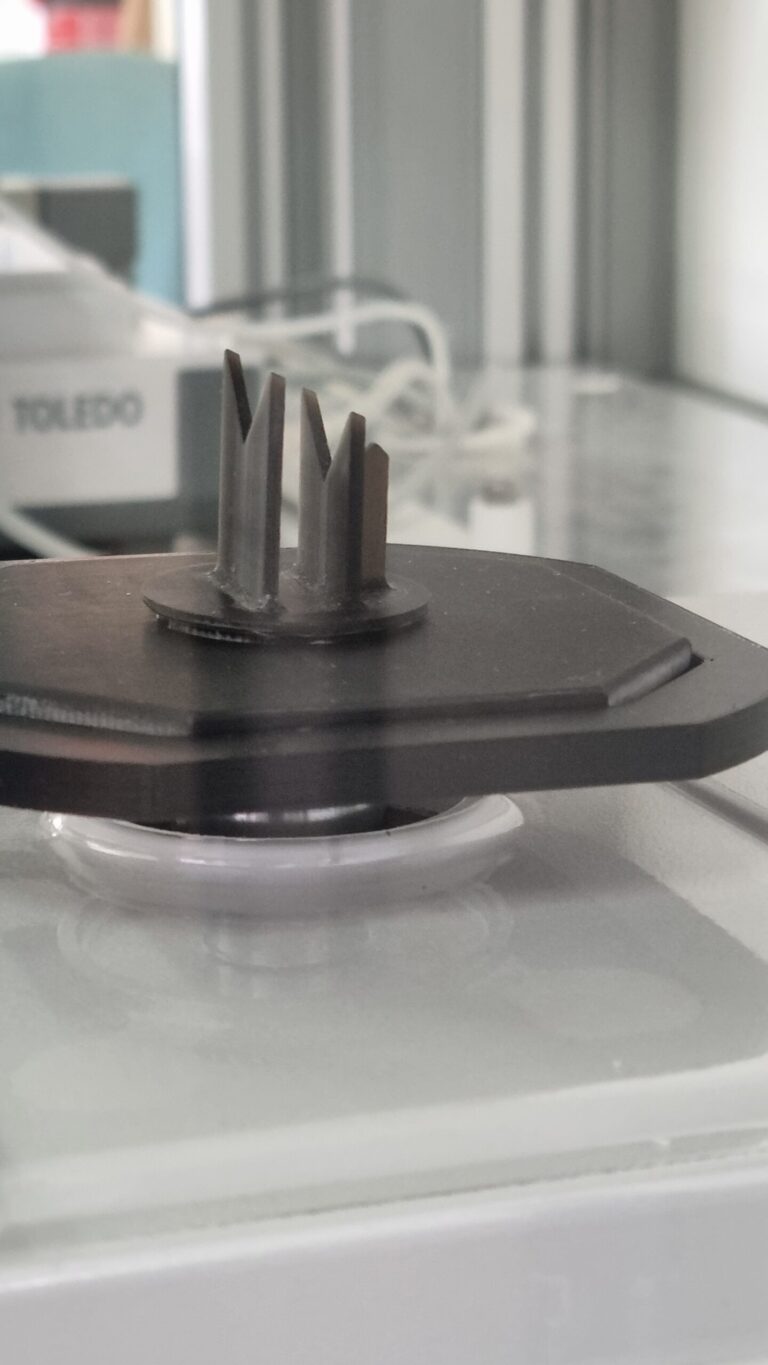
Philipp Pruesse, Head of Sales at Dimensionics Density, says: “We are extremely encouraged that the Fraunhofer IAPT report recognised the advantages of the automated density determination process that we produce. Our process uses the Archimedes method mentioned above, but in combination with modern automation technology. The samples to be measured are placed in a special component carrier, which is provided with openings on the underside. These component carriers are transported through the system by an axis robot and thus lowered centrally and precisely onto the scales. On the scales themselves, a lift-out rack with pins is placed, which lifts the component over the openings in the component carrier and thus lifts the component out of the carrier. The automated handling eliminates human influence on the measurement, as the parts are always placed identically onto the scales. The scales are designed to be insulated from vibration. In addition, all ambient conditions such as temperature, air pressure, and water temperature, are recorded via climate sensors, and their influence on the measurement result is taken into account directly in the evaluation algorithm when determining the density.”

The Fraunhofer IAPT benchmarking report states that Dimensionics Density’s automated density determination removes the user from the Archimedean measurement and therefore has a significantly higher repeatability and lower fluctuations. It states that this method is the only one that is traceable, so it can be referenced to a recognized standard via a measurement chain. Compared to micrographs and CT scans, the measurement time is also much shorter, making it easier to take multiple measurements for greater statistical confidence, and this makes this method suitable for evaluating the process capability of machines. Establishing the process capability of machines is an essential step for the production of series components via AM. It is continuously determined by external influencing factors, such as temperature. These influencing factors are included and compensated for in the density calculation, which means that operation in environments without laboratory conditions is also possible.

Pruesse continues, “Dimensionic Density’s automated density determination solution is poised to revolutionize the analysis of component density, and we are delighted that the Fraunhofer IAPT report recognises its importance in the critical area of AM production part / process validation. Its unparalleled accuracy and efficiency will help identify and mitigate porosity-related issues, bolstering the mechanical integrity, durability, and resistance of AM parts against external stressors and environmental challenges. Users will be able to elevate their manufacturing processes to new heights and unlock the true potential of AM for validated AM components.”

www.pylassociates.com


#modernplasticsindia #plasticmagazine #indianmagazine #indianplasticmagazine #modernplasticsaward #ginujoseph #modernplastic #plasticindia #plasticnews #plasticrecycling #modernplasticsglobalnetwork #modernglobalnetwork #modernplasticsaward2023 #PlasticIndustry #modernplasticsgermany #modernplasticsmiddleeast #modernplasticsamerica #modernplasticsbangladesh #modernplasticsasia #modernplasticsitaly #pylassociates

Success Story: Superior Lubrication for Energy-Efficiency in the Plastics Industry

Success Story: Superior Lubrication for Energy-Efficiency in the Plastics Industry

As a fast-developing economy, India is currently witnessing an escalating demand in the use and re-use of plastics across several industries. Fulfilling these demands has, thus, become imperative to ensure sustained growth of the country to accelerate its development journey. Additionally, employing 4 million people, the plastics industry in India is a multimillion dollar business that is anticipated to grow at a CAGR of 6.6% from 2022 to 2027, reaching almost US $ 56.42 billion in 2027.

Aligning with the projected growth, businesses in the sector today are focusing their attention on achieving productivity and profitability along with ensuring energy-efficiency in operations. The biggest challenge that the industry is encountering is in reducing its carbon footprint, to become cleaner and more energy-efficient. Most plastic manufacturing plants, therefore, require adequate and superior-quality lubrication to increase reliability as well as to improve the total cost of ownership through high-performance and high-pressure lubricants. Addressing this challenge as well as many others, Mobil provides exceptional hydraulic oils which are designed to provide outstanding service in terms of equipment protection, long oil life, and problem-free operations enabling increased productivity and efficiency.

Solutions through premium lubrication

Mobil associated with Supreme Industries Limited, India’s largest plastic manufacturing and processing company. Supreme handles volumes of over 3,20,000 tonnes of polymer annually across its 27 plant locations for export to more than 55 countries. However, the plastic injection molding machine used by the company that was previously lubricated by a competitive ISO VG 68 HLP hydraulic oil was leading to high energy consumption which increased operational costs, reduced machine productivity, and negatively impacted the environment.

To meet the rigorous demand of energy conservation, Supreme reached out to Mobil’s Field Engineering Services (FES) team who conducted thorough studies of the equipment, its performance and challenges faced. Thereafter, the team recommended a switch to the Mobil DTE 10 ExcelTM 68 hydraulic oil, a “shear stable” high viscosity index zinc-free energy-efficient hydraulic oil, for their plastic injection molding machine. The energy-efficiency demonstration of Mobil DTE 10 Excel 68 was performed on their injection molding machine using the vane pump for the same tonnage produced with the same mold material.

Post the switch, Supreme witnessed a 3.97% increase in energy efficiency and 3⁰C drop in hydraulic oil bath temperature v/s premium competitive oils in its injection molding machine. Eight such machines are now running with the use of Mobil oil resulting in an overall annual savings of US$ 8,586.

Leading lubrication innovation

The Mobil DTE 10 Excel Series high performance anti-wear hydraulic oils help reduce power consumption and increase machine output. These oils help keep modern hydraulic systems cleaner for longer and have been proven to boost hydraulic efficiency by up to 6 per cent. The products demonstrate outstanding oxidation and thermal stability allowing for long oil life and minimized deposit formation in severe hydraulic systems using high pressure, high output pumps. The innovative ultra-keep-clean performance protects critical hydraulic system components from malfunction. The shear stable, high viscosity index allows for a wide range of operating temperatures maintaining maximum hydraulic efficiency and utmost component protection at both low and high temperatures. Formulated with extensive laboratory and in-service field testing, the Mobil DTE 10 Excel series can help provide quantifiable increases in hydraulic efficiency, translating to reduced power consumption or increased machine output, resulting in monetary savings.

With customer experience at the centre of its brand ambition, Mobil is collaborating closely with industry leaders like Supreme to help them achieve their productivity and energy-efficiency goals. Bringing a legacy of 150-years complemented by continuous R&D, Mobil remains committed to innovating lubrication services and supporting the sustainable growth of the plastics industry in India.

For more information, visit www.mobil.in


#modernplasticsindia #plasticmagazine #indianmagazine #indianplasticmagazine #modernplasticsaward #ginujoseph #modernplastic #plasticindia #plasticnews #plasticrecycling #modernplasticsglobalnetwork #modernglobalnetwork #modernplasticsaward2023 #PlasticIndustry #modernplasticsgermany #packaging #innovations #packagingindustry #modernplasticsmiddleeast #modernplasticsamerica #modernplasticsbangladesh #modernplasticsasia #modernplasticsitaly #performanceplastics #sustainability #polymer #extrusion #mobil