Flexographic Technical Association (FTA) Recognizes Asahi Photoproducts With its Prestigious Sustainability Excellence Award for AFP-R Reduced Solvent Plates
A key step on the Road to Solvent ZERO for solvent-based platemaking operations
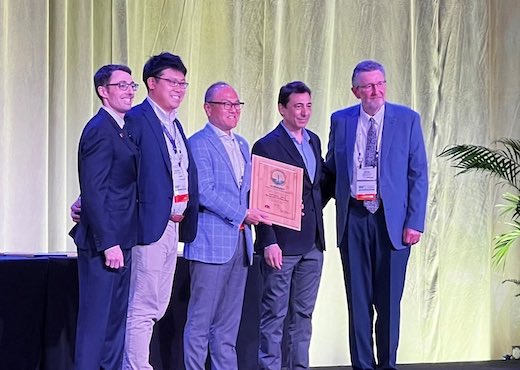
Asahi Photoproducts, a pioneer in flexographic photopolymer plate development, today reported that the Flexographic Technical Association (FTA) has awarded the company with a prestigious Sustainability Excellence Award for its AFP-R Reduced Solvent CleanPrint flexographic plates.
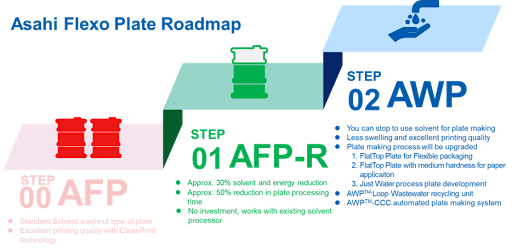
“We are very honored to receive this prestigious Sustainability Award! The AFP-R plates are a step along the road to Solvent ZERO which is our philosophy for contributing to the improved sustainability for the printing and packaging industry by eliminating VOC-based washout platemaking and reducing both energy usage and time to market due to shorter tact for washout and drying time. We are eager to continue creating new products and solutions which can help our clients ultimately migrate to an environmentally balanced solution such as our water washable AWP or AFP-R CleanPrint plates which are based on our unique polymer development culture,” said Aki Kato, Executive, Senior General Manager of Photoproducts Division.
The AFP-R plate is a solvent washable plate with reduced environmental impact and improved pre-press and press productivity. It can save 30% in solvent use and is 50% faster in platemaking, saving time and energy. This is another milestone in Asahi’s sustainability journey, reinforcing its dedication to continuously improving product development in balance with the environment. This is a hard flexo plate for high quality flexible packaging, label and paper applications, featuring several improvements when compared to a standard solvent-wash plate. It is also a step along the Road to Solvent ZERO for the approximately 70% of flexographic plate making operations that still use traditional solvent-based washouts and would like to reduce solvent usage without the need for additional investments in equipment.
CleanPrint plates from Asahi Photoproducts have been specifically engineered by Asahi’s chemical engineers to transfer all remaining ink to the printed substrate, reducing makeready time, ink consumption, and press stops for plate cleaning while delivering exceptionally consistent quality.
Beaulieu International Group Unveils Brand-New Experience Center at Flanders Flooring Days
The third edition of Flanders Flooring Days (FFD) has officially kicked off! This four-day event (May 13-16) is a collaborative initiative among Flemish flooring companies opening their doors to customers or prospects worldwide. Beaulieu International Group (B.I.G.) has been involved since the very beginning of the concept and is indispensable yet again. Moreover, this year, Beaulieu is presenting a unique experience by seizing Flanders Flooring Days as an opportunity to unveil their state-of-the-art Experience Center to the public for the first time.
Ultimate experience
During the Flanders Flooring Days, everyone is invited to discover the wide range of solutions offered by Beaulieu, all under one roof. Whether it’s cushion vinyl, hard flooring, event carpets, or artificial grass, each option can be explored in a unique way. And the offerings don’t stop there. Beaulieu also presents its Engineered Solutions such as Fibres and Technical Textiles, as well as its Upholstery activities, and Beaulieu Polymers, will also shine in the Experience Center. “At this Center, visitors will have the opportunity to touch, discover, and experience all our solutions. The aim is for visitors to leave here with even more ideas than they came in with,” says Matthias Blomme, Group Marketing Manager at Beaulieu.
Tangible solutions combined with digital impressions
Each solution offered by Beaulieu is housed in a dedicated corner, allowing visitors to fully immerse themselves in that specific application. However, the Experience Center is structured in such a way that visitors can seamlessly stroll from one solution to another, enabling them to discover that combining multiple solutions can lead to even more inventive and creative projects. “We’ve opted for tangible solutions combined with digital experiences and impressions,” continues Matthias Blomme. “For example, you can test and experience our Act Sports sports turf in our 180° sportsbox, but also explore our sustainable landscaping grass solutions. Or you can unleash your creativity within our immersive box, where you can instantly visualize your designs on digitally printed cushion vinyl flooring of Beauflor. Furthermore, you’ll be able to fully grasp the sustainability narrative of our event carpet Rewind and discover that BerryAlloc offers much more than just an impressive range of unique and innovative solutions in laminate, parquet, high-pressure flooring, strong wood floors, and vinyl planks & tiles in fantastic designs. The corner dedicated for BerryAlloc goes beyond product offerings. With tools as Myfloorstyle, a new content platform that answers all questions about flooring and interior design, and Harmony Lab, an innovative interior design concept created in collaboration with renowned color experts, we show everyone the full picture!”
Sustainability across all solutions
With the purpose of Beaulieu being Shaping sustainable living together, it’s not surprising that sustainability takes center stage in this Experience Center and during these Flanders Flooring Days. Beaulieu aims to build a better future by reducing our environmental footprint, caring for our people and communities, and conducting business in a transparent, ethical manner. And this commitment is evident in everything we do.
In the landscaping artificial grass section, there’s a strong focus on eco-backings, which improves recyclability by utilizing yarns and backing from the same polyolefin material family. These solutions require up to 50% less backing material while maximizing stability and durability, shown in products like Iska Eco, Forestland Eco, Wildflower Eco, Mystique Eco, and Elite Eco.
Meanwhile, Beauflor introduces the Twilight collection: our cushion vinyl rolls with a 40% lower carbon footprint compared to our conventional heterogeneous CV flooring for residential applications. It sets a new standard for our industry.
And by utilizing Rewind at events or exhibitions, you’re opting for the most sustainable flooring solution available; no water usage, latex-free, and eliminating excessive energy consumption. It’s also 100% recyclable and flawlessly transforms into pure mono-recyclate, ready for a new life.
And let’s not forget about our Fibres with their Sustainable Fibres Program and Technical Textiles, whose products are a benchmark in various markets. They provide solutions with proven sustainability-enhancing benefits in agrotextiles, geotextiles, backings, and industrial fabrics.
Creative and sustainable hub
The sustainability ambitions of Beaulieu are also reflected in the construction of the building itself. Thanks to geothermal technology for both cooling and heating, with 60 boreholes each approximately 90 meters deep, an exceptionally low ecological footprint is ensured, perfectly aligning with Beaulieu’s sustainability goals set for 2030. With a total of 3.700 square meters, of which 1.600 square meters are exclusively reserved for the Experience Center, it’s hard not to be captivated by this impressive architectural structure. This creative hub is not only a unique experience for visitors, but also all employees can fully enjoy the benefits of this brand-new space. At the heart of the building lies the “Place Beaulieu“, a versatile space where everyone can meet, co-create, innovate and work together.
Kraft-Heinz, Colgate-Palmolive, Novolex, Tekniplex and More to Speak at Rigid Packaging Forum
Join us on June 25-26, 2024 in Cincinnati, OH, USA to explore driving sustainable innovation and operational excellence for the FMCG rigid packaging value chain.
In the context of growing concerns about the impact of the slowing economy, surging inflation, high fuel and energy prices all impacting on profitability, it has been difficult to prioritise sustainability efforts. A recent progress report from the Ellen MacArthur Foundation confirms that the 1,000 signatories to its Global Commitment will not meet their 2025 plastic reduction goals. Indeed, several leading brands have increased use of virgin plastic and are being criticised for it.
Europe has led the way on sustainability efforts and we are now seeing similar heightened sentiments in North America. Waning public support for plastics and legislation often favouring plastic alternatives has created challenges for the rigid packaging industry but strong innovation efforts and sustainability focus are showing meaningful change.
Lightweighting and other efficiencies remain top of mind for plastic packaging manufacturers squeezed between their high priced raw material suppliers and brand owner/retailer customers. Consolidation continues to achieve economies of scale and efficiencies. With the size and scale of the larger players, rationalisation may start to occur. M&A is taking place both horizontally but also into new verticals with plastic processors acquiring recyclers and capabilities outside their core material / plastics to add value and growth to their offering and support customers with their packaging requirements.
The market has changed significantly over the last five years towards more sustainable formats driven by legislation and plastics taxes, pressure from NGOs, brand owner/retailer sustainability commitments and consumer perception.
This has resulted in changes both in polymer consumed and seen a move towards formats perceived to be more sustainable including flexibles and fibre-based solutions.
There is unprecedented demand for mechanically and chemically recycled material and the availability of recycled content material needs to accelerate. Developments are taking place throughout the entire value chain to increase availability of and incorporate recycled material into rigid packaging.
Combining The successes of our well-established Thin Wall Packaging and Plastic Closure Innovation events in Europe, the Rigid Packaging Forum provides a focused platform for all players in the fast-growing industry to discuss market opportunities and challenges.
Featuring two theaters,Rigid Container Innovations and Plastic Closure Innovations, the concurrent agendas investigate the two distinct markets to explore optimal ways to enhance innovation, functionality, operational excellence, and sustainability across multiple rigid packaging formats.
Expert speakers from across the packaging industry, including FMCG brand owners, packaging and closure producers will examine solutions to today’s challenges and development opportunities in material science and technology in rigid packaging. Their presentations will focus on thin-wall formats, pails, preforms, and bottle closure solutions.
The two-day agenda provides a unique platform to network, exchange knowledge and innovate. Examining cost and operational efficiencies through technology and material science, in the context of sustainable progress in thin wall containers, food service disposables, pre-forms, pails, caps and closure solutions, this is a must attend event.
Key presentations include:
Rigid Container Innovations
Designing for sustainability in rigid packaging
Steve Kapantais, Technical Director, Rigid Plastics, and Ashlee Larson, Senior Product Manager, Novolex
Certified PCR content in PET food packaging
Camilla Fangel, Director, Group ESG, Faerch
Achieving sustainable material replacement with advanced polypropylene solutions
Jonathan Cage, Director of Business Development, ICPG
Generative AI for Rigid Container Design
John Manderfield, Innovation & Design Fellow, Altium Packaging
Trends in premium closures Sukhdev Saini, Global Packaging Lead, Toothbrush and Devices Category, Colgate-Palmolive, USA
Plastic Closure Innovations
Taking cross-functional external partners through Kraft Heinz condiment closure decision-making process
Chris Max, Sustainable Innovation Packaging Lead, Kraft Heinz
Product innovations: added value of liners and seals for rigid packaging containers
Oscar Martin, Senior Vice President – Global Innovation, and Rafael Posada, Director, Global Sustainability / Consumer Division, TekniPlex
Route to sustainability: lightweighting, tethered caps and the untapped circularity of HDPE
Alessandro Falzoni, Laboratory Director, Rigid Packaging Technology Business Unit, SACMI
Integrating PP and HDPE PCR into closures and rigid packaging
Sandra Lewis, Manager of Business Development, Envision Plastics
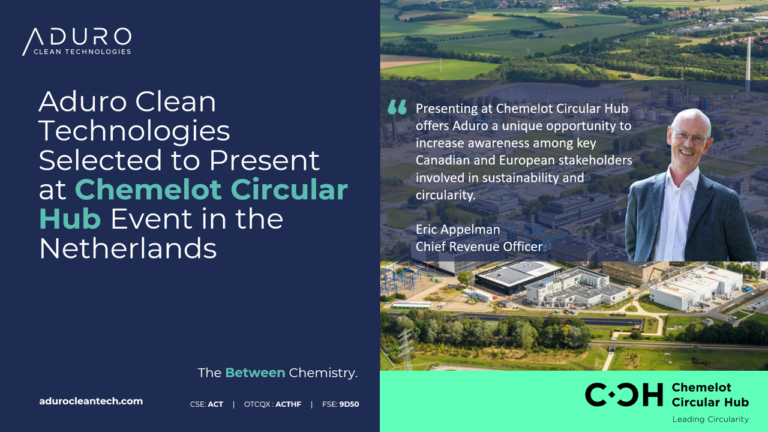
Aduro Clean Technologies Selected to Present at Chemelot Circular Hub Event in the Netherlands
Aduro Clean Technologies Inc. (“Aduro” or the “Company”) a Canadian technology company using the power of chemistry to transform lower value feedstocks, like waste plastics, heavy bitumen, and renewable oils, into resources for the 21st century, is pleased to announce its participation in the upcoming Chemelot Circular Hub event on May 15, 2024, at the Brightlands Chemelot Campus in Geleen, Netherlands. Eric Appelman, Chief Revenue Officer, will introduce the Aduro Hydrochemolytic technology, a unique approach to chemical recycling.
The Chemelot Circular Hub (CCH) is a leading example of industrial collaboration and innovation in sustainable chemistry. Located in the Limburg region, it encompasses the Brightlands Chemelot Campus, the Chemelot Industrial Park, and Brightsite. These entities work synergistically to transform the chemical industry towards greater sustainability and efficiency. Strategically positioned in the Netherlands, CCH aims to become a European leader in circular chemistry by 2030 and climate-neutral by 2050. It fosters innovation and economic growth by bringing together a broad alliance of companies, governments, and research institutes to develop sustainable solutions for the future. As Europe’s most ambitious chemical complex, CCH serves as a role model with its comprehensive plan to become the most sustainable chemical site in Europe.
The Canadian Trade Commission Service has organized a delegation of key figures in government, institutional bodies, regional authorities, and companies active in sustainability, hydrogen, and circular economy solutions to attend the World Hydrogen Summit 2024. As part of the program, the delegation will attend company presentations from a select group and tour the facilities of the Chemelot Industrial Park.
Out of 130 companies located at the Brightlands Campus, Aduro is one of four companies invited to present to the delegation. Eric Appelman will present Aduro’s chemical recycling technology to this influential audience, highlighting its potential to contribute to global sustainability goals.
“At Aduro, we are honored to have our technology recognized among the many outstanding initiatives happening at Chemelot,” said Eric Appelman. “An innovative part of our process for recycling plastic waste utilizes biomass or components of waste plastics to stabilize the product which in effect is similar to hydrotreatment using molecular hydrogen. This method not only achieves the required product quality but does so in an affordable and fully circular manner, demonstrating the potential for sustainable chemical recycling.”
Ofer Vicus, CEO of Aduro, commented, “Our participation in this event and Aduro’s selection from the impressive list of innovative companies in the CCH ecosystem is a great source of pride. This opportunity is not just about showcasing our technology, but also reinforces our commitment to the European market and key stakeholders in the region, in line with the interest of the delegation members. The establishment of our European subsidiary and the collaboration with Brightlands Chemelot Campus are important elements of our global strategy and we look forward to fostering further collaborations and driving innovation in chemical recycling.”
Horizon Announces Expansion of Service to Include Subcontract Micro-Am Production and Design Support
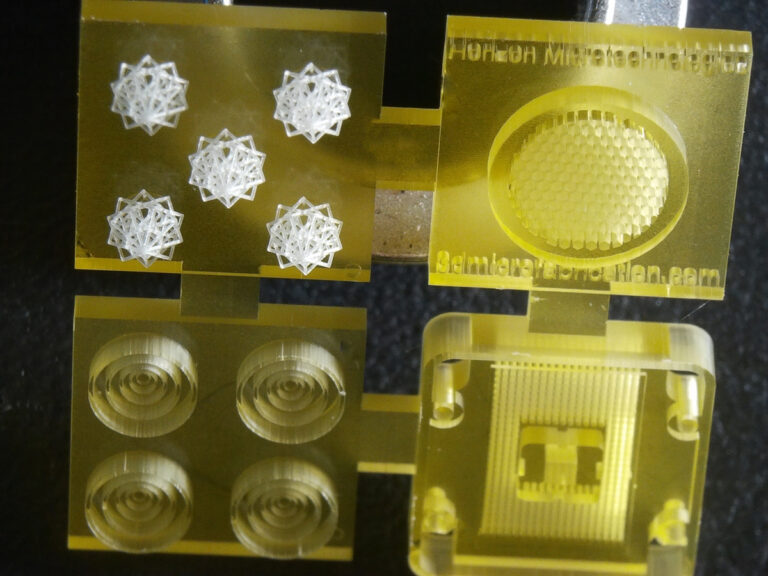
Horizon Microtechnologies today announces that it is offering a micro-AM subcontract service for customers interested in exploring the possibilities that exist through the use of AM for precise and small scale parts and components but do not have the expertise or infrastructure to undertake production in house.
Andreas Frölich, CEO at Horizon says, “Horizon provides a suite of in-house coating processes that add material and functionality to a microstructure. Very often the microstructure that we coat is made using micro-AM, and we offer a truly vertically integrated service assisting companies in part design, in-house micro-AM production, and then in-house coating. We understand that there are a large number of companies that have heard of micro-AM but have not as yet experienced just how precise and repeatable it is as a production process today. Therefore, it is a natural step for Horizon to extend its service to produce and design micro-AM parts and components for customers whether they need post-process coating or not. There is a requirement for a significant expertise to operate micro-AM technologies optimally. At Horizon we have this expertise and look forward to using it on behalf of companies looking to take exploit the inherent process advantages that micro-AM can offer.”
When producing exceptionally precise and tight tolerance parts and components, the significance and added value of a vertically integrated development and manufacturing partner becomes paramount. First and foremost, the early inclusion of manufacturability considerations along the full microfabrication process-chain in design decisions reduces the number of iterations during the product development phase. This concurrently reduces the time-to-market and overall product development costs. Furthermore, seamless linking of the separate production steps entails tight control and coordination over the various stages of production, from raw material sourcing to final assembly. In the context of precision manufacturing, this approach ensures seamless quality control, optimal material selection, streamlined communication, and enhanced process efficiency. Importantly, the interdependencies of the different process steps are established, so the manufacturing process’ execution is fully transparent and can be tightly controlled.
Frölich continues, “At Horizon, we are introducing the use of AM to application areas that have not considered it a viable technology due to its historical lack of precision, and also on the micro level due to its limited palette of materials. However, it needs to be considered that micro-AM is today able routinely to achieve single micron tolerances and surface finishes with 0.4 micron Ra repeatably with 10 micron XY optical resolution. So it is now possible to use micro-AM for exacting production applications where ultra-high resolution, accuracy and precision are critical to part functionality. We look forward to opening up the possibilities that can be achieved through the use of micro-AM to customers moving forward, and showing how this agile production process can be cost-effective, open up design freedom, and stimulate innovation in numerous application areas across an array of industries.”
In addition to offering a sub-contract micro-AM service for customers, where appropriate Horizon also offers a suite of proprietary coating processes which allow customers to successfully expand the functionality of parts which are typically produced in plastics on commercially available micro-AM platforms. The coatings allow for homogeneous and precise coating of 3D substrates, and selective coating of parts is possible. Coatings available include HMT-Metal (copper with >25% of bulk copper conductivity); HMT-Protect (ceramic-like protective coatings that increase resilience against external influences such as chemicals, abrasion or elevated temperatures); and HMT-Conductive (transparent conductive coatings with sheet resistances between a few kOhm/sq and approx. 100 Ohm/sq.).
NGA Plastic Technology India – NPE Premiere in Hall E, Booth W7261 – 2 Lines in Live Operation:
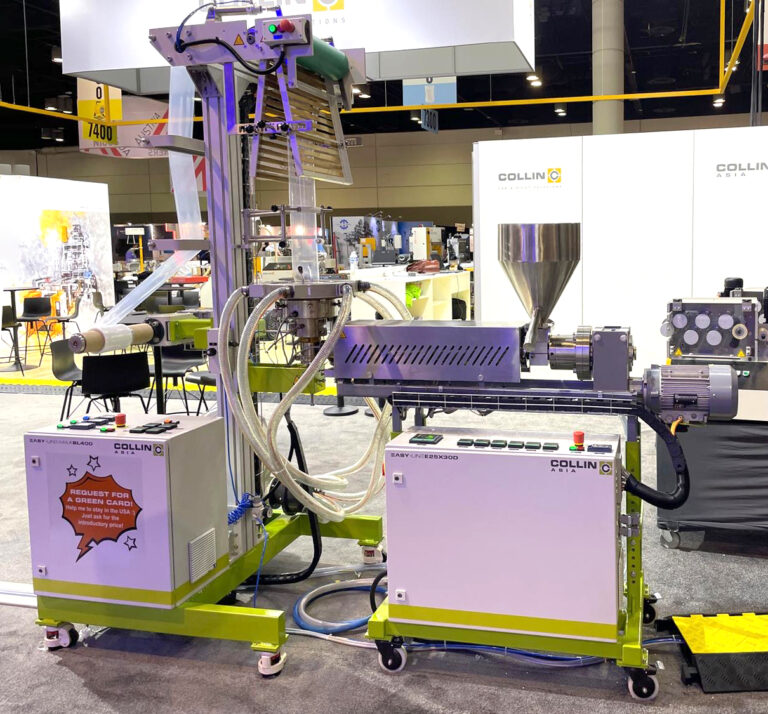
• Live: EASY LINE MAX 400 blown film line – first international presentation of the new extrusion line.
• Live: EASY LINE pressure filter test – ideal for film inspection.
• First appearance at the NPE: Production & Sales of extrusion machines of the brand COLLIN Asia – easy to handle test as well as R&D lines.
For the first time, NGA Plastic Technology from India presents itself at the NPE – and that with two lines in live operation at the booth! On the one hand, the brand-new blown film line EASY LINE MAX – which, furthermore, will be introduced to the international audience during the exhibition for the first time. On the other hand, the company will show the EASY LINE pressure filter test – also in live-operation.
New & live! EASY LINE MAX blown film line – compact, easy to handle, perfect for extremely thin, even films
„At the NPE exhibition booth, we bring our latest product, the MAX blown film line, in front of the curtain and present the line in live operation to the international market for the first time!“ says Rajnissh Sood Country Manager NGA Plastic Technology Private Limited.
The EASY LINE MAX line is used for the production of blown films made of all standard, non corrosive, customary polymers and includes an E25 x 30D extruder or an E30 x 30 D extruder, a mono blown film head and the blown film line BL 400. „The blown film head with optimized melt flow and a cooling ring with adjustable gap guarantees an extremely thin, even blown film“, explains Sood.
Like all other EASY LINE machines, the MAX blown film unit is very compact, convinces with an ergonomic design and is easy to handle.
Live! EASY LINE pressure filter test – practical table-top machine for film inspection during operation without extruder stop
The second EASY LINE line in live-operation at the NPE exhibition booth is a pressure filter test for film inspection – concrete: pigment or additive dispersion resp. inspection of determinations in new and recycled polymers. One of the advantages of this compact table-top machine is the fact, that the extruder needs not to be stopped during the measuring process. A melt pump guarantees a constant melt flow.
First NPE appearance of the entire NGA Group
„We are very happy, that NGA India shows its portfolio under the brand COLLIN Asia during the NPE for the first time“, say DI Dr. Friedrich Kastner and Corné Verstraten, majority owners of the NGA Group.
COLLIN Asia EASY LINE MAX 400 blown film line at the NPE 5.2024
“India is the fastest growing market for polymer industry, especially regarding masterbatch, compounding, blown and cast film production. It is a fact, that local plastic processing companies upgrade their production infrastructure with technologies, which correspond to the global standards. Therefore, in India, the group is represented with an own company – with NGA Plastic Technology Private Limited.“
EASY LINE portfolio – table-top machines from presses and extruders to pressure filter tests
EASY LINE table-top machines are designed as series 1 of the brand COLLIN Asia for the processing of polymers, for apprenticeship, research and development and include presses, extruders, compounders, blown as well as flat film lines, roll mills and pressure filter tests.
The main aim of the company NGA India is to provide growing markets with test and R&D lines in laboratory scale, which are easy to handle – based on proven COLLIN technology, manufactured in India under the brand “COLLIN Asia“. The foundation of the Indian subsidiary is a perfect mixture of German and Indian know-how in mechanical engineering to offer affordable technology. In other words, EASY LINE machines are manufactured in India and the support is also provided via the Indian NGA Plastic Technology.
NGA Next Generation Analytics GROUP OF COMPANIES:
NGA Plastic Technology Private LTD in India
Sales & service of the product line EASYLINE of the brand COLLIN Asia.
NGA Next Generation Analytics NGA (Grieskirchen/AT) focuses on the development of testing devices as well as lines for the plastic industry.
COLLIN Lab & Pilot Solutions COLLIN (Maitenbeth/D) develops intelligent pilot and laboratory lines in modular system for the plastic processing industry, universities as well as research institutes.
NGA Plastic Technology Asia PTE. LTD in Singapore
Sales & service of the product line EASYLINE of the brand COLLIN Asia
NGA Plastic Technology Inc. in the USA
Sales & service of the brands COLLIN Lab & Pilot Solutions, BritAS as well as COMELT
BritAS Recycling-Anlagen GmbH
BritAS (Hanau/D) develops and manufactures lines for the filtration of plastic waste and machines for quality control of plastic products.
COMELT Collin Melt Solutions GmbH COMELT is contract manufacturer in the field of mechanical production such as lathing, milling, eroding, and grinding and specialist for the manufacture of extrusion dies.
Syensqo Introduces Aeropaste 1003: an Innovative Two-Part Room-Temperature Paste Increasing Efficiency for Aerospace Manufacturers
Syensqo Introduces Aeropaste 1003: an Innovative Two-Part Room-Temperature Paste Increasing Efficiency for Aerospace Manufacturers to showcase its research and material solutions at SAMPE Long Beach 2024
Syensqo is launching AeroPaste 1003, a new grade of its epoxy-based structural paste adhesives which already includes AeroPaste 1006 and 1100. This aerospace adhesive will not only increase part assembly efficiency but also offers great processing flexibility, making it ideal for targeted high production rates in markets such as Advanced Air Mobility, Commercial Aerospace and Defense.
AeroPaste 1003 is designed for structural bonding of metallic and composite parts, rapid assembly, repair applications and is suitable for out of autoclave. It has excellent high temperature strength performance, and is easy to mix with controlled flow properties to allow for easy dispensing. It provides film-like properties and performance, comparable or superior to leading film adhesives currently on the market.
AeroPaste 1003 can be used in automated processes supporting industrialization requirements in the aerospace industry by increasing manufacturers’ efficiency and output thanks to its fast and easy application.
“Syensqo’s long standing leadership in the development of aerospace adhesive technologies has led us to develop the next-generation of paste adhesives that meet the industry’s need for higher rate assembly and joining,” said Dr. Stephen Heinz, Vice President of Research and Innovation of Syensqo’s Composite Materials Business. “Initial feedback from customers is very promising and we look forward to introducing AeroPaste 1003 at SAMPE Long Beach 2024.”
Dr. Heinz will also deliver the keynote speech at SAMPE Long Beach 2024 providing thought leadership on how the Materials & Process (M&P) community can best prepare to support future innovations within the aerospace and defense industries.
In addition, Syensqo’s original research and advanced material solutions will be featured in three technical presentations at the show:
Syensqo Product Development Scientist Dr. Rhys Tapper will present on SolvaLite 716FR, a rapid curing epoxy prepreg system, designed to meet the thermal needs for electric vehicle battery enclosures.
Syensqo research partner Dr. Salma El Euch of Centre Technologique en Aérospatiale (CTA) will present new insights into the rheological, thermal-chemical and compaction properties of the 2×2 twill weave of CYCOM EP2750.
Dr. Goran Fernlund of Convergent Manufacturing Technologies will present an enhanced machine learning approach for fitting cure kinetics models to dynamic scanning data (DSC) using the high performance epoxy matrix CYCOM EP2190.
Finally, as main sponsors and partners of the show’s presentation theater, Syensqo will share updates on its high performance and lightweighting technologies for space and defense and offer a deep dive in its adhesive portfolio and its hot compression molding solutions.
Sabic Introduces Valox Hx325hp Resin for High-Precision Diabetes Management Devices, Offering Excellent Processability & Chemical Resistance
HIGH-FLOW, BIOCOMPATIBLE PBT GRADE TO BE SHOWN AT npe2024
New VALOX HX325HP resin meets international standards of biocompatibility and change management.
This unreinforced polybutylene terephthalate (PBT) resin has predictable processing and performance properties, including excellent mold release, flexible sterilization options and high environmental stress cracking (ESC) resistance.
It addresses a growing need for medical devices that enable more-convenient and personalized insulin administration and glucose monitoring by patients.
SABIC, a global leader in the chemicals industry, today announced the availability of VALOX HX325HP resin, a new high-performance, medical-grade, injection molding polybutylene terephthalate (PBT) resin. Developed especially for high-precision parts, such as components of insulin delivery pens, insulin pumps, auto-injectors and continuous glucose monitors, this new resin combines outstanding processability with high chemical resistance and validated biocompatibility. SABIC will be featuring VALOX HX325HP resin at NPE2024 and will display auto injectors as candidate applications for this material at its booth .
“Global diabetes cases are expected to soar from 529 million to 1.3 billion by 2050, leading manufacturers in the medical and pharmaceutical markets to invest in easy-to-use, consistent and accurate devices that put diabetes treatment in patients’ hands,” Roble Amanda, Director, Advanced Consumer Solutions, SABIC, said “This trend requires materials capable of providing high levels of safety, reliability and durability without compromising productivity or precision in high-volume applications. We are pleased to introduce our new VALOX HX325HP grade as a thermoplastic polyester solution that is engineered to exceed the high expectations and strict specifications of manufacturers in these demanding industry segments.”
The new medical-grade PBT resin has passed stringent injection molding trials, where it demonstrated high flow even in complex designs, as well as excellent mold release properties with lower shrinkage variation compared with competitive engineering plastics.
In service, VALOX HX325HP resin delivers high resistance to a wide range of chemicals for the mitigation of environmental stress cracking (ESC), as well as compatibility with ethylene oxide (EtO), gamma irradiation and steam sterilization.
The new material has been successfully tested to international biocompatibility standards. Preliminary assessments according to ISO 10993 or USP Class VI are available upon request. In addition, the grade is subject to SABIC’s Healthcare Policy, providing reliable formulation lock and change control management in line with FDA and EU guidelines for medical-grade plastics.
VALOX HX325HP resin also serves as a formaldehyde-free alternative to polyoxymethylene (POM) materials.
The resin is supplied as an unreinforced, neat material, as well as in a limited range of standard colors.
NPE 2024 Machinery Manufacturers Present OPC UA as the Successful World Production Language
After a six-year break, the NPE, the most important plastics trade fair for the American market, takes place again. Mechanical engineering companies from Europe, the USA and Asia will present OPC UA as the global production language with their digital solutions for greater efficiency in production lines.
Together with the VDMA, the companies Arburg, Billion, Conair, Haitian, Plasmatreat, Shibaura, Sumitomo (SHI) Demag and Wittmann Battenfeld are presenting the benefits of OPC UA, for example in the connection of peripheral devices, in the interaction of machines from different manufacturers or in communication and data transfer via the cloud. The benefit is clear to see from the practical examples: it is about greater efficiency in increasingly complex systems, cost reduction and quality assurance.
NPE 2024
The internationality of the participating companies clearly shows that OPC UA lives up to its reputation as the global machine language of production. The further spread of OPC UA will bring enormous benefits to all end customers, as it will enable them to strengthen their competitiveness on the global markets.
Thorsten Kühmann, Managing Director of the VDMA Plastics and Rubber Machinery Association, is convinced: “All of us, machine manufacturers and processors, can only win if we decide in favour of OPC UA as the basis for data exchange in production on a global level. Together with our members and partners worldwide, we are committed to further developing the specifications for plastics machinery manufacturing and we invite all interested parties to get involved.”
Managing the Risk of Exceeding Tolerance Margins in Micro Molding
Paul Runyan, VP Sales & Marketing, Accumold
The production of tiny plastic components is a multifaceted task that relies on the professional collaboration of specialists in areas such as design, material science, tool creation, micro-molding processes, quality checks, and the final assembly to achieve high-volume production for clients.
Precision is paramount in a micro manufacturing context, where the margin for error is limited to mere microns. This necessitates a laser-sharp dedication from everyone participating in the development of the product to proactively prevent any deviation from these stringent tolerances. This article explores the rigorous standards and practices that must be upheld to guarantee the desired outcomes.
Parts created through micro molding often weigh under a gram, sometimes tipping the scales at a mere 0.001 grams, with tolerances that can be as narrow as 2 microns. For producers accustomed to larger-scale injection molding, the notion of consistently fabricating such minuscule components with extreme precision might appear daunting. However, for experts in micro molding, producing these components — often for parts that are crucial for safety and demand zero defects — with virtually no margin for error is part of their everyday operations.
Additionally, it’s essential to execute these tasks not only accurately but also economically and efficiently. The key principle is to pre-empt the necessity for any redesigns, process overhauls, or the remaking of the already costly and intricate micro tools. The overarching mantra for every step is to ensure accuracy from the outset, and to get it right first time.
The cornerstone of precision in micro molding lies in the vigilant management of stages where discrepancies in exactness are most likely to arise. While opinions may differ on which parts of the product development sequence hold paramount importance in this regard, there is a strongly shared understanding that the aspect of tooling — encompassing both its design and manufacture — is essential to achieving success in micro molding projects.
Accumold Engineering
MICRO TOOLING
In the area of micro tooling, experience is the foundation for achieving the minute tolerances required for success. Having a tightly integrated development cycle, where every critical stage, including design, tooling, molding, metrology, and assembly, is managed under one roof, is indispensable. The mastery over the micro molding process necessitates this vertical integration as outsourcing any segment of the design-manufacture cycle could lead to inefficiencies in time, cost, and quality control.
The key component when producing millions of products with micro-scale features is a high-quality micro tool. A subpar tool can consume your margin for error in a single stroke, jeopardizing the entire project. Therefore, it’s crucial that the tooling department possesses advanced fabrication technologies that ensure the project stays comfortably within the overall tolerance threshold, leaving room for adjustments as the product development advances.
Access to a suite of precision-enhancing technologies is essential for micro molders. The use of wire EDM (Electrical Discharge Machining) and highly precise milling equipment is often necessary. Yet, the pursuit of ultra-precision begins well before the physical creation of the tool — it starts with the synergy between tool design and fabrication experts. By collaborating closely from the outset, micro molders can secure successful results, adhering to the ethos of ultra-precision and the ethos of getting it right the very first time.
MICRO MOLDING
Upon completion of a precision-crafted and resilient micro tool, attention naturally shifts to the molding process itself. A proficient micro molder would have already played an instrumental role in shaping the design of the micro part or component to ensure it can be manufactured effectively and would have selected the most appropriate material for the job. However, when it comes to realizing the required tolerances, the molding phase is yet another stage that can trip up those without the requisite experience.
It is often said that while macro-level molding is scientific, micro-level molding combines both the science and the “art” of the craft. This notion underscores the reality that true success in micro molding hinges on the molder’s ability to innovate and apply creative problem-solving to each unique challenge.
But what does this mean in practice? The complexities of micro molding transcend the simplicity of executing pre-set instructions. It’s not a matter of scaling down macro processes; it’s about adapting and improvising with the equipment and technology available, sometimes even customizing solutions. It involves an element of nuanced, insightful experimentation to fine-tune the many variables in play.
These variables, including factors like the time the plastic spends inside the machine (residence time), the force used to inject the plastic into the mold (injection pressure), and the temperature of the mold itself, are all meticulously adjusted by the experienced micro
molder to tailor the process to the material’s characteristics and the intricacies of the component’s design, thus maintaining control over the precision of the final product.
This intricate balancing act again highlights the significance of micro tooling in maintaining tolerances. No matter how many adjustments and calibrations a micro molder makes during the molding process, the outcome relies on the injection of high-pressure molten plastic into an exceedingly small and sometimes delicate cavity, which is dependent on the quality of the micro tool. If the tool can’t withstand the process — if it deflects or fractures — then all the molder’s skill and knowledge go to waste.
METROLOGY & VALIDATION
Next, we address what some may term a “necessary evil,” which, in the context of micro molding, is actually a critical component, the metrology phase. In such precise manufacturing processes, metrology becomes not just significant, but a critical enabling technology.
The role of metrology in the development of micro molded products cannot be overstated. Utilizing advanced measurement technologies capable of validating the often tiny features on end products is essential. Without such capabilities, it’s impossible to guarantee that a product matches the original design intent and is suitable for its intended use.
The saying “what can’t be measured, can’t be made” holds a dual meaning. Possessing advanced metrology tools that can measure features previously unquantifiable not only enables validation but also expands the possibilities of what can be manufactured. As such, it’s imperative for micro molders to have access to the latest metrology equipment and to follow meticulous measurement practices.
Even with state-of-the-art tools, inherent variations within any measurement system must be recognized and managed. In micro molding, establishing trust in the precision and dependability of the measurement system is crucial. Equipment variation (repeatability) and observer variation (reproducibility) are the primary concerns. Minimizing these variations provides greater confidence in the ability to detect deviations in the product’s fabrication.
Regular assessment of the measurement system, particularly Gage R&R (Repeatability and Reproducibility), should be a core aspect of ongoing refinement processes, more so in micro molding where the smallest variation can significantly impact the tight tolerance thresholds. Such evaluations fortify confidence in the instruments, operators, and methodologies. Understanding the nuances of measurement variation is essential to grasp the full scope of the manufacturing process, to better predict its capabilities, and to consistently deliver a product that meets customer expectations.
In summary, successful micro molding entities invest in superior metrology equipment and are relentlessly dedicated to enhancing their R&R metrics.
CONCLUSION
A successful micro molding project requires meticulous oversight across all phases of product development. While the focal points of this discussion have been on the crucial areas where tolerances are most stringent — such as tooling precision, molding finesse, and rigorous metrology — there are numerous other elements that demand vigilant management. Variations in the materials chosen for the micro parts can significantly influence the outcome, with even different batches potentially leading to inconsistencies in the molding process. Additionally, environmental factors, including humidity and temperature, play a subtle yet impactful role in the dimensional stability of the final products. These factors may not always take center stage, but they are influential when micro molding, each capable of reshaping the outcome if not considered.
Everything circles back to a singular, inescapable truth — the experience and integrated operations of a micro molder are not merely beneficial but essential for success. An experienced micro molder possesses the nuanced understanding necessary to navigate multifaceted challenges, leveraging a comprehensive, coordinated “under-one-roof” in- approach to ensure every step is optimized to achieve the end goal. This vertical integration isn’t just about having all the tools and processes under one roof, it’s about creating a cohesive and synergistic workflow where expertise, precision, and adaptability coalesce. When micro molding, where every micron counts, this harmonized pulling together of skills and resources is the key to unlocking consistent, high-quality production that stands the test of market demands and customer expectations.